A RESTful API (Representational State Transfer) is an architectural style and set of principles for designing networked applications. It is a way of building web services that follow a specific set of rules to enable communication between client applications and server resources over the HTTP protocol.
Here are some key characteristics and principles of a RESTful API:
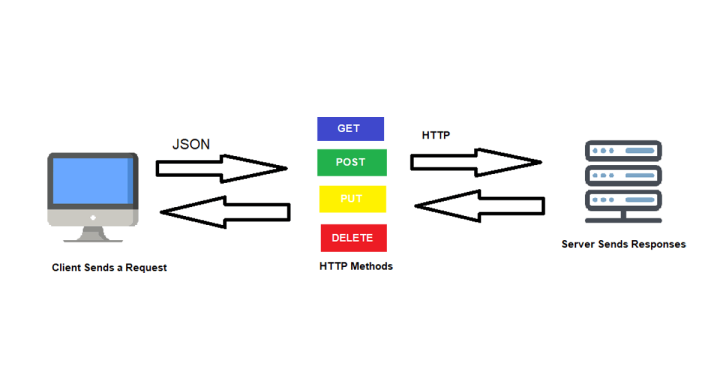
- Stateless: Each request from a client to a server contains all the information needed to understand and process the request. The server does not store any client-specific information between requests. This allows for scalability and simplicity in the API design.
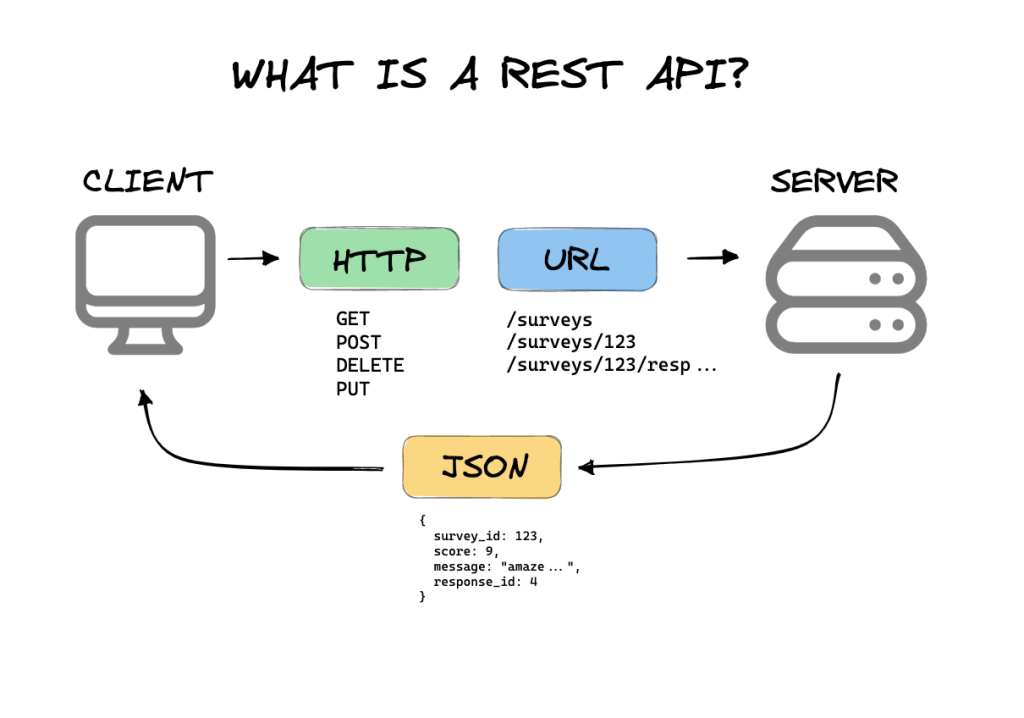
- Resources and URIs: RESTful APIs are based on the concept of resources, which are typically represented by URIs (Uniform Resource Identifiers). Each resource has a unique URI, which allows clients to interact with and manipulate that resource using HTTP verbs.
- HTTP Verbs: RESTful APIs utilize HTTP methods or verbs such as GET, POST, PUT, PATCH, and DELETE to perform operations on resources. Each verb has a specific meaning and purpose. For example, GET is used to retrieve a resource, POST is used to create a new resource, PUT is used to update an existing resource, PATCH is used to partially update a resource, and DELETE is used to remove a resource.
- Representations: RESTful APIs can return different representations of a resource, such as JSON, XML, or HTML, based on the client’s preferences or the requested format.
- Stateless Communication: Communication between the client and server is stateless, meaning that the server does not maintain any information about the client’s state between requests. Any required state information should be included in the request itself.
- Hypermedia as the Engine of Application State (HATEOAS): HATEOAS is a principle in RESTful API design that suggests including hypermedia links in the responses. These links provide the client with navigation and discovery capabilities, allowing it to understand the available actions or resources.
RESTful APIs provide a standardized and scalable way of building web services, making them widely used in modern web development. They are language-agnostic, meaning they can be implemented in any programming language as long as it adheres to the principles and guidelines of REST. RESTful APIs are commonly used to build web services, and mobile applications, and integrate systems across different platforms.
