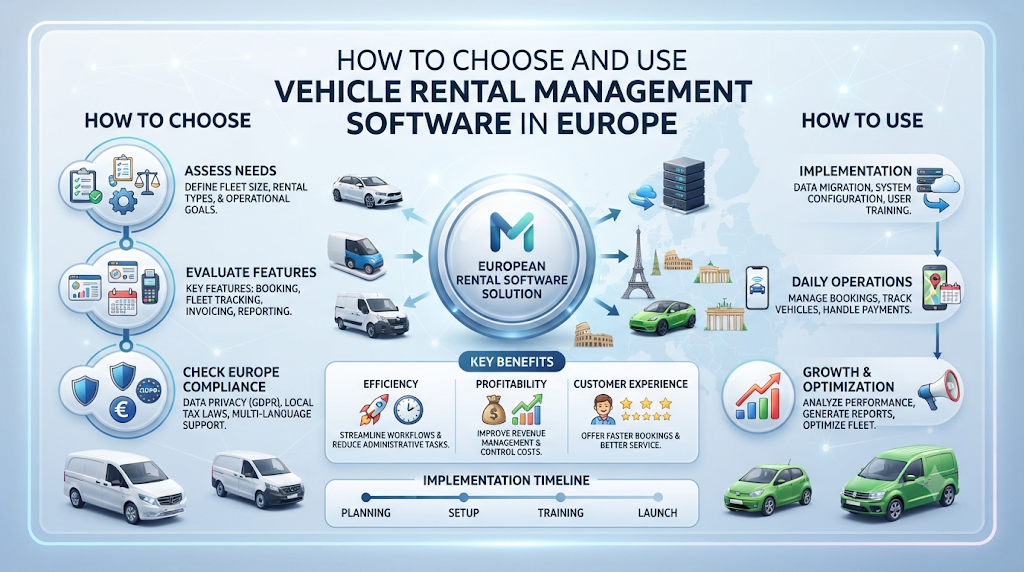
Managing a vehicle rental fleet—whether you run a small fleet of scooters in Athens, a motorcycle tour company in the Alps, or a local car hire business in Spain—requires reliable organization. From tracking daily reservations and checking bike maintenance schedules to handling customer records and processing payments, administrative overhead can quickly consume valuable time.
For growing businesses and independent operators, finding cost-effective tools is essential. Adopting the right technology can streamline daily operations, minimize double-booking risks, and improve the overall customer experience. This guide explores how vehicle rental management software works, what to look for when choosing a solution, and how platforms like MotoShare Europe support both independent rental operators and travelers across Europe.
Understanding Vehicle Rental Management Software
Vehicle rental management software is designed to automate and simplify the administrative tasks involved in running a rental business. Instead of managing bookings through spreadsheets, paper logbooks, or disconnected messaging apps, operators use centralized digital platforms to handle their entire workflow.
In the European mobility sector, businesses typically manage diverse inventories. A single shop might rent out touring motorcycles, city scooters, electric bikes, and compact cars. Managing this mixed fleet requires versatile software capable of handling varied rental durations, seasonal pricing, and distinct maintenance requirements.
Core Functions of a Rental Management System
Modern platforms generally combine several key operational modules into a single interface:
- Inventory Management: Tracks the real-time status of every vehicle, noting whether a scooter, car, or motorcycle is currently rented, undergoing maintenance, or available for booking.
- Reservation and Booking System: Manages online booking requests, prevents scheduling conflicts, and automates confirmation messages.
- Customer Records (CRM): Stores renter contact information, driver’s license verifications, rental history, and security deposit details.
- Payment and Revenue Tracking: Records transactions, tracks outstanding balances, and generates financial summaries.
- Operational Reporting: Provides insights into fleet utilization rates, peak rental seasons, and top-performing vehicle categories.
Exploring Free Vehicle Rental Management Software Options
For startups, independent vehicle owners, and small local rental shops, software costs can represent a significant hurdle. Many software providers charge monthly subscription fees per vehicle or per user, which can strain tight operating margins during low seasons.
This has increased interest in free vehicle rental management software. However, evaluating these tools requires looking closely at how they are structured.
Free Plans vs. Open-Source Solutions
When evaluating free software options, operators generally encounter two models:
- Freemium Cloud Platforms: Software providers offer a basic tier at no charge, often with limitations on the number of active vehicle listings, monthly bookings, or advanced reporting features. Paid upgrades unlock higher capacity and premium tools.
- Open-Source Software: Self-hosted software solutions where the core code is free to download and use. While there are no license fees, operators must cover hosting, server maintenance, setup, and technical troubleshooting costs.
What to Look For in Free Rental Software
Even when software is offered at no cost, it must meet practical operational standards:
- Ease of Use: Staff and customers should be able to navigate the booking interface without extensive training.
- Mobile Accessibility: Fleet managers often need to check availability or update reservation statuses from a smartphone or tablet while away from the front desk.
- Data Security: Protecting customer personal data and payment records is essential for compliance with European data regulations like GDPR.
- Scalability: The software should allow you to add vehicles or upgrade your plan as your business grows.
Specialized Software for Motorcycles, Scooters, and Cars
Different vehicle categories require specialized administrative features. Software that works well for a traditional car rental agency may lack the specific tracking needs required for two-wheeled transport.
Motorcycle Rental Software
Touring and adventure motorcycles involve unique management considerations. Motorcycle rental Europe operators must track mileage limits, accessory rentals (such as helmets, GPS units, and panniers), and strict maintenance intervals following long-distance trips. Furthermore, verifying motorcycle license categories across different European jurisdictions is a critical daily task.
Scooter Rental Software
Urban scooter rental operations focus on high turnover, short-term rentals, and rapid turnaround times. Scooter rental software must prioritize quick check-ins and check-outs, digital damage reporting, and efficient key or helmet handover workflows.
Bike Rental Software
For bicycle rental shops—particularly in tourist-heavy European cities and coastal regions—inventory volume is often much higher than car or motorcycle fleets. Bike rental software needs to handle bulk group bookings, hourly rates, and quick seasonal adjustments for mountain bikes, e-bikes, and city cruisers.
Car Rental Software
Traditional car rental operations require robust contract generation, multi-day scheduling, insurance add-on tracking, and detailed vehicle inspection checklists to record pre-existing scratches and dents before departure.
The Growth of Peer-to-Peer Vehicle Sharing and Rental Marketplaces
Alongside traditional rental shops, peer-to-peer (P2P) platforms have changed how travelers find transportation and how vehicle owners monetize underutilized assets.
How Peer-to-Peer Motorcycle Rentals Work
A peer-to-peer motorcycle rental Europe marketplace connects private motorcycle owners who rarely ride their bikes with travelers seeking local two-wheeled transport. Instead of traditional commercial storefronts, the platform acts as a digital intermediary, facilitating discovery, booking requests, and communication between private parties.
How to Rent Out My Motorcycle
Private owners interested in offsetting maintenance, insurance, and storage costs often explore how to rent out my motorcycle. Successful participation typically involves:
- Creating a detailed vehicle listing with clear photographs and accurate maintenance records.
- Setting clear house rules and daily mileage limits.
- Agreeing on pickup and drop-off logistics with interested renters.
- Reviewing platform guidelines regarding safety checks and identification verification.
How to List My Car for Rent
Similarly, private vehicle owners looking to generate supplemental income explore how to list my car for rent on regional sharing platforms. When listing a private vehicle, owners must verify local insurance requirements, understand platform security deposits, and ensure their vehicle meets regional safety standards.
Key Factors Influencing Motorcycle Rental Costs in Europe
Travelers planning an independent road trip across Europe often evaluate varied pricing structures. Understanding what drives motorcycle rental cost Europe helps renters budget accurately and choose the right vehicle category for their journey.
- Vehicle Displacement and Style: Renting a lightweight 125cc scooter for city navigation is significantly less expensive than hiring a heavy adventure-touring motorcycle equipped for cross-border alpine trips.
- Rental Duration: Many providers offer tiered pricing where the daily rate decreases for weekly or monthly rentals.
- Seasonal Demand: Rental rates peak during summer months in Southern and Central Europe, while prices drop during shoulder seasons or winter periods.
- Insurance and Extras: Comprehensive collision damage waiver (CDW) policies, roadside assistance, and rented riding gear (jackets, helmets, gloves) add to the baseline rental cost.
- Cross-Border Travel Fees: Crossing international borders within Europe may involve specific documentation, green cards, or additional insurance coverage stipulated by the rental provider.
MotoShare Europe and Its Role in the European Mobility Market
Platforms like MotoShare Europe operate at the intersection of consumer vehicle rental discovery and business-facing operational software.
Consumer-Facing Marketplace Features
For travelers and enthusiasts, the online marketplace provides a centralized environment to:
- Explore vehicle rental listings across participating European locations.
- Compare available motorcycles, bikes, scooters, and cars.
- Review displayed rental options, pricing, and vehicle specifications.
- Submit booking requests to participating local owners and independent rental providers.
Business-Facing Rental Management Tools
For fleet operators and independent rental shops, MotoShare Europe advertises free vehicle rental management software capabilities designed to support daily administration. While specific feature sets vary, advertised platform tools generally assist with:
- Vehicle Listing Management: Organizing and updating fleet displays.
- Reservation Administration: Managing incoming booking requests and checking availability.
- Customer Record Keeping: Maintaining renter details and transaction history.
- Operational Overview: Monitoring fleet utilization and rental activity.
Note: While these management tools are advertised by the platform, operators should review current terms and verify specific feature availability directly on the official website before migrating core business operations.
Frequently Asked Questions
How does motorcycle rental work in Europe?
Motorcycle rental in Europe involves selecting a provider or marketplace, choosing a suitable vehicle, verifying your driving license eligibility for the specific engine size, and agreeing to rental terms. Pickups are arranged either at commercial rental shops or through verified peer-to-peer arrangements with private owners.
What affects motorcycle rental costs in Europe?
Costs depend on the motorcycle model, engine displacement, rental duration, seasonal timing, insurance coverage levels, and optional equipment such as luggage cases or riding gear. Summer peak seasons in popular tourist regions generally feature higher rates.
Can I rent a motorcycle for one day?
Yes, many rental providers and marketplace listings support single-day rentals, though some touring specialists may require multi-day minimums during peak travel months or for specific high-end adventure models.
How does peer-to-peer motorcycle rental work?
Peer-to-peer rental connects private motorcycle owners with travelers via an online platform. The platform facilitates vehicle discovery, messaging, and booking requests, allowing private owners to rent out vehicles when they are not riding them.
What documents are needed to rent a motorcycle in Europe?
Renters typically need a valid passport or national identity card, a recognized driving license endorsed for the appropriate motorcycle engine category, and a credit card for security deposits. Non-EU visitors may require an International Driving Permit (IDP) depending on the destination country.
Is motorcycle insurance included in rental bookings?
Basic third-party liability insurance is generally included, but collision damage waiver (CDW) policies and theft protection often vary by provider. Renters should carefully review policy deductibles and excess amounts before confirming a booking.
What is free vehicle rental management software?
Free vehicle rental management software refers to digital tools provided at no cost that help fleet operators handle reservations, customer records, inventory tracking, and payment recording without paying standard monthly subscription fees.
Is free car rental software suitable for small businesses?
Free software tiers can be ideal for startups and small independent operators managing modest fleet sizes, provided the free plan includes essential booking, calendar, and customer management features without restrictive limits.
What features should bike rental software include?
Effective bike rental software should offer bulk inventory management, hourly and daily rate configuration, quick check-in workflows, accessory tracking (helmets, locks), and multi-channel booking integration.
How does a vehicle rental booking system work?
A digital booking system centralizes availability in real-time, allowing customers to check dates, select vehicles, submit reservation requests, and receive automated confirmations, thereby reducing scheduling conflicts and manual paperwork.
Is scooter rental software useful for small operators?
Yes, scooter software accelerates daily turnover by streamlining digital check-ins, tracking vehicle maintenance status, and managing fast-paced urban rental demand efficiently.
How can I rent out my motorcycle?
To rent out your motorcycle, you can join a peer-to-peer rental marketplace, create a detailed listing with photos and maintenance records, set your availability calendar, and review booking requests from interested riders.
How can I list my car for rent?
Listing a car involves registering on a vehicle-sharing platform, providing vehicle registration and insurance details, uploading clear photos, setting pricing rules, and managing incoming rental requests from verified drivers.
What should a rental business check before choosing software?
Operators should evaluate ease of use, mobile accessibility, data security standards, customer support responsiveness, payment processing integration, and whether free plan limits align with their business size.
Conclusion
Navigating the European vehicle rental landscape requires the right combination of practical planning and efficient tools. Whether you are a traveler planning an independent motorcycle tour, a private owner looking to share your vehicle, or an independent shop operator searching for cost-effective management solutions, modern digital platforms offer valuable support. By understanding vehicle requirements, evaluating software capabilities carefully, and utilizing structured online marketplaces like MotoShare Europe, renters and operators alike can streamline their journeys and administrative workflows across Europe.
