How to Check Project Size in Linux

Introduction

Have you ever wondered how to determine the size of a project in Linux? In this blog post, we will explore various methods to check the size of your project in Linux. Whether you are a developer or a system administrator, knowing the size of your project can be useful for resource allocation and optimization. So, let’s dive in!
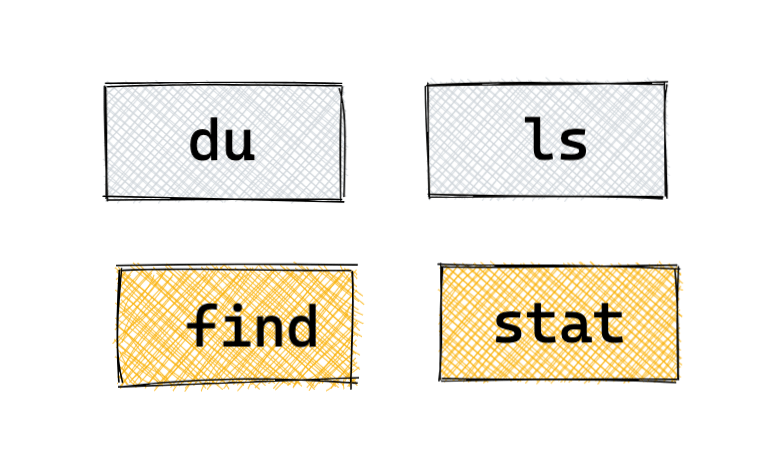
Method 1: Using the du Command

One of the easiest ways to check the size of your project is by using the du command. The du command stands for “disk usage” and provides information about the disk space used by files and directories.

To check the size of your project, open the terminal and navigate to the project directory. Then, run the following command:

du -h --max-depth=1

Output:-
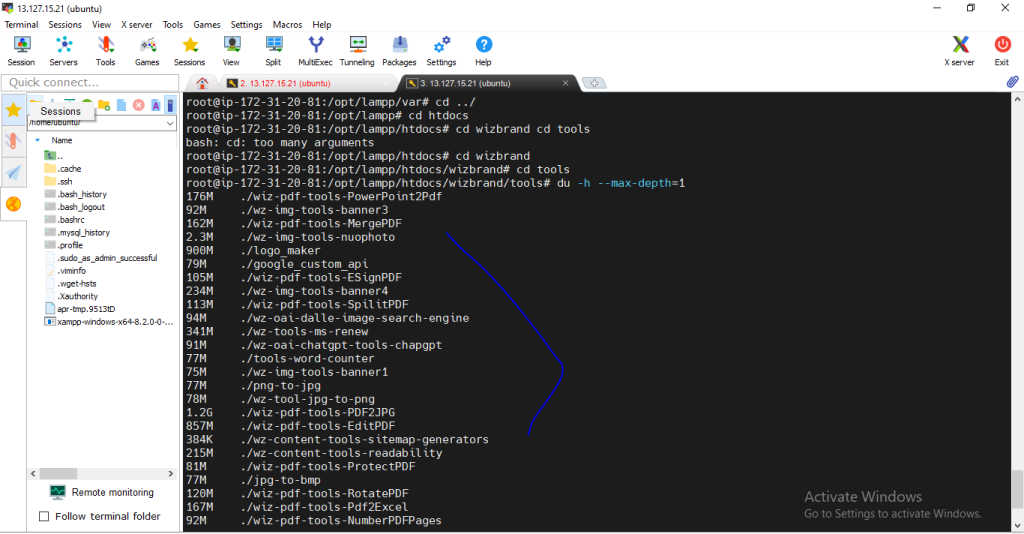
This command will display the total size of the project in a human-readable format, such as “10M” for 10 megabytes or “2G” for 2 gigabytes.

Method 2: Using the ls Command

Another method to check the size of your project is by using the ls command. The ls command lists files and directories in a directory, and with the appropriate options, it can display their sizes as well.

To check the size of your project using the ls command, open the terminal and navigate to the project directory. Then, run the following command:

ls -lh

This command will list all the files and directories in the project directory along with their sizes in a human-readable format.

Conclusion

Checking the size of your project in Linux is essential for effective resource management. In this blog post, we explored three methods to check project size: using the du command, using the ls command, and using the ncdu command. Each method has its advantages, so choose the one that suits your needs. Happy coding!

Related Posts

Transforming Global Healthcare Solutions with Expert Treatment Guidance

Introduction As healthcare networks expand globally, an increasing number of individuals look beyond their geographic borders for solutions. However, exploring foreign medical environments presents its own set…

Read More

Affordable Healthcare Secrets: How MyHospitalNow Helps Patients Find Verified Hospitals and Save Money

Introduction The single greatest hurdle in modern healthcare is the lack of transparent, centralized data. Comparing treatment costs across different institutions is notoriously difficult. A procedure that…

Read More

DataOps Security in Pipelines: Best Practices for Data Engineers

Data has become the primary asset of the modern enterprise, but it is also the most vulnerable. As organizations migrate from static data warehouses to distributed, real-time…

Read More

Evaluating Enterprise DataOps Tools for Secure Automation and Pipeline Orchestration

Introduction Enterprise data systems are expanding at an unprecedented rate. Organizations no longer manage just a few centralized databases. Instead, modern infrastructure spans across hybrid cloud environments,…

Read More

Comprehensive Guide to Evaluating Open Source DataOps Observability Tools

Introduction Modern data ecosystems are experiencing an unprecedented surge in complexity. Organizations no longer rely on a single, isolated relational database to power their business intelligence. Today’s…

Read More

Top Tools and Frameworks for Continuous Data Quality in DataOps Pipelines

Introduction In the modern enterprise landscape, decisions are only as good as the data that drives them. Organizations increasingly depend on fast, reliable data to power real-time…

Read More
Subscribe
Notify of
guest
0 Comments
Oldest
Newest Most Voted
Inline Feedbacks
View all comments
0
Would love your thoughts, please comment.x
()
x