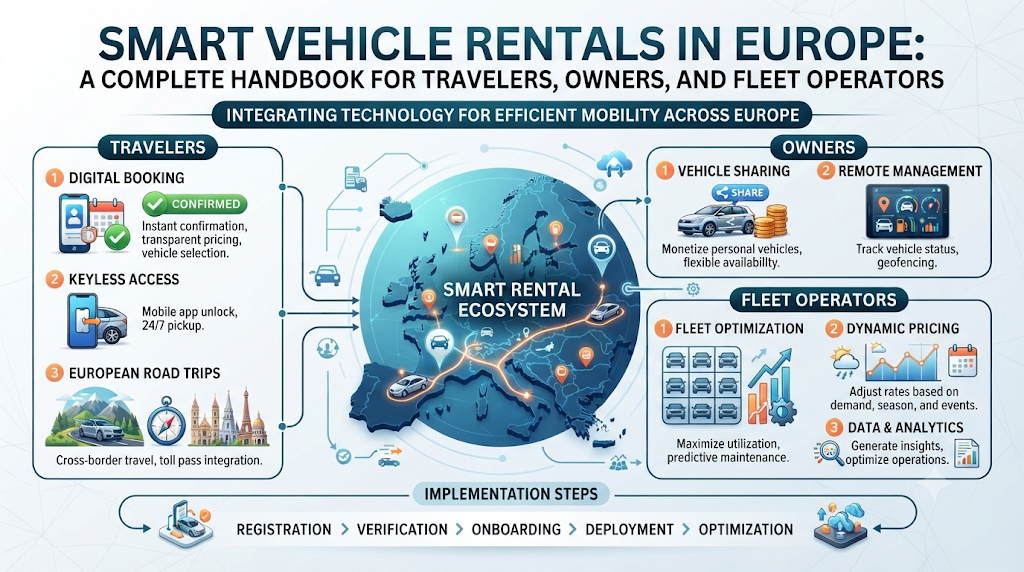
Renting or sharing a vehicle in Europe works best when you know how local rules, pricing, and digital tools fit together. Millions of travelers visit European cities, coastlines, and mountain roads every year looking for flexible ways to explore beyond train lines. At the same time, private owners want safe ways to earn income from parked vehicles, while small rental shops need clean systems to manage daily bookings. Online marketplaces like MotoShare Europe connect travelers with local vehicle providers and promote free digital tools for independent rental operators.
This handbook gives you a clear roadmap for European vehicle sharing. You will learn how travelers pick the right ride, what shapes daily rental rates, how private owners list bikes and cars safely, and how software keeps small rental businesses organized.
Choosing the Right Ride in Europe
European roads vary dramatically from one region to the next. Historic town centers often have narrow lanes and tight parking, while alpine passes and rural highways reward comfort and steady power.
When searching for a motorcycle rental Europe option, riders usually match their vehicle to their route:
- 50cc and 125cc Scooters: Best for short city hops, beach towns, and easy parking on busy streets.
- Mid-Size Street and Naked Bikes: Great for weekend rides, coastal curves, and solo travelers who want light handling.
- Touring and Adventure Motorcycles: Built for multi-day trips, highway comfort, and carrying side luggage across regions.
- Compact and Family Cars: Ideal when traveling with extra bags, unpredictable weather, or more than two people.
How Peer to Peer Motorcycle Rental Europe Works in Practice
Traditional rental desks operate from fixed storefronts with strict opening hours and standard corporate fleets. By contrast, a peer to peer motorcycle rental Europe marketplace lets travelers rent directly from private riders or small neighborhood shops.
Here is how a typical marketplace booking unfolds:
- Search and Compare: You enter your destination and travel dates to view available bikes, scooters, or cars with upfront daily prices.
- Message the Host: You ask questions about seat height, helmet sizes, luggage racks, or local road conditions before booking.
- Send a Booking Request: Once dates and terms look right, you request the vehicle and complete payment verification.
- Meet for Handover: You meet the owner or local shop at the agreed time, inspect the vehicle together, and hit the road.
Comparing Local Shops vs. Peer-to-Peer Marketplaces
| Decision Point | Traditional Rental Shop | Peer-to-Peer Marketplace |
| Who Owns the Vehicle | Commercial rental business | Private rider or independent local host |
| Pricing Clarity | Base rate plus optional counter add-ons | Transparent upfront rates set by the host |
| Pickup Schedule | Fixed shop opening and closing hours | Flexible handover times arranged directly |
| Rider Support | Front-desk staff during business hours | Direct chat with an experienced local owner |
Understanding Motorcycle Rental Cost Europe
Daily rental rates across Europe depend on local living costs, seasonal demand, and vehicle type. Knowing what shapes the motorcycle rental cost Europe market helps you compare listings fairly and stick to your travel budget.
Seven main factors determine your final bill:
- Destination Country: Countries with higher taxes and wages—such as Switzerland, Norway, or Denmark—charge more per day than Spain, Portugal, or Greece.
- Engine Size and Model Year: Newer, high-powered touring bikes cost more to insure and maintain than smaller commuter bikes or scooters.
- Time of Year: Peak holiday months (July and August) bring the highest prices, while spring and autumn offer gentler rates and quieter roads.
- Number of Rental Days: Booking for a full week or ten days usually unlocks a lower daily rate than a two-day weekend trip.
- Refundable Security Deposit: Providers hold a temporary deposit on your payment card to cover potential scratches, traffic fines, or late returns.
- Insurance Protection Level: Basic third-party liability insurance is mandatory across Europe, while optional waivers that reduce your damage liability add a daily fee.
- Mileage Caps and Fuel Rules: Some rentals offer unlimited kilometers, while others include a daily distance limit. Almost all providers require returning the tank full.
Illustrative Example of a 5-Day Mountain Tour Budget
Note: This scenario is a hypothetical example created to show how costs add up and does not represent an actual quote.
Suppose a rider books a 700cc adventure bike in northern Italy for 5 days in June. The daily base rate is €85 (€425 total). Adding two side panniers costs €10 per day (€50 total), and choosing a lower-excess insurance option adds €14 per day (€70 total). The complete rental comes to €545, plus a refundable €750 security deposit released after a clean return.
European Driving Licences and Border Rules
Europe consists of more than forty independent countries, each enforcing its own traffic and licensing laws. Always verify your paperwork before paying for a reservation.
- EU Motorcycle Licence Categories: European permits follow four tiers: AM (mopeds up to 50cc), A1 (light bikes up to 125cc), A2 (medium bikes up to 35 kW), and A (unrestricted motorcycles). Your licence must match the bike’s power rating.
- Car Licence Rules for Light Scooters: Several countries—including France, Spain, and Italy—allow drivers who have held a Category B car licence for two or three years to ride 125cc scooters inside their own national borders. However, this local rule does not automatically permit riding across borders into neighboring countries.
- International Driving Permits (IDP): Visitors traveling from outside the EU should carry an IDP alongside their original home driving licence, especially when the home permit is not written in the local language.
- Cross-Border Travel Permission: Never ride a rented motorcycle or car into another country without written consent from the owner or shop. Insurance coverage often stops at the national border unless approved in advance.
How Vehicle Owners Turn Parked Bikes and Cars into Income
Many motorcycles, scooters, and cars sit unused in private garages for weeks between weekend rides. Listing a spare vehicle online helps owners offset annual insurance, road tax, and maintenance expenses.
Practical Steps to Rent Out My Motorcycle
If you are wondering, “How do I rent out my motorcycle safely and smoothly?” follow these five essential steps:
- Check Local Laws and Insurance: Confirm your country’s rules on private vehicle sharing and ask your insurer whether paid peer-to-peer rentals are covered. Never assume personal commuting insurance covers a paying guest.
- Prepare the Bike Mechanically: Check tire pressure, tread depth, brake pads, chain slack, oil levels, and all lights before every handover.
- Create an Honest, Detailed Listing: Post clear daytime photos showing all angles, the instrument cluster, and any minor wear. Mention seat height, fuel type, and included gear.
- Verify the Renter’s Identity: Check the rider’s physical driving licence and passport or ID in person before handing over the keys.
- Document the Condition Together: Walk around the bike with the renter at pickup and return, taking timestamped photos together to prevent disputes.
Simple Routine to List My Car for Rent
If you have an extra car at home and want to list my car for rent, use the exact same approach. Clean the seats and carpets, remove personal items, check fluid levels and tire pressure, and place the registration papers and safety vest inside the car. Always remind visiting drivers whether the engine uses petrol, diesel, or electric charging.
Why Small Rental Shops Need Digital Management Tools
Independent rental businesses face daily challenges that spreadsheets simply cannot solve. When a shop manages twelve scooters, twenty bicycles, or ten cars using paper notebooks, busy weekends quickly lead to double bookings, lost customer forms, and messy payment tracking.
Using free vehicle rental management software gives small operators a central dashboard to run daily tasks smoothly without expensive monthly fees.
Choosing the Right Software for Your Fleet
Different vehicle types require specialized workflows:
- Vehicle Rental Booking System: Displays real-time availability online, lets travelers request dates 24/7, and automatically blocks booked days on your calendar.
- Scooter Rental Software: Built for fast city check-ins, helping staff manage short hourly or daily hires, track helmet sizes, and store rider IDs quickly.
- Bike Rental Software: Helps bicycle and e-bike shops track frame sizes, battery charge status, lock codes, and family group bookings without paper clutter.
- Free Car Rental Software: Helps small car rental agencies log multi-day reservations, record starting and ending mileage, track fuel levels, and store customer agreements digitally.
Manual Shop Operations vs. Digital Rental Software
Moving daily shop tasks onto one digital system saves hours of repetitive desk work every week.
| Operational Area | Paper Notebooks & Spreadsheets | Digital Rental Management Software |
| Fleet Availability | Searching through pages or files manually | Live calendar showing open and booked vehicles |
| Double-Booking Risk | High during peak tourist weekends | Automated date blocking upon confirmation |
| Customer Information | Scattered paper forms and emails | Organized digital profiles with licence history |
| Payments & Revenue | Slow manual math at month-end | Clear payment logs and revenue summaries |
| Vehicle Checklists | Paper handover sheets that get misplaced | Digital trip records saved in one dashboard |
Common Mistakes to Avoid
Avoiding a few everyday errors protects both travelers and vehicle providers:
- Riders Ignoring Seat Height and Weight: Renting an unfamiliar heavy motorcycle for narrow mountain roads can make low-speed turns stressful.
- Owners Skipping Insurance Verification: Listing a personal vehicle without confirming valid rental insurance exposes the owner to heavy financial risk.
- Shops Waiting Until Summer to Organize: Relying on paper calendars during peak tourist season almost always causes scheduling overlaps and slow check-ins.
Four Golden Rules for Better European Rentals
Keep these four habits in mind for smooth trips and reliable shop operations:
- Keep All Terms Written: Confirm pickup times, mileage caps, fuel rules, and border permissions inside your booking chat.
- Match Licence to Engine Power: Always check that the driver’s physical licence covers the exact vehicle class before starting the trip.
- Inspect in Bright Daylight: Take clear photos of tires, lights, mirrors, and body panels at both pickup and return.
- Centralize Your Schedule: Track all reservations, customer details, and payments inside one reliable digital platform.
How MotoShare Europe Connects the Marketplace
MotoShare Europe operates as an online vehicle rental marketplace built to connect travelers, motorcycle enthusiasts, local residents, private vehicle owners, and independent rental shops across Europe. Focusing on motorcycles, scooters, bicycles, and cars, the platform enables users to compare transparent listings and submit booking requests directly to participating local providers.
For independent rental shops and fleet operators, MotoShare Europe also promotes free vehicle rental management software. According to its advertised features, the software is designed to help operators manage vehicle listings, reservations, customer records, fleet availability, payments, revenue tracking, and operational reporting from one place. Because regional availability and specific software tools can vary by country and business setup, travelers and shop owners should always verify current details directly on the platform.
Conclusion
Navigating European vehicle rentals becomes straightforward when travelers, owners, and rental shops use clear routines. Riders enjoy stress-free journeys when they check local licence rules, understand seasonal pricing, and inspect vehicles at pickup. Private owners earn side income safely when they verify insurance and screen renters carefully. Meanwhile, independent shops save hours every week by replacing paper logs with modern digital booking systems.
Take action today by checking your driving licence categories, preparing a simple handover checklist, or exploring transparent online marketplaces that simplify European mobility.
Frequently Asked Questions (FAQs)
1. How can travelers find a reliable motorcycle rental Europe provider?
Compare verified local shops and peer-to-peer marketplaces online before your trip. Look for transparent daily rates, clear photos from multiple angles, detailed vehicle specs, and written terms covering security deposits and daily mileage limits.
2. Why do riders choose a peer to peer motorcycle rental Europe marketplace?
Peer-to-peer marketplaces connect travelers directly with private owners and independent local hosts. This setup often provides more flexible pickup times, unique motorcycle models, and practical local route tips from experienced riders.
3. What factors affect motorcycle rental cost Europe travelers pay?
Prices depend on the destination country, travel season, engine size, and rental duration. Small scooters in southern Europe typically cost much less per day than large touring bikes in higher-cost countries during peak summer months.
4. Can I ride a 125cc scooter in Europe using a standard car driving licence?
In several European nations—such as Italy, Spain, and France—drivers who have held a Category B car licence for two or three years may ride 125cc scooters locally. However, rules vary by country, and this local exception does not automatically allow cross-border travel.
5. When do tourists need an International Driving Permit in Europe?
Visitors arriving from outside the EU generally need an International Driving Permit (IDP) alongside their original home driving licence, especially if the home permit was issued outside Europe or is not printed in the local alphabet.
6. What should I check before I rent out my motorcycle to a traveler?
First, verify your country’s vehicle-sharing laws and confirm with your insurer that paid peer-to-peer rentals are covered. Next, inspect your tires, brakes, chain, fluids, and lights, and verify the renter’s physical driving licence at pickup.
7. How do I safely list my car for rent in my neighborhood?
Clean the interior and exterior thoroughly, confirm that your insurance allows rental use, upload clear daylight photos, and set clear daily mileage and fuel rules. Always verify the driver’s physical licence and ID before handing over the keys.
8. What is free vehicle rental management software used for?
It helps independent motorcycle, scooter, bicycle, and car rental shops manage fleet availability, customer reservations, driver records, and payment logs in one digital dashboard without paying high monthly software fees.
9. How do scooter rental software and bike rental software help busy shops?
These specialized tools speed up quick hourly or daily check-ins, track helmet sizes or lock codes, monitor e-bike battery levels, and keep customer ID records organized during busy tourist hours.
10. Why should small agencies use free car rental software instead of paper logs?
Paper logs and basic spreadsheets do not automatically block reserved dates, which easily leads to double bookings. Dedicated car rental software keeps vehicle calendars, mileage logs, customer records, and payment statuses updated in real time.
11. How does a vehicle rental booking system prevent double bookings?
A vehicle rental booking system connects your live fleet calendar to online reservation requests, automatically locking dates as soon as a customer booking is confirmed.
12. Are refundable security deposits common across European vehicle rentals?
Yes, nearly all commercial rental shops and most peer-to-peer hosts hold a refundable security deposit on a payment card to cover potential minor damage, missing gear, or unreturned fuel until the vehicle is returned safely.
