
Top 10 Checklist for Microservices Design

Microservices have fundamentally changed the way server-side engines are architected. Rather than a single giant monolithic codebase hosting all the business logic of your application, microservices reflect the distributed systems model, where a group of application components works together to deliver the business needs. By following ten basic microservices best practices, you can achieve an efficient microservices ecosystem devoid of unnecessary architectural complexities.

Benefits of a Microservices Architecture
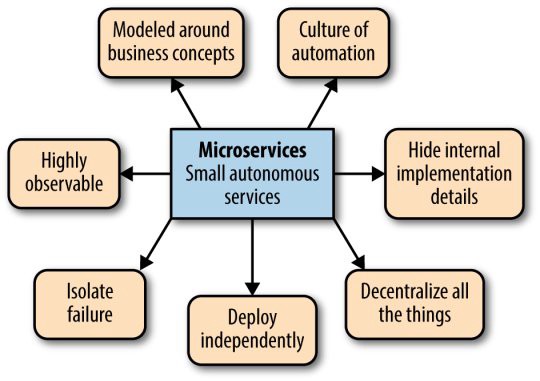
10 Microservices Best Practices

  • The Single Responsibility Principle.
  • Have a separate data store(s) for your microservice.
  • Use asynchronous communication to achieve loose coupling.
  • Fail fast by using a circuit breaker to achieve fault tolerance.
  • Proxy your microservice requests through an API Gateway.
  •  Ensure your API changes are backward compatible.
  • Version your microservices for breaking changes.
  •  Have dedicated infrastructure hosting your microservice.
  • Create a separate release train.
  • Create Organizational Efficiencies.

Related Posts

Navigating Pipeline Risks with Expert DevSecOps Consulting Services

Software delivery moves faster today than at any point in technological history. High-performing engineering organizations push code changes to production multiple times a day using automated deployment…

Read More

DevOps Support Services: Key Practices for Stable Production Environments

Introduction Running modern software infrastructure is an ongoing responsibility. A development team may successfully launch an application, but keeping that application reliable in production requires continuous attention….

Read More

DevOps Learning Paths for Kubernetes, Cloud, Security, SRE, and MLOps

Introduction DevOps has become an important part of modern software engineering because development teams are expected to release software quickly without losing control over quality, security, or…

Read More

Best Practices for Multi-Cloud Tool Integration: A Practical DataOps Guide

Introduction Modern organizations rarely rely on a single cloud provider. As enterprise data architectures evolve, teams frequently operate across combinations of Amazon Web Services (AWS), Microsoft Azure,…

Read More

Enterprise DataOps Adoption: How TheDataOps.org Simplifies Transformation

Introduction Modern enterprises run on data. Every strategic business decision, real-time dashboard, predictive financial forecast, and customer-facing machine learning model relies on continuous data streams. However, as…

Read More

Expert Tips for Evaluating Best Dental Hospitals Overseas

Introduction Navigating complex dental care—whether for a single missing tooth, extensive cosmetic restoration, or full-mouth reconstruction—represents a significant personal, clinical, and financial decision. In recent years, global…

Read More