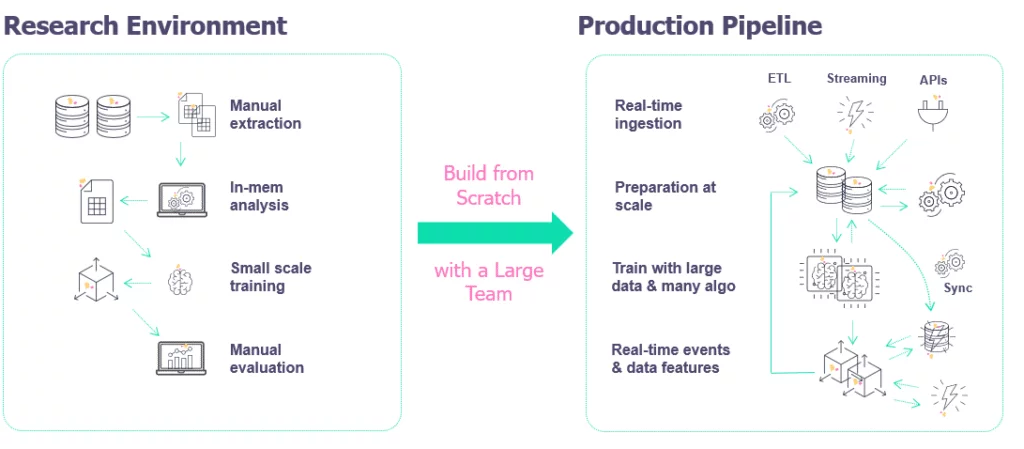
Are you tired of manual IT service management (ITSM) processes that take up too much time and resources? Do you want to improve your ITSM efficiency and accuracy? If yes, then Machine Learning Operations (MLOps) might be the solution you need. In this article, we’ll explore how MLOps can help you streamline your ITSM processes and improve your overall IT operations.
What is MLOps?
MLOps is a set of best practices and tools used to develop, deploy, and manage machine learning models in a production environment. It combines the principles of DevOps with machine learning to enable organizations to build and deploy models faster and more efficiently. MLOps helps organizations to automate the entire machine learning life cycle, from data preparation to model deployment and monitoring.
Why is MLOps Important for ITSM?
MLOps can bring significant benefits to ITSM. It can help organizations to automate repetitive tasks, reduce manual errors, and improve response times. With MLOps, organizations can build machine learning models that can predict and prevent IT incidents before they occur. This can help to minimize downtime and reduce the impact of IT incidents on business operations.
How to Implement MLOps for ITSM?
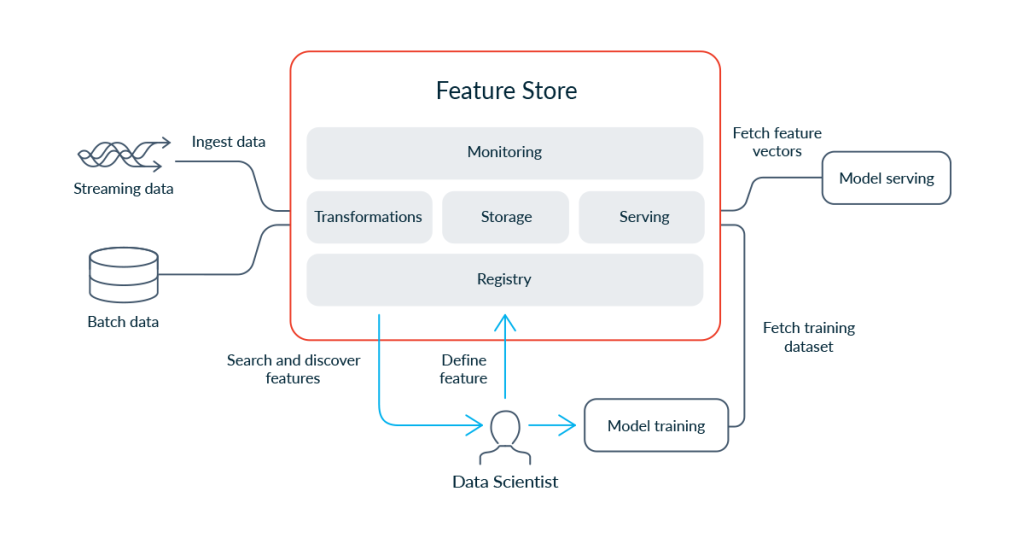
Implementing MLOps for ITSM involves several steps:
Step 1: Define the Problem
The first step in implementing MLOps is to identify the problem you want to solve. This could be anything from predicting IT incidents to automating ITSM workflows. Once you have identified the problem, you can start collecting the data you need for your machine learning model.
Step 2: Prepare the Data
Data preparation is a crucial step in building accurate machine learning models. You need to ensure that your data is clean, consistent, and relevant to the problem you are trying to solve. You can use data cleaning tools and techniques to ensure that your data is of high quality.
Step 3: Build the Model
Once you have prepared your data, you can start building your machine learning model. You can use various machine learning algorithms and techniques to build your model. You can also use open-source machine learning libraries such as TensorFlow and PyTorch to build your model.
Step 4: Deploy the Model
Once you have built your model, you can deploy it in a production environment. You can use containerization tools such as Docker to package your model and deploy it to a cloud-based platform such as AWS or Google Cloud.
Step 5: Monitor and Improve the Model
Once your model is deployed, you need to monitor its performance and make improvements as necessary. You can use monitoring tools and techniques to track the performance of your model and identify any issues that need to be addressed.
Conclusion
MLOps is a powerful tool that can help organizations to improve their ITSM processes. By automating repetitive tasks, reducing manual errors, and improving response times, MLOps can help organizations to optimize their IT operations and minimize downtime. With the right tools and techniques, implementing MLOps for ITSM can be a straightforward process that delivers significant benefits. So why not give it a try?
