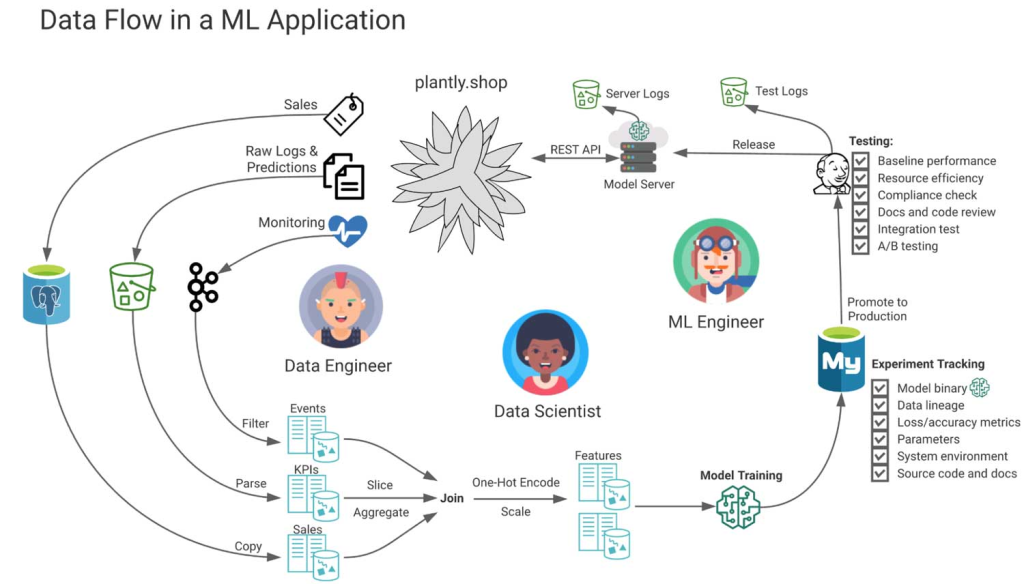
Are you tired of manually managing your data center operations? Do you want to improve your data center efficiency and reduce downtime? Well, you’re in luck because MLOps can help you achieve these goals and more! In this article, we’ll discuss how you can use MLOps for data center operations, and why it’s essential to do so.
What is MLOps?
MLOps is the process of applying machine learning (ML) to operations management. It involves automating the development, deployment, and monitoring of ML models. MLOps is an emerging field that aims to improve the efficiency, reliability, and scalability of ML-based applications. MLOps combines the best practices of DevOps and ML to create a seamless pipeline for ML model development and deployment.
Why is MLOps Essential for Data Center Operations?
Data centers are complex environments that require constant monitoring and management. Data center operators face several challenges, such as managing server capacity, ensuring high availability, and minimizing downtime. MLOps can help data center operators overcome these challenges by automating several tasks that were previously done manually. MLOps can help data center operators:
- Improve operational efficiency
- Reduce downtime
- Increase scalability
- Enhance security
- Optimize resource utilization
MLOps can achieve these benefits by using ML models to predict and prevent system failures, automate resource allocation, and monitor system performance in real-time.
How to Implement MLOps for Data Center Operations?
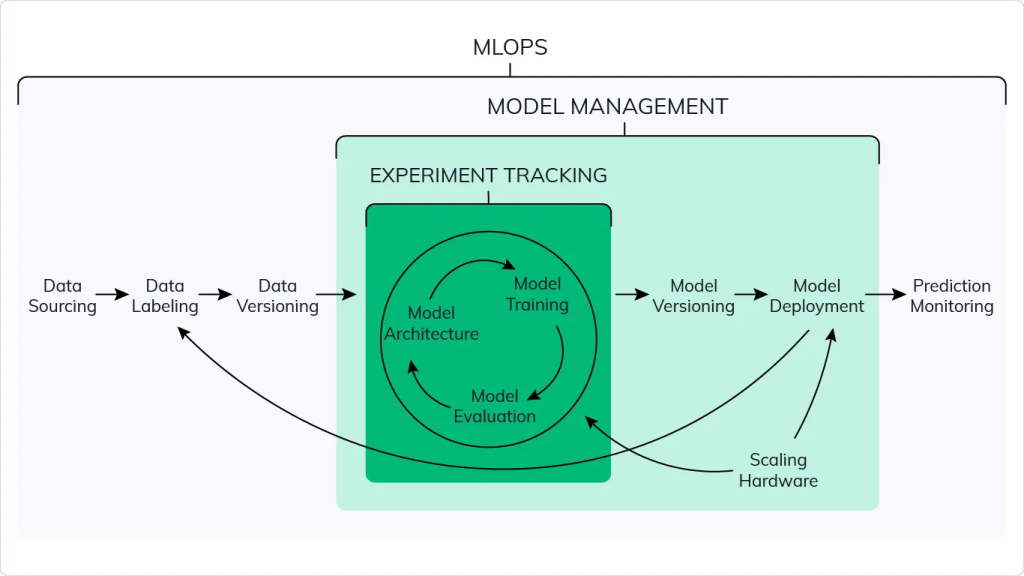
Implementing MLOps for data center operations requires a multidisciplinary approach that involves several stakeholders, including data scientists, DevOps engineers, and data center operators. Here are the steps involved in implementing MLOps for data center operations:
Step 1: Data Collection and Preparation
The first step in implementing MLOps for data center operations is to collect and prepare data. This involves selecting relevant data sources, cleaning and preprocessing the data, and storing it in a format that’s suitable for ML models.
Step 2: Model Development
The next step is to develop ML models that can predict system failures and optimize resource allocation. This involves selecting appropriate ML algorithms, training the models on the prepared data, and evaluating their performance.
Step 3: Model Deployment
The third step is to deploy the ML models in the data center environment. This involves integrating the models with existing data center infrastructure, testing the models in a staging environment, and deploying them in the production environment.
Step 4: Model Monitoring
The fourth step is to monitor the performance of the deployed models in real-time. This involves collecting performance metrics, detecting anomalies, and triggering alerts when necessary.
Step 5: Model Maintenance and Improvement
The final step is to maintain and improve the deployed models. This involves updating the models with new data, retraining the models when necessary, and continuously monitoring their performance.
Conclusion
MLOps is a powerful tool for data center operators who want to improve their operational efficiency and reduce downtime. By using ML models to predict and prevent system failures, automate resource allocation, and monitor system performance in real-time, MLOps can help data center operators achieve their goals. Implementing MLOps for data center operations requires a multidisciplinary approach that involves several stakeholders, including data scientists, DevOps engineers, and data center operators. With the right approach, MLOps can transform your data center operations and help you stay ahead of the competition.
