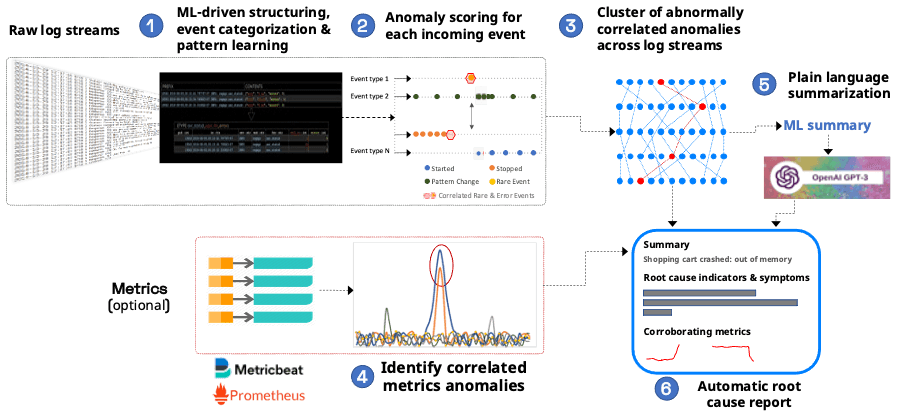
Are you tired of manually sifting through log files to find errors and anomalies? Do you want to streamline your log analysis process and optimize your operations? Look no further than MLOps.
MLOps, or Machine Learning Operations, is the practice of applying machine learning algorithms and techniques to the development, deployment, and maintenance of software systems. In the context of log analysis, MLOps can help automate the process of identifying and resolving issues in log files.
What is log analysis?
Before diving into MLOps, let’s first define what log analysis is. Log files are records of events that occur within a software system, such as errors, warnings, and informational messages. Log analysis involves reviewing these files to identify patterns, anomalies, and other information that can help improve the system’s performance and stability.
The challenges of manual log analysis
Manual log analysis can be a time-consuming and error-prone process. With large volumes of log data to sift through, it can be difficult to identify important information and prioritize issues. Additionally, human analysts may miss subtle patterns or anomalies that could indicate underlying issues.
The benefits of MLOps for log analysis
MLOps can help overcome the challenges of manual log analysis by automating the process of identifying and resolving issues. By applying machine learning algorithms to log data, MLOps can identify patterns and anomalies that may be difficult for human analysts to spot. Additionally, MLOps can prioritize issues based on their severity and impact, allowing teams to focus on the most critical issues first.
How to implement MLOps for log analysis
Implementing MLOps for log analysis involves several steps:
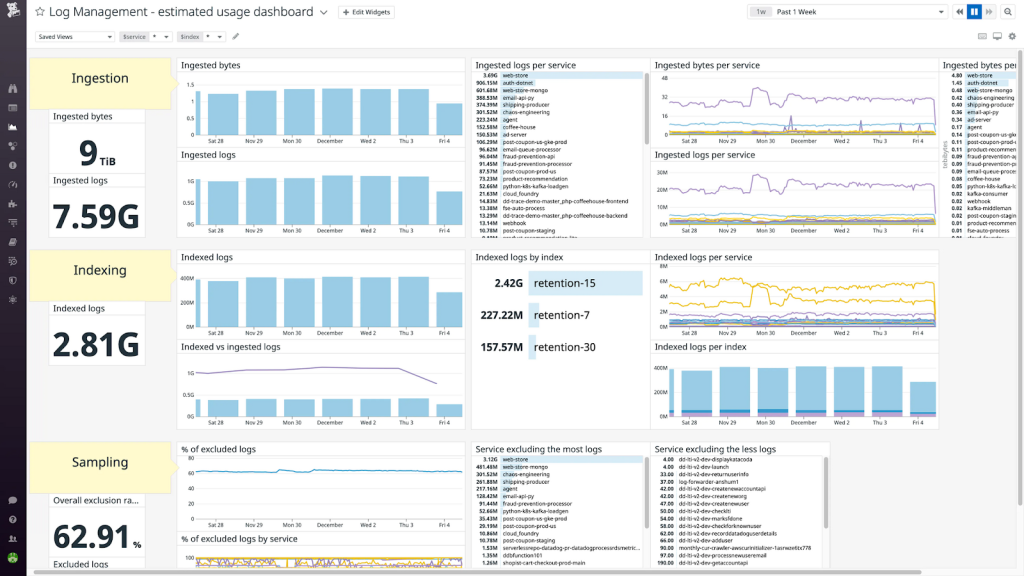
- Collect log data: The first step is to collect log data from your software system. This can be done using a variety of tools and techniques, such as log aggregators or custom scripts.
- Preprocess data: Once you have collected log data, you need to preprocess it to prepare it for analysis. This may involve cleaning and normalizing the data, as well as splitting it into training and testing sets.
- Train machine learning models: The next step is to train machine learning models on the log data. This involves selecting appropriate algorithms and tuning their parameters to optimize performance.
- Deploy models: Once you have trained machine learning models, you need to deploy them in your production environment. This may involve integrating them into your existing log analysis tools or building custom solutions.
- Monitor and update models: Finally, you need to monitor and update your machine learning models to ensure they continue to perform effectively over time. This may involve retraining models on new data or fine-tuning their parameters based on feedback from production.
Conclusion
MLOps can be a powerful tool for optimizing log analysis and improving software system performance and stability. By automating the process of identifying and resolving issues in log files, MLOps can save time, reduce errors, and improve overall efficiency. While implementing MLOps for log analysis can be complex, the benefits are well worth the investment. So why not give it a try and see how MLOps can transform your log analysis process?
