How to Change PHP Version in Ubuntu Server?

Introduction

Hey there! Are you struggling with changing the PHP version on your Ubuntu server? Don’t worry, I’ve got you covered! In this blog post, I’m going to walk you through the step-by-step process of changing the PHP version on your Ubuntu server, and I’ll even provide live examples to make it easier for you. So, let’s dive right in!

Why Change PHP Version?

Before we get into the nitty-gritty of changing the PHP version, let’s quickly discuss why you might want to do this. Upgrading or downgrading your PHP version can be necessary for various reasons:

  1. Compatibility: Some applications or frameworks require specific PHP versions to function properly. Changing the PHP version allows you to make sure your applications are compatible.
  2. Performance: Newer PHP versions often come with performance improvements and optimizations. Upgrading your PHP version can help boost the performance of your server and applications.
  3. Security: Older PHP versions may have security vulnerabilities that have been patched in newer versions. By upgrading to a newer PHP version, you can ensure the security of your server and applications.

Now that you understand the importance of changing the PHP version, let’s get into the steps!

Method 1: Change PHP Version

Change php version by following command:

sudo update-alternatives --config php

you have to choose from the list below:
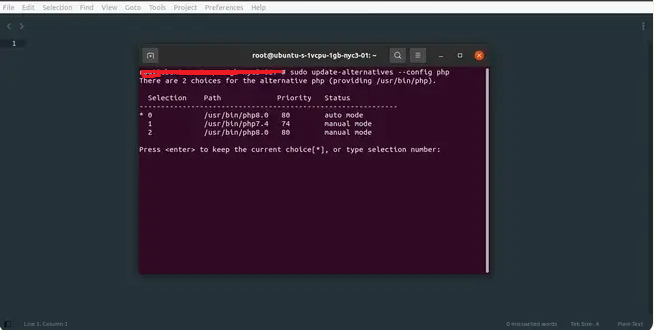
let’s restart server:

sudo service apache2 restart

Method 2: Change PHP Version

you need to a2dismod old version and a2enmod new php version so let’s run following command:

sudo a2dismod php7.3
sudo a2enmod php7.4

let’s restart server:

sudo service apache2 restart

Method 3: Change PHP Version

You can direct change php version by following command:

sudo update-alternatives --set php /usr/bin/php7.4

restart server:

sudo service apache2 restart

I hope it will help you ..!!!

Related Posts

Modern Cloud DataOps Platforms for Reliable Data Pipelines

Introduction Modern organizations depend heavily on data. Every department, from finance and sales to healthcare, manufacturing, marketing, and customer support, needs reliable data to make better decisions….

Read More

Advanced DataOps Monitoring Tools for Enterprises: A Comprehensive Implementation Guide

Introduction Enterprise data environments are becoming more complex as organizations depend on cloud platforms, data lakes, data warehouses, real-time pipelines, analytics tools, and automated workflows. When one…

Read More

The Ultimate Share Market for Beginners Guide to Smart Returns

Entering the world of equity investing can feel like stepping into a foreign country where everyone speaks a different language. The flashing tickers, fast-moving financial news charts,…

Read More

Evaluating SEO Reporting Software: Must-Have Features for Modern Enterprise

Introduction Modern marketing teams, digital agencies, and e-commerce brands juggle multiple disjointed tools to manage their online footprint. Hopping between single-purpose tools for keyword tracking, asset storage,…

Read More

Platform Engineering and GitOps: Enterprise Guide to Modern Delivery

Introduction DevOps has evolved from a niche engineering practice into a boardroom priority that directly impacts customer experience, revenue, and competitiveness. Yet many enterprises still struggle to…

Read More

Platform Engineering vs DevOps: The New Cloud Architecture Shift.

Introduction Modern software engineering moves at breakneck speeds. Organizations must deploy features rapidly while maintaining total system availability. Transitioning away from legacy architectures toward modern cloud infrastructure…

Read More
Subscribe
Notify of
guest
0 Comments
Oldest
Newest Most Voted
Inline Feedbacks
View all comments
0
Would love your thoughts, please comment.x
()
x