How to Configure Virtual Hosts in XAMPP

XAMPP is a popular development environment that includes Apache, MySQL, PHP, and Perl. It allows developers to create and test web applications locally before deploying them to a production server. One of the key features of XAMPP is the ability to set up virtual hosts, which allows you to run multiple websites on the same local server. In this blog post, we’ll discuss how to configure virtual hosts in XAMPP on Windows.
Setting Up Virtual Hosts in XAMPP:

  1. Locate the httpd-vhosts.conf File: Open your XAMPP installation directory and navigate to the apache\conf\extra folder. Inside this folder, you’ll find the httpd-vhosts.conf file. This file is used to define virtual hosts for your Apache server.
  2. Edit the httpd-vhosts.conf File: Open the httpd-vhosts.conf file in a text editor such as Notepad. By default, this file may be empty or contain some example configurations. You’ll need to add your virtual host configurations to this file.
  3. Define Virtual Hosts: To define a virtual host, use the <VirtualHost> directive followed by the IP address and port number of your local server. Here’s an example of a basic virtual host configuration:
<VirtualHost *:80>
    ServerAdmin webmaster@example.com
    DocumentRoot "C:/xampp/htdocs/example"
    ServerName example.local
    ErrorLog "logs/example-error.log"
    CustomLog "logs/example-access.log" common
    <Directory "C:/xampp/htdocs/example">
        Options Indexes FollowSymLinks
        AllowOverride All
        Require all granted
    </Directory>
</VirtualHost>

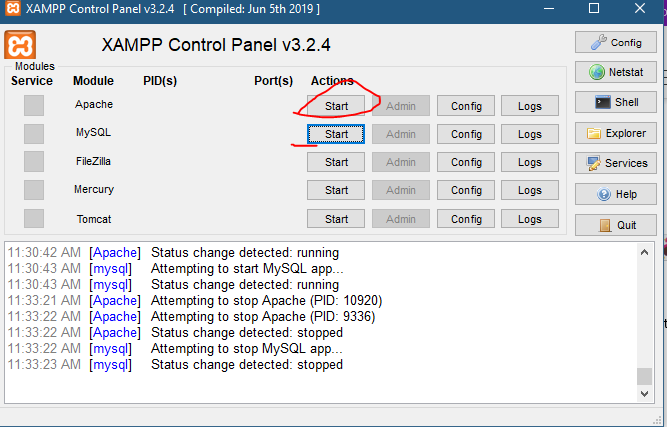
Turn off the XAMPP server (apache, mySQL)
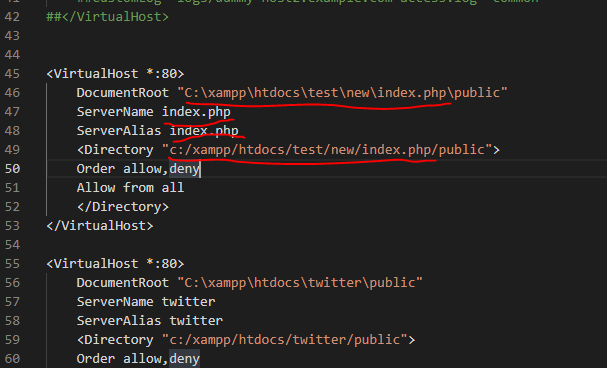
 C:\xampp\apache\conf\extra\httpd-vhosts.conf
Hopefully, It will help you ..!!!

Related Posts

Ask a Doctor Online: A Simple Guide to Virtual Healthcare

In our fast-paced world, the traditional trip to a doctor’s office isn’t always the most practical first step when health concerns arise. Whether you are dealing with…

Read More

Best Free Programming Ebooks to Learn Software Development

Learning modern technology can feel overwhelming when tutorials are scattered across dozens of websites. Many software developers, engineering students, and IT professionals struggle to find comprehensive study…

Read More

FinOps Training: Understanding Cost Visibility and Optimization

Introduction Moving workloads to the cloud can simplify infrastructure management, but it can also introduce a new financial challenge. Teams can provision resources whenever they need them,…

Read More

The Architecture of Intelligent DataOps: From Ingestion to Automation

Introduction Modern organizations run on distributed data ecosystems. On any given day, an enterprise environment ingests, transforms, and serves petabytes of records sourced from transactional databases, external…

Read More

Transforming Data Reliability: How DataOps Platforms Drive Proactive Monitoring

Introduction Traditional monitoring focuses almost entirely on infrastructure availability and binary job execution states—whether a server is up or whether a task completed. However, modern distributed environments…

Read More

Navigating Pipeline Risks with Expert DevSecOps Consulting Services

Software delivery moves faster today than at any point in technological history. High-performing engineering organizations push code changes to production multiple times a day using automated deployment…

Read More
Subscribe
Notify of
guest
0 Comments
Oldest
Newest Most Voted
Inline Feedbacks
View all comments
0
Would love your thoughts, please comment.x
()
x