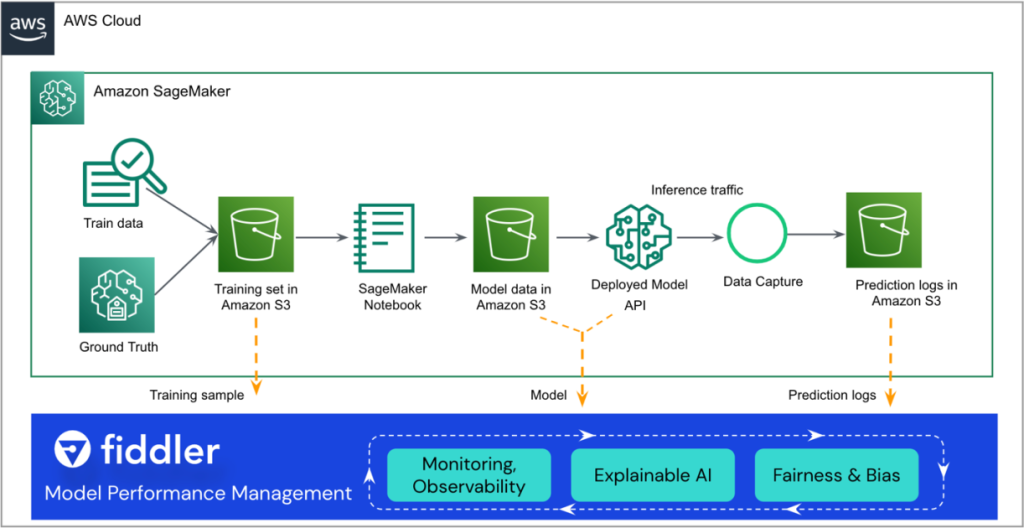
As the world of technology continues to evolve, companies are increasingly relying on machine learning to optimize their operations. Amazon Web Services (AWS) is no exception, and has been using machine learning operations (MLOps) to improve monitoring and observability. In this article, we will explore how AWS is leveraging MLOps to improve monitoring and observability, and how this technology can benefit businesses.
Understanding MLOps
Before diving into how AWS is using MLOps in monitoring and observability, it is important to understand what MLOps is. MLOps is the practice of applying DevOps principles to machine learning systems. This includes automating the training and deployment of machine learning models, as well as monitoring and maintaining these models over time.
Leveraging MLOps for Monitoring and Observability
AWS has been using MLOps to improve monitoring and observability in a number of ways. One of the key benefits of MLOps is that it allows businesses to detect and respond to issues more quickly. By monitoring machine learning models in real-time, AWS can quickly identify any issues or anomalies and take action to resolve them.
Another way that AWS is using MLOps is by leveraging machine learning to improve observability. By analyzing data from a wide range of sources, including logs, metrics, and traces, AWS can gain a deeper understanding of how its systems are performing. This allows the company to identify bottlenecks and other issues that may be impacting performance, and take action to address them.
Benefits of MLOps for Businesses
There are a number of benefits that businesses can derive from using MLOps. One of the key benefits is improved efficiency. By automating the training and deployment of machine learning models, businesses can save time and reduce the risk of errors. Additionally, by monitoring these models in real-time, businesses can respond to issues more quickly, which can help to minimize downtime and other disruptions.

Another benefit of MLOps is improved accuracy. By leveraging machine learning to analyze data from a wide range of sources, businesses can gain a more accurate understanding of how their systems are performing. This can help to identify issues that may be impacting performance, and take action to address them.
Conclusion
In conclusion, AWS is using MLOps to improve monitoring and observability, which can have a number of benefits for businesses. By leveraging machine learning to monitor systems in real-time, AWS can quickly detect and respond to issues, which can help to minimize downtime and other disruptions. Additionally, by analyzing data from a wide range of sources, AWS can gain a deeper understanding of how its systems are performing, which can help to identify and address issues that may be impacting performance. As technology continues to evolve, it is likely that more businesses will turn to MLOps to optimize their operations.
