In the world of internet communication, HTTP and HTTPS are two protocols commonly used for transmitting data between a web server and a client’s browser. While they serve the same fundamental purpose, there are significant differences between them, particularly in terms of security. In this blog post, we’ll explore the disparities between HTTP and HTTPS and why the latter has become the preferred choice for secure web communication.
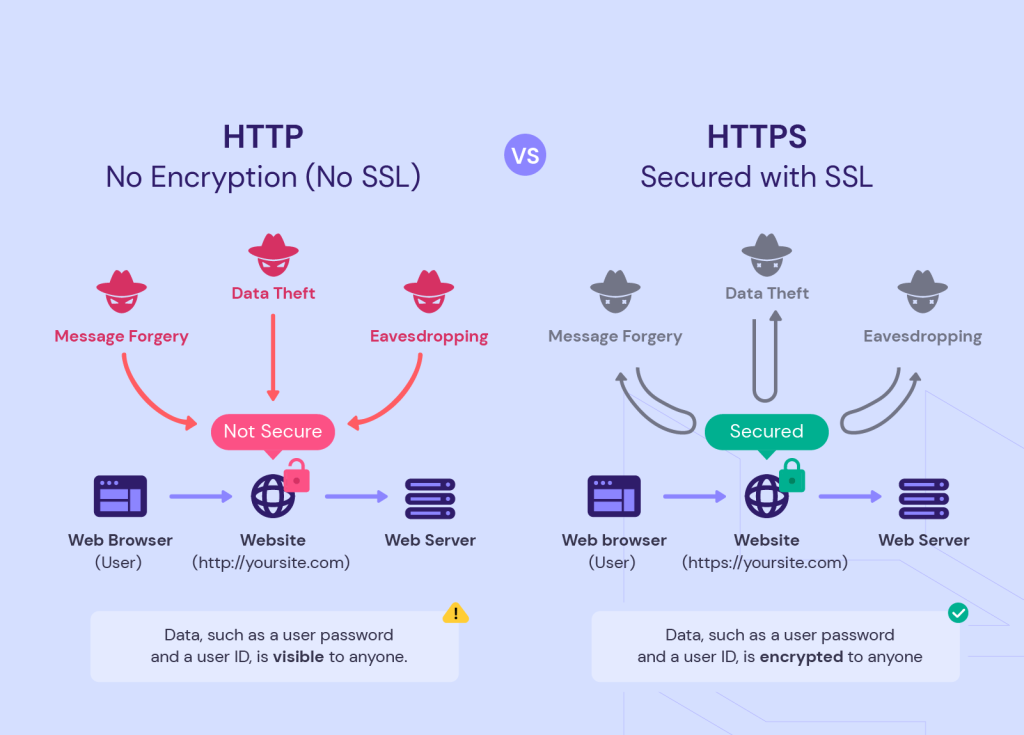
HTTP (Hypertext Transfer Protocol):
HTTP, which stands for Hypertext Transfer Protocol, is the foundation of data communication on the World Wide Web. It is a protocol that defines how information is transmitted and formatted between a web server and a client’s browser. When you enter a URL into your browser’s address bar, it sends an HTTP request to the server, which then responds by sending back the requested webpage’s content.
- Statelessness: HTTP is stateless, meaning that each request from a client to a server is independent and unrelated to previous requests. This simplicity allows for faster communication but does not inherently support the storage of session data between requests.
- Lack of Encryption: HTTP does not provide data encryption during transmission, which means that the information exchanged between the client and server is sent in plain text. This lack of encryption makes HTTP vulnerable to various security threats, such as eavesdropping and data tampering.
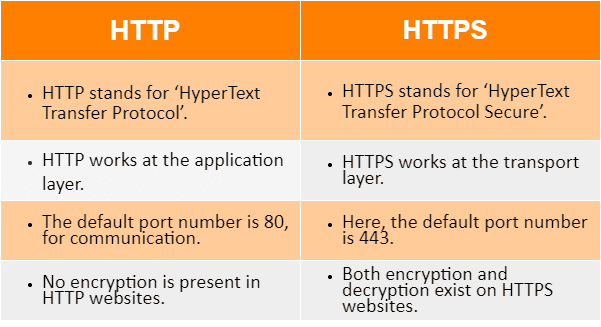
HTTPS (Hypertext Transfer Protocol Secure):
HTTPS, or Hypertext Transfer Protocol Secure, is an extension of HTTP with added security features. It uses SSL/TLS (Secure Sockets Layer/Transport Layer Security) encryption to secure the communication between the client and server. When a website uses HTTPS, the data exchanged between the client and server is encrypted, making it significantly more difficult for attackers to intercept or manipulate.
- Data Encryption: The primary advantage of HTTPS over HTTP is its ability to encrypt data during transmission. SSL/TLS encryption ensures that sensitive information, such as login credentials, credit card numbers, and personal data, remains confidential and secure from unauthorized access.
- Authentication: HTTPS provides a mechanism for server authentication, allowing clients to verify the identity of the server they are communicating with. This helps prevent man-in-the-middle attacks, where a malicious actor intercepts communication between the client and server.
- Trust and Security: Websites that use HTTPS are often perceived as more trustworthy and secure by users. The presence of a padlock icon in the browser’s address bar indicates that the connection is secure, instilling confidence in users to share sensitive information and conduct transactions online.
