Introduction
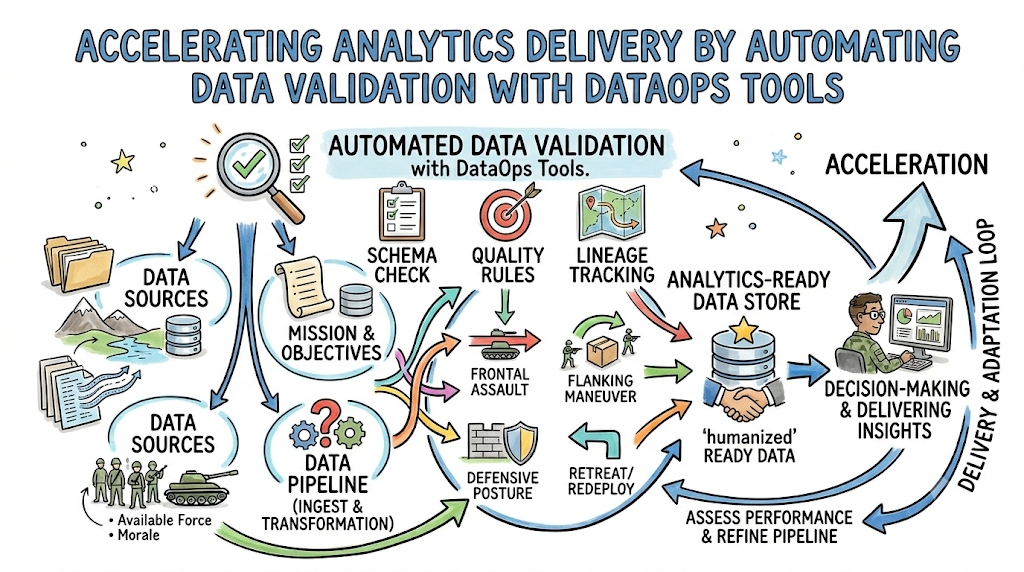
In the modern digital economy, high-quality, trusted data serves as the foundation for critical enterprise decisions. Organizations rely heavily on business intelligence, machine learning models, and real-time operational analytics to maintain a competitive edge. However, as the volume, variety, and speed of incoming data skyrocket, ensuring the integrity of this information becomes an immense technical bottleneck. Automating Data Validation with DataOps Tools provides a scalable, systematic path to capture data quality bugs at the ingestion layer before they corrupt downstream business applications. By building continuous automated checks into data movement workflows, engineering teams can guarantee data precision while boosting development velocity. To help data teams master these modern automated frameworks, TheDataOps.org delivers practical, real-world blueprints, architecture templates, and specialized technical guides. This deep dive breaks down how to integrate continuous validation checkpoints, deploy modern testing tools, and design resilient data environments.
Understanding Data Validation in Modern Data Operations
What is Data Validation?
Data validation is the automated process of checking ingested and transformed data against predefined rules, constraints, schemas, and historical statistical baselines. The core goal is to verify that incoming datasets are complete, cleanly formatted, syntactically accurate, and structurally compliant before they cross into production environments or target analytical storage layers.
[Incoming Data Stream] ---> [Automated Validation Checkpoint] ---> [Valid: Target Warehouse]
                                        |
                                        +------------------------> [Invalid: Quarantine Area]
Why Data Quality Matters
High-velocity corporate data engines are useless if the information floating inside them is fundamentally broken. Data quality matters because it represents the raw material fueling corporate strategy. If your underlying records are riddled with errors, every downstream report, metric dashboard, and predictive AI model will yield flawed, unreliable conclusions.
Common Data Quality Issues
Data pipelines regularly encounter unexpected operational anomalies, including:
- Null Values in Primary Keys: Vital identification fields entering databases completely blank.
- Malformed Strings: Inconsistent phone numbers, scrambled email layouts, or broken postal codes.
- Out-of-Bound Numeric Values: Negative pricing variables, impossible ages, or extreme financial outliers.
- Stale Telemetry Feeds: IoT data or transactional logs stalling halfway through transit due to API network timeouts.
- Schema Drifts: Upstream application developers changing a column data type from an integer to a string without warning downstream teams.
Business Impact of Poor-Quality Data
When corrupted records bypass traditional monitoring barriers, the corporate damage is often immediate and expensive. Operational teams waste thousands of engineering hours hunting down bugs across distributed microservices. More critically, bad data leads directly to regulatory compliance fines, inaccurate financial reporting, misallocated marketing budgets, and broken customer experiences.
What Is DataOps?
Definition and Principles
DataOps is an agile, process-oriented methodology that combines data engineers, data scientists, and operational analysts to improve the quality, speed, and predictability of data analytics delivery. Borrowing heavily from DevOps, agile manufacturing, and statistical process control, DataOps focuses on continuous delivery, automated testing, version control, and collaborative metadata management.
Relationship Between DataOps and Data Quality
In traditional setups, data quality is treated as a separate post-processing chore handled by siloed compliance teams. DataOps turns this structure on its head by integrating data quality management directly into every stage of the development pipeline. Quality checking becomes a continuous, living component of code execution rather than an isolated afterthought.
DataOps Versus Traditional Data Management
Traditional data management relies heavily on bureaucratic governance boards, rigid document templates, and periodic manual code reviews. DataOps replaces these slow, human-centric gates with automated validation testing, declarative code configurations, continuous integration pipelines, and real-time observability dashboards.
Why Automation is Central to DataOps
Humans cannot scale to validate billions of distinct event lines shifting through complex cloud architectures every single minute. Automation serves as the vital engine of DataOps because it removes human bias, eliminates repetitive manual engineering tasks, and executes testing routines instantly at scale.
Why Automate Data Validation?
Relying on developers to manually write custom SQL queries to check new production tables is a major operational risk. Automating Data Validation with DataOps Tools shifts organizations to a reliable, proactive operational model:
- Massive Speed and Scalability: Automated testing suites process terrabytes of unstructured and structured files in parallel across cloud nodes instantly.
- Unmatched Verification Accuracy: Programmatic checks evaluate every single database row and column according to precise statistical constraints, catching minor bugs that escape human spot checks.
- Drastic Manual Effort Reduction: Engineers stop spending hours writing repetitive testing scripts and focus on building features and scalable ingestion pipelines.
- Continuous Quality Assurance: Data assets are verified at every point in the data lifecycle—from initial landing files down to final calculated metric views.
- Rapid Issue Detection and Isolation: The system flags an anomaly the moment it enters a pipeline, preventing toxic source data from mixing with healthy target tables.
Key Types of Data Validation
An enterprise data validation automation framework must run diverse testing routines to comprehensively protect target datasets.
- Schema Validation: Verifies that column names, operational definitions, and relational layouts perfectly match declared structural architectures.
- Data Type Validation: Confirms that incoming fields contain the correct technical types (e.g., verifying a timestamp column contains valid date formats rather than text strings).
- Completeness Checks: Counts row volumes and scans key columns to ensure mandatory fields contain no null variables or missing blocks.
- Consistency Checks: Cross-references values between separate database systems to ensure related records tell the exact same story across platforms.
- Accuracy Validation: Compares metric values against realistic physical ranges or historical mathematical averages to catch impossible numbers.
- Duplicate Detection: Scans primary keys and compound fields to flag and isolate duplicate records before they skew final analytics.
- Referential Integrity Validation: Confirms that foreign keys across transactional tables successfully link back to valid primary entries in core dimensions.
- Business Rule Validation: Evaluates records against custom corporate logic, such as ensuring a ship date never sits chronologically before an order date.
How DataOps Tools Automate Data Validation
Modern DataOps tools use structured, declarative configurations to execute validation logic automatically across complex software fabrics.
Automated Testing Workflows
Engineers declare data assertions in simple text files (like YAML or JSON). The DataOps platform automatically compiles these files into optimized database queries, running testing logic seamlessly against your target datasets.
Validation Checkpoints and Gates
Platforms establish strict validation gates at different transition layers in a DataOps pipeline. If an incoming file fails a critical test at the staging layer, the validation gate automatically freezes the pipeline, quarantines the bad records, and prevents corrupted tables from reaching public views.
[Staging Data] ---> [Schema Check] ---> PASS ---> [Transformations]
                          |
                        FAIL
                          v
               [Quarantine & Slack Alert]
Continuous Data Monitoring and Observability
Instead of running tests only during data loads, continuous data monitoring utilities look at data properties round-the-clock. These observability systems analyze parameters like row ingestion speeds, table volume shifts, and schema changes in real time.
Data Quality Scoring and Metrics
Validation software aggregates test results to generate real-time data quality scores for corporate data assets. These metrics give teams an instant look at overall pipeline health, making it simple to track long-term reliability trends.
Alerting and Automated Remediation
When an assertion fails, DataOps software alerts engineering teams instantly through communication tools like Slack, PagerDuty, or Jira. Advanced setups can automatically run remediation scripts, such as spinning up an isolated backup cluster or rolling back a bad transformation step.
Pipeline Orchestration Integration
Data validation rules do not sit in a silo. They embed natively inside pipeline orchestration tools like Apache Airflow, Prefect, or Dagster, running as dependent nodes directly within your core processing graphs.
Essential DataOps Tools for Data Validation
Building a dependable data validation architecture requires combining distinct open-source frameworks and enterprise observability tools.
Data Validation Tools Matrix
| Tool Category | Primary Purpose | Key Benefits | Typical Use Cases |
| Testing Frameworks (e.g., Great Expectations, dbt-tests) | Programmatic assertion testing on physical datasets. | Simple, readable test declarations with automated data documentation. | Verifying analytical tables directly inside Snowflake or BigQuery. |
| Data Observability Platforms (e.g., Monte Carlo, Acceldata) | Automated anomaly tracking using machine learning baselines. | Minimal manual setup with instant warning alerts for schema drift. | Monitoring complex, multi-layered cloud data environments. |
| Pipeline Orchestrators (e.g., Apache Airflow, Dagster) | Managing data processing jobs and running testing sequences. | Reliable job timing, dependency tracing, and automated error handling. | Controlling multi-stage ETL pipelines across enterprise apps. |
| Metadata Solutions (e.g., OpenMetadata, Atlan) | Tracking data history, asset catalogs, and compliance rules. | Complete view of data lineage with explicit data asset tracking. | Tracing how bad data flows down to final business reports. |
Data Validation Workflow in a DataOps Pipeline
Implementing automated data testing requires establishing structured verification checks at five distinct phases of your data movement pipeline.
Step 1: Ingestion Validation (The Entry Gate)
Raw files land in data lakes from external sources. The platform immediately checks schema layout, table row volume, and file sizes before running any ingestion scripts.
Step 2: Transformation Validation (The Processing Gate)
Data moves through SQL or PySpark transformation layers. The system evaluates intermediate datasets right away, checking columns for null entries, enforcing business rules, and verifying referential integrity.
Step 3: Deep Quality Testing (The Production Gate)
Transformed data moves into final production tables. The framework runs thorough validation checks across full datasets, verifying mathematical values and flagging duplicates before opening access to users.
Step 4: Continuous Data Observability (The Monitoring Phase)
Observability agents monitor production tables 24/7. They track background shifts, analyzing parameters like ingestion frequencies and statistical variances to spot hidden system drift.
Step 5: Reporting, Governance, and Improvement (The Feedback Loop)
Test summaries feed directly into central data quality dashboards. Engineers use this metric history to refine testing thresholds, update data governance rules, and continuously optimize data reliability.
Real-World Use Cases
Financial Services Transaction Tracking
A multinational banking platform ingests millions of credit card transactions daily from disparate payment clearers. The DataOps validation suite screens records instantly as they stream into cloud infrastructure, catching negative currency values, invalid merchant codes, and duplicate transactions before they corrupt downstream financial ledger metrics.
Healthcare Analytics and Patient Records
A hospital system aggregates electronic health records across multiple clinics into a centralized cloud data warehouse. Automated validation gates confirm that patient identity tags match master formatting templates and verify that diagnostic codes conform to exact regulatory standards, preventing dangerous data mismatches in patient care analytics.
E-Commerce Personalization and Logistics
A retail brand uses automated data validation to protect their machine learning recommendation algorithms. The DataOps platform isolates corrupted inventory logs and incomplete clickstream files at the ingestion layer, ensuring the recommendation models train only on pristine, reliable behavioral records.
Benefits of Automating Data Validation
- Unmatched Data Reliability: Business teams operate with complete confidence, knowing dashboards are backed by clean, fully verified data.
- Accelerated Analytics Delivery: Automated testing removes long manual review delays, helping data teams deploy pipeline updates to production much faster.
- Smarter Corporate Decisions: Leaders base strategic plans on accurate metrics, eliminating costly mistakes caused by corrupted reports.
- Reduced Operational Risk: Pipeline validation catches structural bugs early, keeping data environments compliant with strict data privacy laws.
- Higher Team Productivity: Data engineers escape the frustrating cycle of reactive firefighting and focus on building high-value features.
Challenges and Limitations
- Highly Complex Data Environments: Managing validation rules across hybrid setups with multi-cloud clusters and legacy databases requires careful planning.
- Frequent Upstream Schema Changes: When application teams modify database layouts without warning, it can cause downstream validation tests to fail.
- Dealing with Tool False Positives: Setting validation thresholds too tightly can trigger waves of harmless error alerts, causing alert fatigue across your engineering team.
Practical Solutions
Address these friction points by implementing machine learning tools that automatically adapt validation thresholds based on historical trends, and establish cross-team governance practices to manage schema updates safely.
Common Mistakes Organizations Make
- Relying Solely on Post-Load Manual Checks: Finding data bugs after they reach executive dashboards forces teams into a stressful, reactive firefighting mode.
- Ignoring Real-Time Data Observability: Relying on simple, point-in-time schema assertions means you miss slower, subtle data quality drift over time.
- Operating Without Centralized Validation Standards: Allowing individual engineering teams to write disconnected testing scripts creates major inconsistencies in data metrics across the company.
Best Practices for Data Validation Automation
- Shift-Left Data Quality Practices: Run validation tests as early as possible in your pipelines to catch and isolate data issues right at the ingestion layer.
- Implement Continuous Monitoring: Use automated observability tools alongside point-in-time checks to track metric health round-the-clock.
- Embed Testing Directly into CI/CD Workflows: Integrate your data validation checks into your continuous deployment setups, testing code changes against production-like data before rollout.
- Track Long-Term Quality Analytics: Monitor data quality trends over time to identify systemic pipeline weaknesses and plan long-term infrastructure improvements.
Measuring Success in Automated Data Validation
To evaluate how well your automated data testing strategy works, monitor these key performance indicators:
- Data Quality KPI Metric: The ratio of fully verified, clean records to total ingested data rows across your infrastructure.
- Error Reduction Rate: The drop in customer-reported data errors after deploying your DataOps validation tools.
- Pipeline Reliability Indicator: The percentage of scheduled data processing jobs that complete successfully without data quality failures.
- Mean Time to Detection (MTTD): The time it takes your automated testing suite to identify and flag an incoming data bug.
Future of Data Validation and DataOps
The data engineering space is evolving away from manually written testing constraints toward fully automated, intelligent validation models.
AI-Driven Data Quality and Smart Remediation
Future platforms will feature self-healing data pipelines. When an AI-powered observability engine detects a broken data format or schema shift, it will automatically modify the ingestion configuration and correct the records on the fly without breaking downstream operations.
Advanced Automated Governance Systems
As global privacy laws grow stricter, DataOps tools will automatically classify sensitive information, check for regulatory compliance, and apply data masking rules in real time as data flows through your ingestion layers.
Career Opportunities in DataOps and Data Quality
The widespread focus on data reliability has created a strong market for technical professionals who specialize in data quality automation.
Core Roles and Responsibilities
- DataOps Engineer: Designs, deploys, and maintains the automation pipelines, CI/CD infrastructure, and testing setups for data teams.
- Data Quality Engineer: Specializes in writing comprehensive test cases, defining data validations, and managing data compliance dashboards.
- Analytics Engineer: Builds clean, transformed data models and embeds structural validation checks within enterprise data warehouses.
Skill Path and Learning Roadmap
To succeed in this expanding field, focus on mastering SQL for data manipulation, python for automation scripting, orchestration utilities like Apache Airflow, and specialized testing frameworks like Great Expectations or dbt.
Frequently Asked Questions
- What is the difference between data validation and data profiling?
Data validation checks incoming files against explicit formatting rules and schema constraints to block bad data. Data profiling is an exploratory statistical review used to understand the baseline characteristics, trends, and patterns of a new dataset.
- How do DataOps tools prevent schema drift from breaking downstream analytics?
When an upstream system modifies its database columns, DataOps validation software catches the structural change at the ingestion layer, flags it against your saved schema definition, and pauses the pipeline before the bad data can break production tables.
- Can automated data validation tools process completely unstructured data?
Yes. Modern testing engines parse unstructured files like JSON strings, XML blocks, or application logs by applying pattern-matching rules and regular expressions to verify required keys and data values.
- Where is the ideal place to deploy validation checkpoints inside an enterprise pipeline?
Checkpoints should be placed at every key boundary: right after raw data lands in your staging layers, immediately following data transformation steps, and just before final production data is exposed to users.
- How do you prevent data testing routines from slowing down fast pipelines?
Teams can optimize pipeline performance by running simple metadata and structural checks on incoming streams in real time, while scheduling deep, resource-intensive validation tests on large tables during off-peak hours.
- What does it mean to “quarantine” data in a DataOps workflow?
Quarantining isolates records that fail validation checks by routing them into a separate, secure database table or directory. This keeps your main pipeline running smoothly while engineers investigate the broken data.
- Are open-source validation frameworks powerful enough for global enterprises?
Yes. Open-source frameworks like Great Expectations and dbt are widely used by global enterprises because they scale efficiently across modern cloud platforms like Snowflake, Databricks, and BigQuery.
- How does automated data validation support compliance with laws like GDPR?
Automated tools can continuously audit incoming data streams to flag unmasked personally identifiable information (PII), verify data retention limits, and ensure all ingested profiles comply with data privacy policies.
- What is a false positive error in data quality monitoring?
A false positive occurs when an automated testing rule flags a safe, normal variation in your data (such as an expected holiday shopping traffic surge) as a critical data quality failure.
- How should data engineers handle missing data variables in automated validation?
Depending on your business rules, validation systems can handle missing variables by substituting safe default values, applying mathematical averages, or routing the incomplete profiles directly to a quarantine folder.
Final Summary
Automating data validation with DataOps tools is essential for maintaining a reliable, modern data ecosystem. Shifting away from manual, reactive troubleshooting and embedding automated testing, clear validation gates, and continuous monitoring directly into your processing layers allows organizations to completely eliminate bad data issues, protect down-stream analytics, and accelerate feature delivery. Building a dependable, automated data operation requires a continuous focus on optimizing workflows and following solid engineering practices.
