Introduction
Stepping into the world of digital currencies often feels overwhelming when you encounter unfamiliar terms. One of the most critical concepts to grasp early on is how you store and manage your digital assets. Many newcomers mistakenly believe that digital tokens are stored directly inside a CryptoBlockCoins guide or on an online exchange platform. In reality, understanding the function of a crypto wallet is the true foundation of safe navigation in this space.
Unlike a physical leather wallet holding paper cash, digital storage tools do not actually contain physical coins. Instead, they interact with blockchain networks to manage your ownership rights securely. Whether you are exploring Bitcoin for beginners or diving into broader Web3 applications, mastering this tool is essential. This article breaks down everything you need to know about these digital storage tools, how they function, and best practices for keeping your assets secure.
2. What Is a Crypto Wallet?
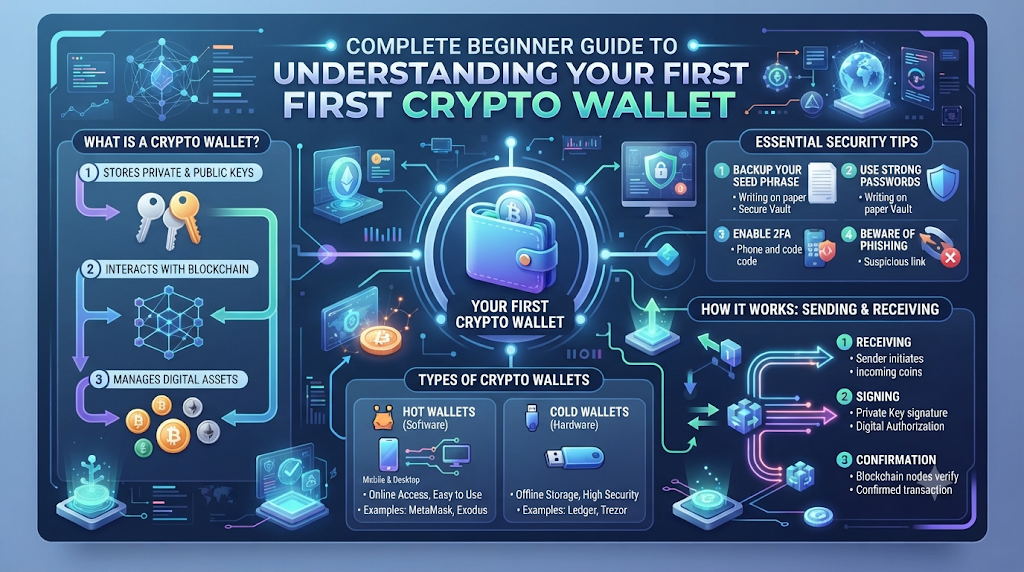
At its core, a crypto wallet is a digital tool that allows users to interact with various blockchain networks. Its primary purpose is to store cryptographic keys, which prove ownership of your digital assets and enable you to send and receive funds.
Basic Definition
Think of it as a digital equivalent of a secure banking app, but one that gives you complete control without relying on a traditional bank. The tool generates and stores your cryptographic credentials safely.
Why It Matters
Without a secure storage tool, you cannot participate in decentralized finance, interact with smart contracts, or transfer digital assets across a blockchain. It acts as your personal gateway to the entire decentralized ecosystem.
Who Should Understand It
Anyone looking to explore blockchain technology must understand how these storage tools operate. Whether you plan to hold assets long-term or participate in active crypto trading for beginners, proper custody knowledge prevents costly mistakes.
3. How Does a Crypto Wallet Work?
Understanding the mechanics behind these digital tools helps demystify how blockchain transactions occur. Transactions do not move physical files from one device to another; instead, they update ledger entries on a decentralized network.
- Generation of Keys: When you set up a new storage tool, it creates a unique pair of cryptographic keys consisting of a public address and a private key.
- Receiving Funds: You share your public address with others, similar to sharing an email address or bank account number, allowing them to send funds to you.
- Initiating a Transfer: When you want to send assets, you authorize the transaction using your private key.
- Signing the Transaction: The private key creates a unique digital signature that proves you own the funds without revealing the key itself.
- Blockchain Verification: The network verifies the signature against your public address, and once confirmed, the transaction is permanently recorded on the Ethereum blockchain or another relevant network.
4. Key Components of
Blockchain Network
A blockchain is a decentralized, distributed digital ledger that records transactions across a network of computers. Your storage tool serves as your personal interface to view and interact with this ledger.
Public and Private Keys
Your public key acts like your bank account number, while your private key acts like your secret password or PIN. Anyone can see your public address, but your private key must remain strictly confidential at all times.
Seed Phrases
Most modern storage setups generate a recovery seed phrase consisting of twelve to twenty-four random words. This phrase serves as the master backup key required to recover your funds if your device is lost or damaged.
5. Real-World Examples
To understand how these concepts apply in practice, consider everyday scenarios you might encounter as a beginner.
- Receiving Bitcoin: If a friend wants to send you funds, you open your application, copy your public receiving address, and share it with them. Once they complete the transfer, the transaction settles on the network, and your balance updates.
- Interacting with Decentralized Apps: When using decentralized finance platforms, your storage tool prompts you to approve interactions or token swaps securely, ensuring you authorize every action.
- Backing Up a Device: After setting up a new application, you write down your recovery seed phrase on a physical sheet of paper and store it in a secure location away from prying eyes.
6. Benefits and Limitations
Evaluating both the advantages and the inherent risks of digital storage tools ensures a well-rounded understanding.
Benefits
- User Sovereignty: You maintain absolute control over your digital assets without intermediaries.
- Global Accessibility: You can access and manage your funds from anywhere in the world with an internet connection.
- Transparency: All interactions are verifiable on public blockchain ledgers.
Limitations and Risks
- Self-Responsibility: If you lose your private credentials or seed phrase, no customer support team can reset your password or recover your funds.
- Technical Complexity: Beginners often find managing keys and understanding network fees intimidating at first.
- Target for Scammers: Because users control their own security, malicious actors frequently attempt phishing attacks to steal credentials.
7. Security and Safety Considerations
Maintaining robust security practices is the single most important habit for anyone interacting with digital assets.
Protecting Your Private Credentials
Never share your private key or recovery seed phrase with anyone, under any circumstances. Legitimate support staff, platforms, and developers will never ask for your seed phrase.
Avoiding Phishing and Fake Platforms
Always double-check website URLs, application names, and download links before installing any software. Scammers frequently create lookalike websites to trick users into downloading malicious applications.
Choosing the Right Storage Type
Understand the difference between hot storage tools, which connect to the internet via apps or browser extensions, and cold storage hardware devices, which keep your keys offline for enhanced security against online threats.
8. Common Mistakes Beginners Make
- Storing Seed Phrases Digitally: Saving your recovery phrase in cloud notes, emails, or smartphone screenshots exposes it to potential digital theft.
- Ignoring Small Test Transactions: Failing to send a small test amount before transferring large sums of digital assets can lead to permanent loss if an address is typed incorrectly.
- Using Untrusted Applications: Downloading unverified software from unofficial app stores increases the risk of malware exposure.
- Neglecting Software Updates: Failing to keep your device operating systems and applications updated leaves security vulnerabilities unpatched.
- Falling for Unrealistic Promises: Trusting platforms that promise guaranteed returns or risk-free profits often leads to financial loss.
- Failing to Understand Network Fees: Forgetting to account for transaction fees can leave your transactions stuck or unexecuted.
9.
| Feature | Hot Storage | Cold Storage |
| Connectivity | Connected to the internet | Offline hardware device |
| Convenience | High convenience for frequent use | Lower convenience, higher security |
| Best Suited For | Daily interactions and smaller amounts | Long-term holdings and large balances |
| Security Level | Moderate, vulnerable to online threats | High, protected from online malware |
10. Step-by-Step Beginner Guide
- Research Options: Learn about different types of storage tools, including mobile apps, browser extensions, and physical hardware devices.
- Choose a Reputable Provider: Select a well-reviewed, trusted application or hardware manufacturer with a strong security track record.
- Install and Initialize: Download the official software or set up your hardware device following the manufacturer’s official instructions.
- Backup Your Seed Phrase: Carefully write down your recovery seed phrase on paper and store it in a safe, offline location.
- Fund and Test: Transfer a small amount of digital assets to your public address to familiarize yourself with the transfer process.
11. Future Considerations
As blockchain technology and Web3 ecosystems continue to mature, user experience and security protocols are evolving rapidly. Developers are working on account abstraction, social recovery mechanisms, and biometric authentication to make self-custody more intuitive for everyday users. Institutional adoption and clearer regulatory frameworks will likely drive further innovation, reducing the technical friction that beginners currently face when managing digital assets.
Frequently Asked Questions
- What is the main difference between a hot and cold crypto wallet?
Hot storage tools remain connected to the internet through software applications, making them convenient for frequent use. Cold storage devices keep your private keys offline on physical hardware, providing maximum security against online hacking attempts.
- Can I lose my funds if I lose my phone or computer?
If your device breaks or gets lost, your funds remain secure on the blockchain as long as you have safely stored your recovery seed phrase, which allows you to restore your account on a new device.
- Are crypto wallets safe from hackers?
Security largely depends on your personal habits. While the underlying cryptography is secure, falling for phishing scams or exposing your private keys can compromise your safety.
- Do I have to pay fees when using a crypto wallet?
Yes, most blockchain networks require a small transaction fee, often called gas, to process and validate transfers across the decentralized network.
- Can a customer support team recover my lost password?
Because these tools are decentralized and non-custodial, no central authority or support team has access to your private keys or the ability to reset your password.
- What is a recovery seed phrase?
A recovery seed phrase is a sequence of random words generated by your storage tool that acts as the master backup key to restore your account and funds.
- Can I use multiple crypto wallets at the same time?
Yes, many users maintain multiple storage tools for different purposes, such as separating long-term holdings from daily decentralized application interactions.
- Is it necessary to buy a hardware device right away?
Beginners often start with reputable software applications for small amounts before investing in dedicated hardware devices for larger holdings.
- How do I find my public address to receive funds?
You can find your public address inside your application interface by selecting the receive option for the specific digital asset you wish to accept.
- Do I need to verify my identity to create a crypto wallet?
Most self-custody software tools do not require identity verification because they operate without a central account, unlike centralized cryptocurrency exchanges.
Conclusion
Understanding how a crypto wallet operates is an essential step for anyone looking to navigate the blockchain landscape with confidence. By keeping your private keys secure, practicing good digital hygiene, and prioritizing education over speculation, you can manage your digital assets safely. CryptoBlockCoins provides educational information only and does not provide financial or investment advice. Cryptocurrency markets can be volatile, so readers should conduct independent research and consider professional advice before making financial decisions.
