Database: Query Builder – Where Not Clauses

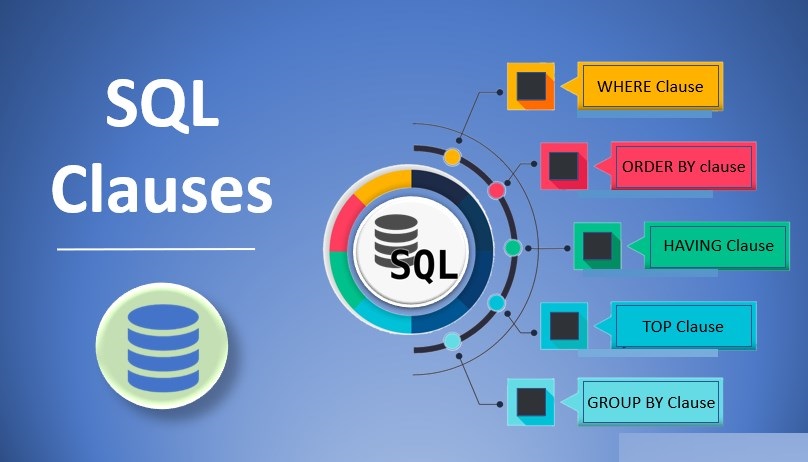
In SQL, the WHERE NOT clause is used to filter rows from a result set based on a condition that should not be met. It is a logical operator that negates the condition specified in the WHERE clause. The WHERE NOT clause is typically used in conjunction with other comparison operators or logical operators to perform more complex filtering in SQL queries.
Syntax:

The syntax for using the WHERE NOT clause in SQL is as follows:

SELECT column1, column2, ...
FROM table
WHERE NOT condition;
  • SELECT: Specifies the columns to be included in the result set.
  • FROM: Specifies the table from which to retrieve data.
  • WHERE: Specifies the condition that must be met for a row to be included in the result set.
  • NOT: Negates the condition specified in the WHERE clause.

Example:

Let’s assume we have a table named “employees” with columns such as “employee_id”, “first_name”, and “salary”. If we want to select all employees whose salary is not greater than 5000, we can use the WHERE NOT clause as follows:

SELECT employee_id, first_name, salary
FROM employees
WHERE NOT salary > 5000;

This query will return all the rows from the “employees” table where the salary is not greater than 5000.

The WHERE NOT clause can be combined with other operators such as “=”, “<>”, “<“, “>”, “<=”, “>=”, and logical operators such as AND, OR to create more complex conditions for filtering data in SQL queries.

It’s important to carefully construct the condition and consider the logical implications when using the WHERE NOT clause to ensure the desired results are obtained.

Related Posts

Site Reliability Engineering: Key Concepts, Tools, and Best Practices

Introduction Imagine your favorite video game crashes during a match. You feel annoyed because the game stopped working. Websites face this exact problem every single day. Millions…

Read More

The Future of Computer Operations: How Smart Systems Fix Problems

Every day, millions of people tap smartphone screens to navigate morning traffic, order groceries to their doorsteps, and transfer money between bank accounts in seconds. Behind every…

Read More

How DataOps Improves Alert Accuracy with AI Tools

Data pipelines run constantly to deliver numbers, reports, and dashboards. When something breaks, monitoring systems send alerts to data engineers. But when these notifications ring every ten…

Read More

Core Engineering Skills Needed to Master Data Pipeline Automation Systems

Introduction Imagine building a giant LEGO castle, but someone keeps swapping out your plastic bricks for blocks of melting ice. That is what working with raw digital…

Read More

Continuous Data Validation in DataOps: The Complete Architecture Guide

Continuous data validation is the systematic practice of asserting data correctness, schema consistency, and distribution integrity across every state boundary of an enterprise data pipeline. In DataOps,…

Read More

Implementing XOps: Key Pillars, Common Challenges, and Real-World Solutions

Introduction Modern engineering teams rarely run on pure application code alone. Enterprise software delivery now relies on distributed microservices, complex telemetry pipelines, machine learning inference engines, high-throughput…

Read More