Introduction
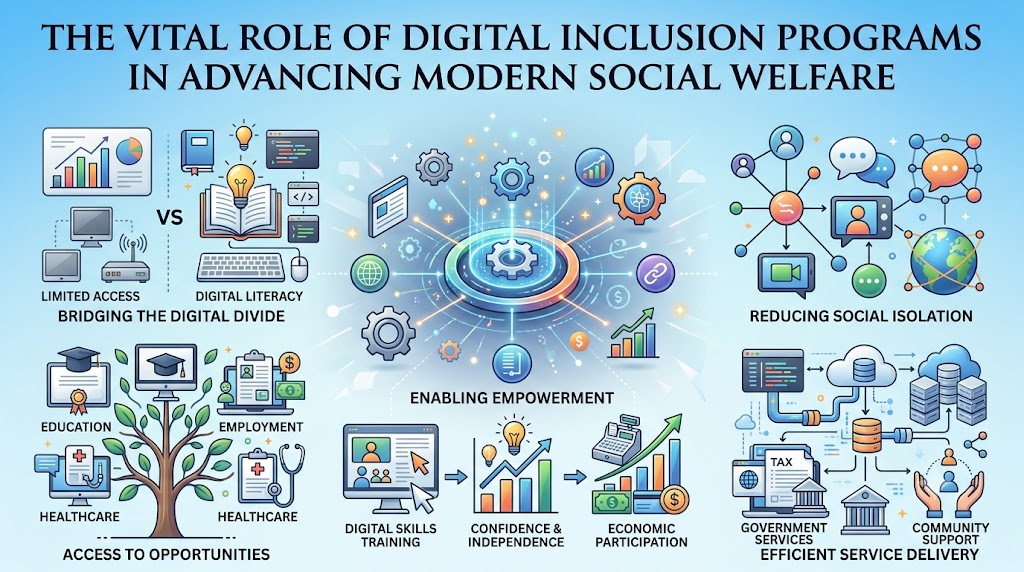
When local governments and public institutions digitize vital civic resources—from municipal court filings and welfare applications to public housing portals—they often assume the broader public can navigate these interfaces seamlessly. In reality, millions of residents in both rural towns and dense urban wards are shut out by structural gaps in home broadband, device affordability, and foundational digital literacy. When administrative access requires an internet connection that households cannot afford, digital transformation unintentionally creates civic disenfranchisement. Building sustainable, rights-respecting digital inclusion programs requires public officials, civic researchers, and community organizations to treat digital access as core public infrastructure, akin to water, transit, or power utilities. By coordinating public policy with grassroots community engagement, initiatives led by the Cotocus Foundation demonstrate how institutional stakeholders can build durable access systems that expand democratic participation and community self-determination.
Defining Digital Inclusion Programs from a Public Governance Viewpoint
From the vantage point of public administration and civic strategy, digital inclusion is not a discretionary social benefit. It is a prerequisite for functional civic participation, public safety administration, and democratic accountability.
A complete civic inclusion policy requires five institutional pillars:
- Universal Broadband as Public Infrastructure: Establishing unmetered, municipal-grade broadband connectivity options that treat digital access as an essential utility rather than an optional luxury.
- Equitable Hardware Allocation: Distributing reliable desktop computers and full-size laptops suited for administrative filings, civic engagement, and schoolwork, rather than assuming mobile smartphones can substitute for complete workstations.
- Contextual Civic Literacy Training: Funding ongoing educational programs through libraries and neighborhood centers to help residents evaluate public information, submit civic petitions, and access benefits securely.
- Universal Design and Language Standards: Requiring public agency portals to conform strictly to accessibility mandates, offering clean performance on low-bandwidth connections and complete multilingual translation.
- Institutional Support Systems: Funding public computer assistance desks in municipal buildings, libraries, and neighborhood hubs so residents can resolve technical roadblocks without paying commercial fees.
When civic planners neglect any single layer—such as launching an online benefits system without providing public access hubs or training—vulnerable residents are cut off from critical public assistance.
The Public Cost of Systemic Digital Exclusion
When public bodies shift services to digital channels without investing in community access, the resulting failures burden public budgets and erode institutional trust.
Administrative Inefficiency and Public Friction
When residents cannot use complex web forms, local government offices face backlogs of incomplete paperwork and long waiting lines. Investing in community digital readiness reduces administrative overhead and helps public agencies process claims efficiently.
Workforce Development and Municipal Revenue
Cities thrive when their residents have pathways to secure living-wage employment. When workers lack home internet or modern computer fluency, local businesses struggle to recruit qualified local talent, depressing household incomes and municipal tax bases.
Public Health and Emergency Communications
During municipal water contamination warnings, severe weather events, or public health crises, agencies rely on digital dashboards to distribute life-saving guidance. If households lack reliable connectivity, municipal alerts fail to reach the most vulnerable neighborhoods.
Democratic Engagement and Civic Legitimacy
When municipal budget hearings, planning commission debates, and town halls migrate online without accessible streaming and commenting channels, working families cannot voice their needs. Public policy then skews toward well-connected, affluent demographics.
The Civic Bridge: The Technology Nonprofit Organization
Public agencies often face bureaucratic constraints, while private vendors focus primarily on maximizing commercial profit. A civic-minded technology nonprofit organization acts as an essential intermediary, delivering public-interest technology with speed, empathy, and community accountability.
Civic-focused nonprofits follow an evidence-based operational cycle:
Civic Needs Assessment → Public Stakeholder Convening → Open-Source Pilot → Community Training → Policy Evaluation
Instead of locking public programs into rigid commercial software contracts, mission-driven organizations build flexible, community-grounded solutions. They collaborate directly with social workers, public librarians, and neighborhood leaders to identify real-world access barriers.
By remaining independent of profit incentives, technical nonprofits serve as trusted partners for municipal agencies, helping public leaders test new approaches to service delivery before deploying them at scale.
Institutional Anchors: Developing Robust Digital Literacy Programs
Digital training programs supported by public investments must deliver practical civic and economic skills. Effective digital literacy programs focus on helping individuals navigate complex public institutions with confidence.
Key civic learning priorities include:
- Navigating Public Portals: Creating secure personal accounts, uploading verified identity documentation, and managing submissions on health, tax, and social service platforms.
- Verifying Official Information: Evaluating online sources, recognizing municipal communication channels, avoiding predatory scams targeting benefit recipients, and identifying online misinformation.
- Basic Operational Security: Implementing strong passwords, configuring two-factor authentication on personal records, and using shared library computers safely.
- Civic Communication: Using email, digital survey platforms, and video conferencing software to participate in school board meetings, city council forums, and neighborhood planning groups.
- Everyday Economic Tools: Navigating public transit card replenishment portals, utility billing platforms, and secure consumer banking systems.
These courses should be integrated into existing civic infrastructure, such as public library branches and community health clinics, creating comfortable, welcoming learning environments for adult learners and seniors.
Public Policy and AI for Social Impact
Public agencies are increasingly adopting algorithmic tools to screen public assistance applicants, manage transit scheduling, and optimize city services. Applying AI for social impact responsibly requires keeping systems subject to democratic governance and independent review.
Consider how an automated workflow can be deployed responsibly within municipal operations:
- Problem: A municipal housing agency faces a months-long backlog evaluating public housing eligibility documents, leaving eligible families stranded in temporary shelters.
- AI Approach: Deploying a secure natural language model to review applicant submissions, check for missing paperwork, and compile verification summaries for caseworkers.
- Human Oversight: Human case managers evaluate every processed file and retain sole legal authority to approve or deny housing placement.
- Expected Benefit: Application backlogs decline, helping eligible families secure stable housing weeks earlier while preserving staff time for complex cases.
- Potential Risk: An unmonitored algorithm could systematically misinterpret non-standard income documentation from freelance or informal workers, leading to improper denials.
Algorithmic systems must never operate as unaccountable gatekeepers for public benefits. They should function strictly as assistive tools that reduce administrative burdens while leaving final decisions to accountable human professionals.
Grounding Public Adoption in Responsible AI Research
Public trust evaporates quickly when civic agencies deploy automated systems that display demographic bias or make arbitrary determinations. Policymakers must adopt standards developed through responsible AI research before funding automated public tools.
Critical public governance safeguards include:
1. Transparent Decision Audits
Any automated tool that affects public resource distribution must provide clear, plain-language explanations for its determinations. Proprietary black-box algorithms have no place in public administration.
2. Algorithmic Impact Assessments
Agencies must conduct pre-deployment evaluations to determine whether automated systems produce disparate impacts across racial, geographic, or socioeconomic lines.
3. Strict Data Minimization
Public systems must collect only the minimum personal information required to deliver a specific service. Collecting unnecessary location metrics, facial biometrics, or behavioral telemetry violates public trust and creates cybersecurity risks.
4. Public Accountability Channels
Residents must have access to simple, clear administrative appeals processes whenever an automated system contributes to an adverse public benefit determination.
Expanding Human Capital Through Technology Education Programs
While basic digital literacy meets daily communication needs, comprehensive technology education programs build regional technical capacity and open pathways to long-term career growth.
Publicly supported curricula should focus on practical, transferable skills:
- Foundational computational thinking and logic
- Data literacy, municipal dataset analysis, and spreadsheet modeling
- Modern software collaboration tools and digital version control
- Basic computer hardware maintenance and diagnostic techniques
- Public interest technology, digital rights, and accessibility design
Instruction should connect directly to civic needs. When students learn data management by analyzing municipal transit schedules or building informational tools for local community centers, they develop technical competence while engaging meaningfully with local civic issues.
Empowering the Next Generation: Youth Innovation Programs
Civic leaders must provide young people with the technical resources and mentorship needed to address community challenges. Well-structured youth innovation programs guide young participants through a civic problem-solving journey:
Civic Challenge Discovery → Community Field Interviews → Iterative Prototyping → Public Presentation → Civic Feedback
In these environments, mentors do not assign hypothetical business exercises. Instead, they support students as they build digital solutions for local challenges, such as tracking urban tree canopy cover, coordinating neighborhood cleanups, or publishing digital guides for immigrant families.
Through this collaborative process, young people gain technical competence, civic pride, teamwork skills, and confidence in public speaking. The objective is to prepare young residents to be active, engaged participants in local civic life.
Guiding Nonprofit Digital Transformation
Grassroots community groups often operate on limited budgets, relying on outdated hardware and manual paper files that make service delivery slow and vulnerable to data loss. Guiding thoughtful nonprofit digital transformation helps these organizations modernize responsibly without compromising client privacy.
Public leaders and philanthropic partners must distinguish between software acquisition and organizational capacity:
| Commercial Software Procurement | Sustainable Civic Capacity Building |
| Purchasing enterprise SaaS licenses that strain operating budgets | Adopting maintainable tools that match everyday organizational needs |
| Storing sensitive client records across insecure personal accounts | Establishing secure, encrypted data systems with clear access controls |
| Mandating complex digital intake forms without staff training | Designing clear intake workflows with direct input from frontline staff |
| Relying on expensive external consultants for routine updates | Training internal staff to manage and troubleshoot core digital tools |
When community organizations modernize their administrative systems, they protect vulnerable client records, improve reporting accuracy, and direct more staff time toward direct community assistance.
Structuring Corporate Social Impact Partnerships
Building resilient community infrastructure requires resources that exceed the budgets of community nonprofits alone. Establishing accountable corporate social impact partnerships allows corporations to contribute resources that advance public-interest goals.
High-impact corporate collaborations can provide:
- Hardware Donation Pipelines: Large enterprises can donate certified refurbished corporate laptops, provide battery replacements, and sponsor equipment for public labs.
- Skills-Based Civic Volunteering: Corporate software engineers, cybersecurity specialists, and product managers can dedicate paid volunteer time to support civic infrastructure projects.
- Unrestricted Multi-Year Funding: Predictable funding enables community centers to hire full-time digital navigators, maintain public computer labs, and evaluate program outcomes.
- Technical Insights: Industry partners can share current development practices, helping community training programs stay aligned with the demands of the modern workforce.
To preserve public trust, partnerships must be guided by community-defined needs rather than corporate marketing goals. Community advisory boards should retain governance authority to ensure programs remain accountable to the public.
Mobilizing Technology Volunteer Opportunities
Many technical professionals wish to use their skills for public benefit, but lack clear, ethical pathways to do so. Setting up structured technology volunteer opportunities channels this technical expertise into high-priority community projects.
Constructive volunteer roles include:
- Serving as lab assistants during evening digital literacy classes for adults and seniors
- Refurbishing donated computers and installing lightweight, secure operating systems
- Conducting cybersecurity reviews to help local nonprofits safeguard client records
- Mentoring student teams in after-school coding and robotics clubs
- Translating technical documentation and municipal forms into plain, accessible language
Program coordinators must provide thorough orientation on community history, participant safeguarding, and data privacy. Volunteers must understand that patience, empathy, and active listening are just as essential as technical expertise.
Universal Accessibility as a Public Imperative
In public administration, accessible design is a legal requirement and an ethical obligation. If a municipal platform functions only on high-end hardware or over fast fiber connections, it effectively disenfranchises residents with limited resources.
Inclusive civic design incorporates practical requirements:
- Comprehensive Assistive Technology: Equipping public computer labs with screen readers, tactile keyboards, trackball mice, and adjustable monitor arms.
- Low-Bandwidth Optimization: Ensuring public portals and educational pages load quickly over slow mobile connections, using lightweight code and minimal page assets.
- Multilingual Localization: Translating official portals, user guides, and training curricula into the primary languages spoken across the municipality.
- Device Flexibility: Designing online public services and educational resources to function reliably across older operating systems and budget mobile devices.
Policy Trade-Offs, Challenges, and Strategic Considerations
Designing institutional digital access initiatives requires balancing policy goals against everyday operational constraints.
Key Policy Benefits
- Expands democratic participation and ensures equitable access to essential public services.
- Improves administrative efficiency and lowers transaction costs across public agencies.
- Prepares local workforces for modern employment opportunities, strengthening municipal economies.
- Strengthens community resilience during public health emergencies and extreme weather events.
Common Policy Challenges
- Securing permanent, dedicated public funding for device replacement and ongoing lab maintenance.
- Navigating changes in federal and state broadband subsidy programs that leave households vulnerable to disconnection.
- Retaining qualified digital navigators and instructional staff on constrained nonprofit salaries.
- Overcoming community skepticism resulting from past top-down pilot programs that ended when initial funding expired.
Best Practices for Sustainable Policy
- Involve community residents, frontline librarians, and local organizers directly in program design and oversight.
- Pair every device distribution initiative with hands-on digital skills training and ongoing technical support.
- Implement strict data-minimization policies to protect resident privacy across all public systems.
- Plan for hardware replacement cycles and software maintenance from the project’s inception.
Practical Community Example
Scenario: A municipal library system in an economically diverse city discovers that thousands of residents are unable to access the city’s new online property tax relief, affordable housing waitlists, and public job portals.
Step-by-Step Implementation Approach:
- Inter-Agency Needs Assessment: The library system works with local housing advocates and neighborhood associations to identify the specific digital barriers preventing residents from accessing municipal services.
- Civic Access Lab Deployment: The city converts underutilized study rooms in four neighborhood library branches into dedicated civic access labs equipped with broadband, workstations, scanners, and assistive peripherals.
- Dedicated Digital Navigators: The city funds full-time digital navigators who provide patient, in-person assistance to help residents navigate online applications.
- Task-Based Civic Workshops: Instructors lead regular workshops on creating verified email addresses, scanning financial documents, resetting account passwords, and spotting fraudulent municipal communications.
- Privacy and Safety Training: Every session covers basic digital security, teaching learners how to clear browser histories and log out safely when using public terminals.
- Skills-Based Volunteer Support: Local technology volunteers offer one-on-one troubleshooting assistance, giving learners the time they need to complete applications at their own pace.
- Documenting Civic Outcomes: The library measures success by tracking how many residents successfully submit housing and tax relief applications through the labs.
- Policy Iteration: Using feedback from the navigators, the city redesigns its online portals, simplifying dense legal language and optimizing forms for mobile phone screens.
Impact Measurement
Evaluating public digital equity programs requires measuring improvements in personal autonomy and civic access, rather than relying on vanity metrics like the number of computers distributed.
Policy Action (Fund 4 public access labs)
  → Program Output (150 residents trained per month)
    → Direct Outcome (75% successfully submit housing filings independently)
      → Civic Impact (Reduced housing displacement and stronger administrative trust)
Useful indicators for public evaluation include:
- Independent Service Completion: The share of participants who can navigate municipal portals, submit applications, and manage personal accounts without staff intervention.
- Demonstrated Civic Agency: Increases in voter registration, town hall participation, and community survey responses among participating households.
- Long-Term Hardware Utility: The proportion of distributed devices that remain operational and in active use after twelve and twenty-four months.
- Economic Milestones: Documented instances of participants securing employment, accessing public benefit programs, or completing educational programs through public labs.
- Community Feedback: Qualitative insights from residents regarding the clarity of public portals, the welcoming environment of access labs, and the helpfulness of digital navigators.
FAQs
What is a technology nonprofit organization?
A technology nonprofit organization is an independent, mission-driven entity that uses technical research, software development, hardware access, and educational programs to address systemic public challenges. Rather than maximizing profit for private investors, it measures success by community benefit, public access, and social equity.
Why are digital literacy programs important for communities?
Digital literacy programs teach the practical skills needed to use computers, navigate the internet safely, and access essential public services. By helping people apply for employment, complete school assignments, and manage personal healthcare, these programs foster lasting self-sufficiency in an increasingly digital society.
How can AI create social impact responsibly?
AI can assist public agencies by automating administrative paperwork, analyzing environmental trends, and providing real-time language translation. Achieving responsible social impact requires human oversight, bias audits, transparent models, and strict data privacy protections to ensure automated systems treat all residents fairly.
What does responsible AI research involve?
Responsible AI research examines methods to make automated systems fair, accountable, secure, and transparent. Researchers focus on identifying algorithmic bias, minimizing personal data collection, creating clear explanations for automated outputs, and establishing ethical guidelines for using artificial intelligence in public administration.
How do digital inclusion programs reduce the digital divide?
Digital inclusion programs address the multiple root causes of digital inequality simultaneously: high broadband costs, inadequate hardware, low digital literacy, inaccessible website design, and the absence of neighborhood technical support. This comprehensive approach ensures that under-resourced communities can participate fully in the modern economy.
Why are technology education programs critical for workforce readiness?
Technology education programs provide foundational training in computational thinking, software development workflows, database management, and basic systems maintenance. These practical capabilities help learners build competitive skills for modern technical and vocational careers without needing to enroll in expensive commercial training programs.
How can young people participate in youth innovation programs?
Young people can participate through school technical clubs, public library maker spaces, and community nonprofit workshops. These environments provide access to modern equipment, supportive mentors, and collaborative spaces where students can design technical solutions for challenges they observe in their own neighborhoods.
How should nonprofits approach digital transformation?
Nonprofits should begin by reviewing their operational workflows and listening to staff needs, rather than buying complex proprietary software suites. Sustainable transformation prioritizes user-friendly tools, comprehensive staff training, strong data security policies, and reliable long-term maintenance budgets.
How can companies support social-impact technology programs?
Companies can establish enterprise computer donation pipelines, fund multi-year operating grants for community broadband, and provide paid volunteer time for their engineering staff to mentor students and support civic infrastructure projects through established community nonprofits.
How can professionals find meaningful technology volunteer opportunities?
Professionals can connect with municipal public libraries, open-source civic initiatives, community technology centers, and organizations like Cotocus Foundation. Technical volunteers can help teach adult digital literacy, mentor student robotics teams, and help community groups improve their data security and network infrastructure.
Conclusion
Bridging the digital divide is fundamentally an effort to expand civic rights and public equity. True digital equity exists only when every resident, regardless of neighborhood or income, has the dependable access, practical skills, accessible interfaces, and personal confidence needed to participate fully in modern civic, economic, and educational life. Public initiatives succeed when they treat digital access as an essential public utility and center community voices in program design. By pairing affordable, high-speed connectivity with practical education, ethical technology adoption, and sustained public investment, community programs ensure that modern tools advance the public good. Through thoughtful collaboration, transparent partnerships, and community-centered initiatives, organizations like Cotocus Foundation continue working to make technology a powerful, dependable instrument for human dignity and community self-determination.
