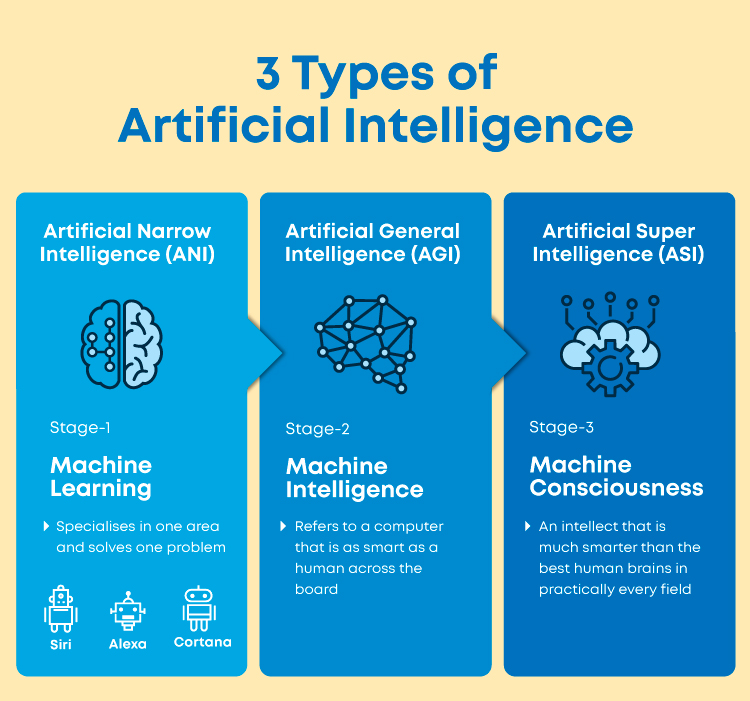
Artificial intelligence is a buzzword that has been around for quite some time now. It has become an essential part of our daily lives, from Siri and Alexa to self-driving cars. But what is AI, and how does it work? AI is a field of computer science that focuses on creating intelligent machines that can think and learn like humans. There are three modes of AI, and in this article, we’ll delve into the details of each mode.
Mode 1: Artificial Narrow Intelligence (ANI)
Artificial Narrow Intelligence (ANI) is the most common type of AI we see today. It’s also known as weak AI, as it can only perform specific tasks. ANI is designed to do one thing and do it well. For example, Siri can recognize voice commands and answer questions, but it can’t do your laundry or cook your dinner. ANI is programmed to perform tasks based on specific rules and algorithms.
ANI is widely used in various industries to increase efficiency and productivity. For instance, it’s used in the healthcare industry to diagnose diseases and recommend treatments. In the finance industry, ANI is used to detect fraudulent transactions and improve investment strategies. ANI is also used in the manufacturing industry to improve production processes and quality control.
Mode 2: Artificial General Intelligence (AGI)
Artificial General Intelligence (AGI) is also known as strong AI. Unlike ANI, AGI is designed to perform any intellectual task that a human can do. AGI can think, learn, and reason like a human being. It can perform a wide range of tasks and adapt to new situations.
AGI is still in the experimental stage, and no one has created a true AGI yet. However, researchers are working hard to develop machines that can match or surpass human intelligence. AGI has the potential to revolutionize various industries, such as healthcare, education, and transportation.
Mode 3: Artificial Superintelligence (ASI)
Artificial Superintelligence (ASI) is the third mode of AI. It’s the most advanced form of AI that can surpass human intelligence in every aspect. ASI can learn and reason at an exponential rate. It can process vast amounts of data and make decisions based on that data. ASI has the potential to solve complex problems that are beyond human comprehension.
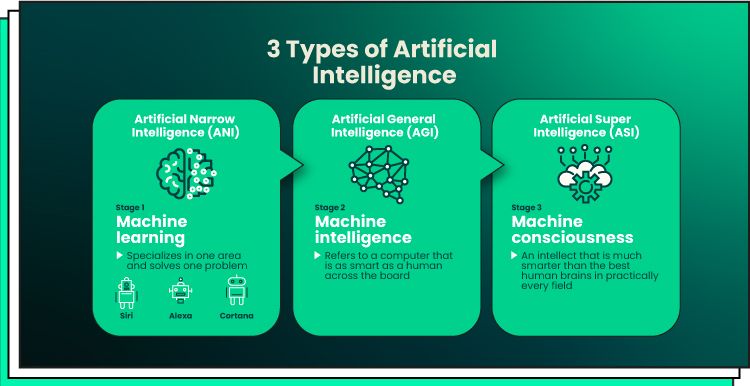
ASI is still a hypothetical concept, and no one has created it yet. However, some experts predict that ASI will become a reality in the future. ASI has both positive and negative implications for humanity. On the one hand, it can solve some of the world’s most pressing problems, such as climate change and disease. On the other hand, it can pose a threat to humanity if it becomes uncontrollable.
Conclusion
In conclusion, AI is an exciting field that has the potential to transform our lives in many ways. There are three modes of AI: ANI, AGI, and ASI. ANI is the most common type of AI we see today, and it’s designed to perform specific tasks. AGI is still in the experimental stage, and it’s designed to perform any intellectual task that a human can do. ASI is the most advanced form of AI, and it has the potential to surpass human intelligence in every aspect. As AI continues to evolve, it will be interesting to see how it impacts our lives and society as a whole.
