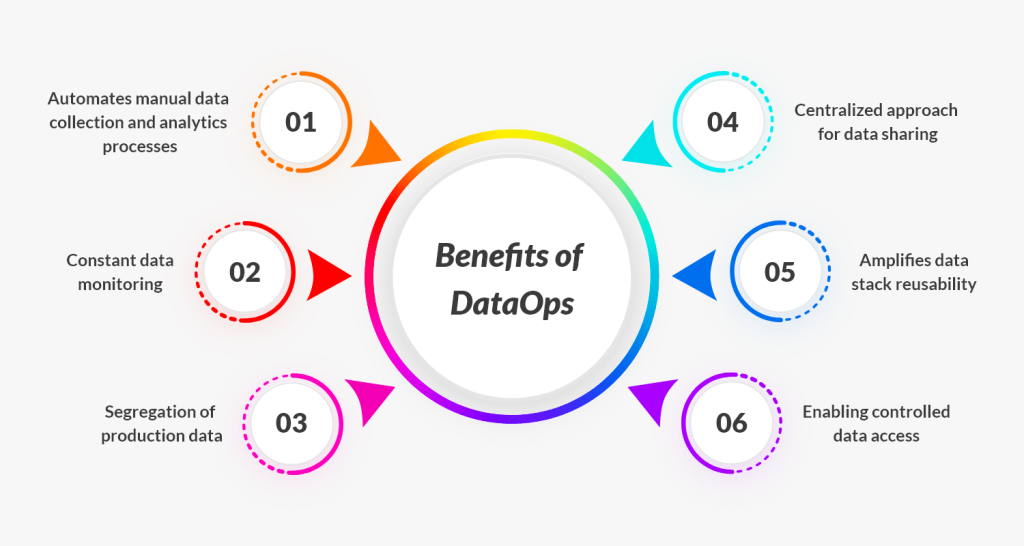
As we move towards a data-driven world, the importance of DataOps cannot be overstated. DataOps is a methodology that aims to improve the communication, integration, and automation of data flows between data consumers and data producers. In this article, we will explore the benefits of DataOps and how it can help businesses stay ahead of the curve.
Benefit 1: Improved Data Quality
Data is the lifeblood of any organization, and the quality of that data is crucial to making informed business decisions. DataOps can help improve data quality by ensuring that data is captured, processed, and stored in a consistent and standardized manner. This can lead to fewer errors and inconsistencies, making the data more reliable and trustworthy.
Benefit 2: Faster Time to Market
In today’s fast-paced business environment, time is of the essence. DataOps can help businesses shorten their time to market by automating many of the processes involved in data management. This can help speed up data analysis, reduce the time it takes to make decisions, and ultimately lead to faster product development.
Benefit 3: Increased Collaboration
DataOps encourages collaboration and communication between different teams involved in data management. This can help break down silos and increase transparency, leading to better decision-making and a more cohesive organization. By bringing together data scientists, developers, and business stakeholders, DataOps can help align everyone’s goals and priorities.
Benefit 4: Better Scalability
As businesses grow, their data needs grow too. DataOps can help businesses scale their data management processes by automating many of the tasks involved in data processing and analysis. This can help businesses handle larger volumes of data more efficiently, without sacrificing data quality or accuracy.
Benefit 5: Improved Data Security
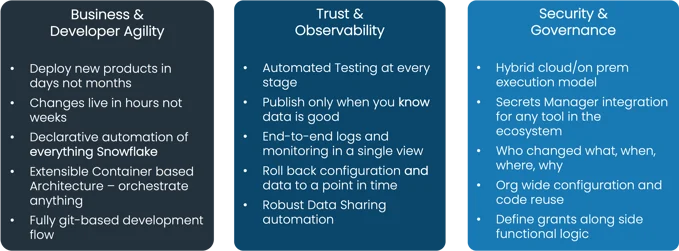
In an age where data breaches are becoming more common, data security is more important than ever. DataOps can help businesses improve their data security by implementing best practices for data storage, access control, and encryption. By ensuring that only authorized users have access to sensitive data, businesses can protect themselves from data breaches and other security threats.
Benefit 6: Better Insights
Ultimately, the goal of data management is to gain insights that can be used to make better business decisions. DataOps can help businesses achieve this goal by improving the accuracy and reliability of their data, and by providing faster access to that data. By using advanced analytics tools and techniques, businesses can gain deeper insights into their operations and customers, leading to better decision-making and improved business outcomes.
Conclusion
In today’s data-driven world, businesses need to be agile, responsive, and innovative. DataOps can help businesses achieve these goals by improving data quality, increasing collaboration, and speeding up time to market. By leveraging the benefits of DataOps, businesses can stay ahead of the competition and thrive in a rapidly changing business environment.
