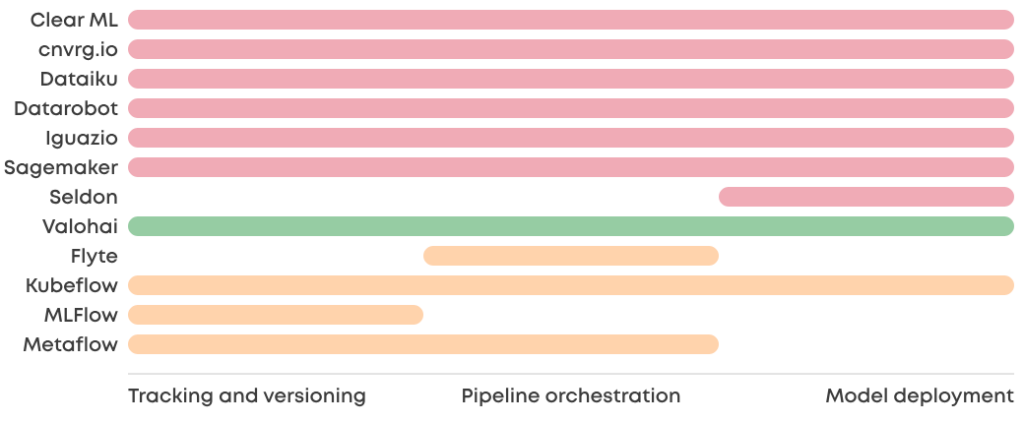
Hey there! Are you looking for the best MLOps platform for your business? Well, you’ve come to the right place. In this article, we’ll be discussing the major MLOps platforms and comparing them to help you make an informed decision.
But first, let’s understand what MLOps means.
What is MLOps?
MLOps is a combination of Machine Learning (ML) and Operations (Ops). It is the practice of applying DevOps principles to Machine Learning systems. The goal of MLOps is to streamline the ML development process and make it more efficient and effective.
Now that we’ve defined MLOps, let’s dive into the major MLOps platforms.
Major MLOps Platforms
1. Kubeflow
Kubeflow is an open-source MLOps platform that is built on top of Kubernetes. It provides a framework for building, deploying, and managing ML workflows. Kubeflow allows you to create end-to-end ML pipelines that can be easily deployed in any environment.
2. TensorFlow Extended (TFX)
TensorFlow Extended (TFX) is a production-ready MLOps platform that is built on top of TensorFlow. It provides a set of tools and libraries that allow you to build, train, and deploy ML models at scale. TFX also provides a robust pipeline orchestration system that makes it easy to manage complex ML workflows.
3. MLflow
MLflow is an open-source MLOps platform that is developed by Databricks. It provides a set of tools and libraries that allow you to track and manage ML experiments, package ML code, and deploy ML models. MLflow also supports multiple ML frameworks such as TensorFlow, PyTorch, and Scikit-learn.
4. DataRobot
DataRobot is a commercial MLOps platform that offers end-to-end automation for building, deploying, and managing ML models. It provides a drag-and-drop interface that allows you to build ML models without any coding. DataRobot also provides a number of pre-built ML models that can be easily deployed in any environment.
Comparison of Major MLOps Platforms
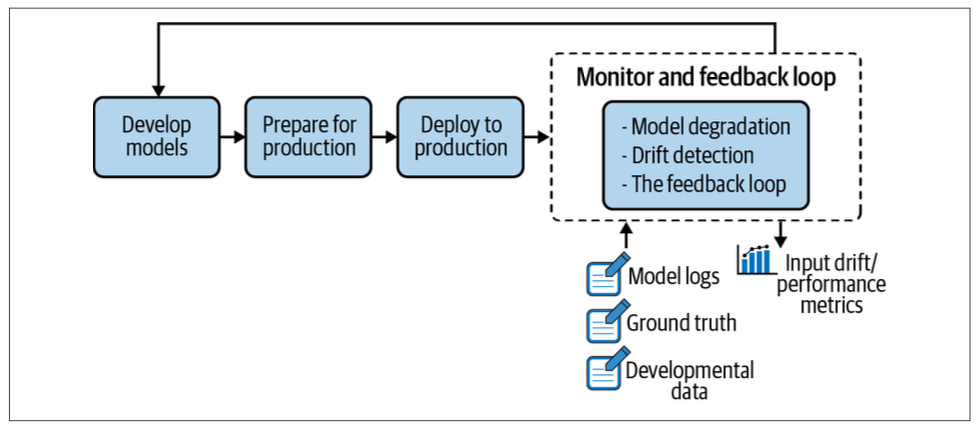
Now that we’ve discussed the major MLOps platforms, let’s compare them based on some key features.
Ease of Use
When it comes to ease of use, Kubeflow and TFX are relatively more complex as they require some knowledge of Kubernetes and TensorFlow. MLflow is relatively easy to use as it provides a simple interface for tracking and managing ML experiments. DataRobot is the easiest to use as it provides a drag-and-drop interface for building ML models.
Scalability
All four MLOps platforms are highly scalable and can handle large amounts of data. However, Kubeflow and TFX are more suited for large-scale ML deployments as they are built on top of Kubernetes and TensorFlow, which are highly scalable technologies.
Customization
Kubeflow and TFX provide a high degree of customization as they are open-source platforms. MLflow also provides some degree of customization, but it is limited to the ML frameworks that it supports. DataRobot, on the other hand, provides limited customization options, as it is a commercial platform.
Cost
Kubeflow, TFX, and MLflow are all open-source platforms and are free to use. DataRobot, being a commercial platform, requires a subscription and can be expensive for small businesses.
Conclusion
In conclusion, all four MLOps platforms discussed in this article are highly capable and can help streamline your ML development process. If you’re looking for an open-source platform with a high degree of customization, Kubeflow or TFX might be the right choice for you. If you’re looking for an easy-to-use platform, MLflow or DataRobot might be a better fit. Ultimately, the choice of MLOps platform depends on your specific needs and requirements. We hope this article has helped you make an informed decision.
