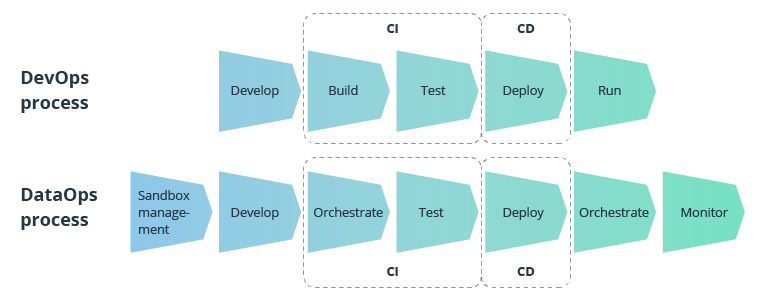
If you’re in the tech world, you’ve probably heard the terms DevOps and DataOps thrown around. But what do they actually mean? And what’s the difference between the two? In this 5000-word blog post (yeah, we’re going deep), we’ll explore the ins and outs of both DevOps and DataOps, and discuss how they relate to each other.
DevOps: The Basics
First up, let’s talk about DevOps. At its core, DevOps is a software development methodology that emphasizes collaboration and communication between different teams involved in the development process. This includes developers, IT operations staff, and quality assurance teams.
DevOps aims to streamline the software development process by breaking down silos and encouraging cross-functional teams to work together. By doing so, it helps organizations to deliver software more quickly and with fewer errors.
DataOps: A New Kid on the Block
Now, let’s turn our attention to DataOps. DataOps is a newer concept that’s gaining traction in the industry. It’s similar to DevOps in that it focuses on collaboration and communication, but with a specific emphasis on data-related projects.
DataOps is all about breaking down the silos between different teams involved in data-related projects, such as data scientists, data engineers, and data analysts. By working together more closely, these teams can deliver data-related projects more quickly and with greater accuracy.
The Key Differences
So, what’s the difference between DevOps and DataOps? While there are certainly similarities between the two, there are a few key differences that set them apart.
Focus
The main difference between DevOps and DataOps lies in their focus. As we’ve discussed, DevOps is primarily concerned with software development. It’s about breaking down silos between different teams involved in the development process, and improving the speed and quality of software delivery.
DataOps, on the other hand, is focused specifically on data-related projects. It’s about breaking down silos between different teams involved in data projects, and improving the speed and accuracy of data delivery.
Tools
Another difference between the two methodologies is the tools that are typically used. DevOps teams often use tools like Jenkins, Git, and Ansible to automate the software development process. DataOps teams, on the other hand, might use tools like Apache Spark, Hadoop, and Kafka to manage data pipelines.
Skillsets
Finally, there’s a difference in the skillsets required for each methodology. DevOps teams typically require skills in software development, IT operations, and quality assurance. DataOps teams, on the other hand, require skills in data engineering, data science, and data analysis.
The Relationship Between DevOps and DataOps
While DevOps and DataOps are certainly different, they’re not mutually exclusive. In fact, many organizations are now adopting both methodologies in order to improve their software and data-related projects.
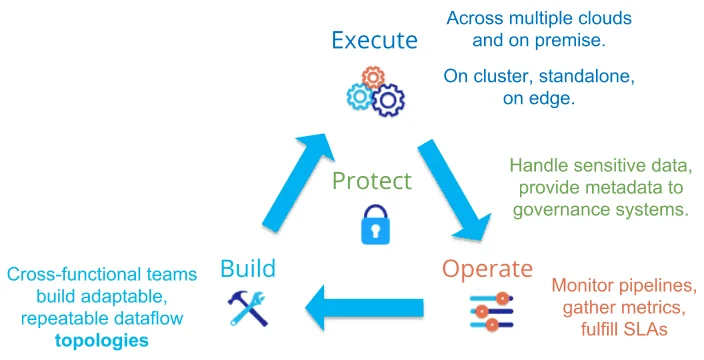
By combining DevOps and DataOps, organizations can benefit from the best of both worlds. They can break down silos between different teams involved in both software development and data projects, and improve the speed, accuracy, and quality of both types of projects.
Wrapping Up
So, there you have it: the difference between DevOps and DataOps. While they’re certainly different, they both share a common goal of improving collaboration and communication between different teams.
If you’re working in the tech industry, it’s worth familiarizing yourself with both methodologies. Who knows? You might just find that adopting a DevOps or DataOps approach can help you to deliver better software or data-related projects.
