If you’re a tech-savvy individual, you’ve probably heard the terms “Dataops” and “Mlops” thrown around a lot lately. But what do they even mean? Are they just fancy buzzwords, or is there something more to them? In this article, we’re going to explore the fascinating world of Dataops and Mlops and uncover their key differences. So grab a cup of coffee, sit back, and let’s dive in!
Dataops: A Definition
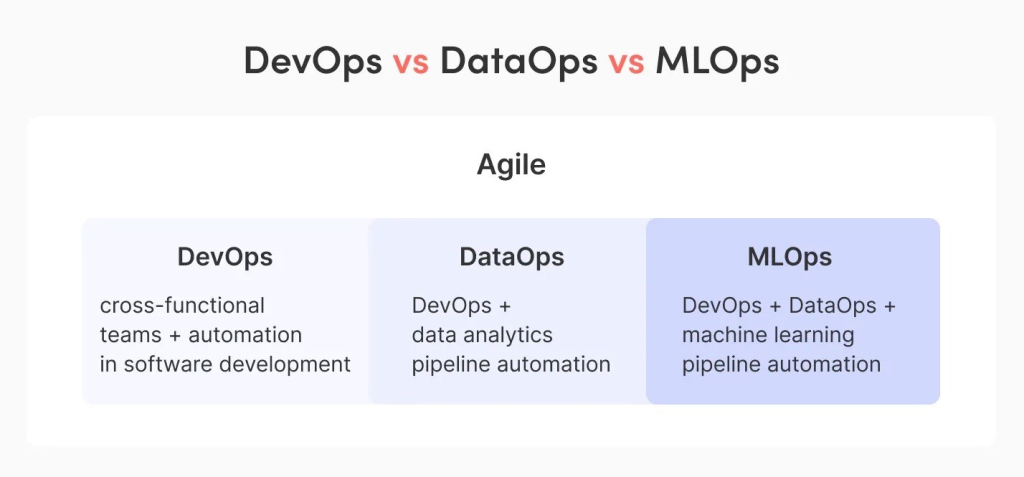
To understand Dataops, we first need to understand DevOps. DevOps is a set of practices that combines software development (Dev) and IT operations (Ops) to shorten the systems development life cycle while delivering features, fixes, and updates frequently in close alignment with business objectives.
Dataops, on the other hand, is an extension of DevOps that focuses on the data aspect of software development. It’s a set of practices that help organizations manage and automate their data pipelines, from collection to analysis to deployment.
Mlops: A Definition
Mlops, or Machine Learning Operations, is a subset of Dataops that specifically deals with machine learning models. It’s a set of practices that enables organizations to deploy, manage, and monitor machine learning models in production.
Mlops aims to take the principles of DevOps and apply them to the machine learning development process. With Mlops, organizations can automate the entire ML pipeline, from feature engineering to model training to deployment.
The Key Differences
Now that we know what Dataops and Mlops are, let’s explore their key differences.
Focus
The first difference between Dataops and Mlops is their focus. Dataops is all about data management, whereas Mlops is all about machine learning model management.
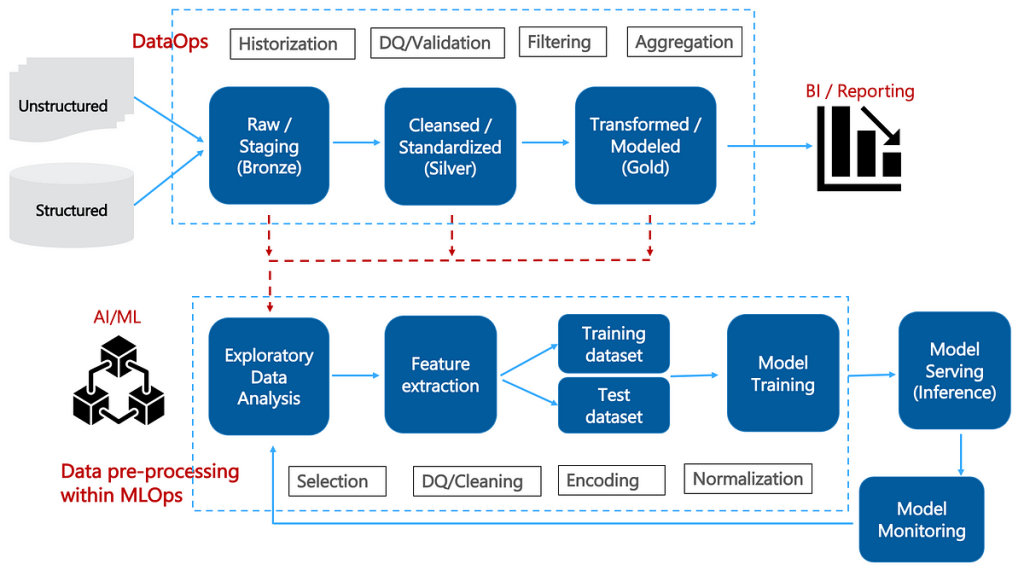
Dataops is concerned with the entire data pipeline, from data collection to analysis to deployment. Mlops, on the other hand, is focused on the machine learning pipeline, from feature engineering to model training to deployment.
Tools
The second difference between Dataops and Mlops is the tools they use. Dataops typically uses tools like Apache Airflow, Apache NiFi, and Jenkins to manage data pipelines.
Mlops, on the other hand, uses tools like TensorFlow, PyTorch, and Apache Spark to manage machine learning pipelines. Mlops also requires tools for model monitoring and management, such as Kubeflow and MLflow.
Teams
The third difference between Dataops and Mlops is the teams involved. Dataops typically involves data engineers, data analysts, and data scientists.
Mlops, on the other hand, involves machine learning engineers, data scientists, and software engineers. The machine learning engineers are responsible for designing and implementing the ML pipeline, while the software engineers are responsible for deploying and managing the ML models in production.
Wrapping Up
In conclusion, Dataops and Mlops are both essential practices for organizations looking to manage and automate their data and machine learning pipelines. While Dataops focuses on data management and automation, Mlops focuses on machine learning model management and automation.
Understanding the key differences between Dataops and Mlops is crucial for organizations looking to implement these practices. By doing so, they can streamline their data and machine learning processes, reduce errors, and improve overall efficiency.
