Introduction
Canada stretches across six time zones and almost ten million square kilometers. The roads here wind through pine forests, past glacier-fed lakes, and over mountain passes. A road trip here feels like a true adventure.
You can ride from Toronto to Niagara Falls in a morning. You can chase the sunset along the Sea-to-Sky Highway. You can cross the Rocky Mountains on the Icefields Parkway.
But first, you need the right vehicle. MotoShare.ca helps you find it. It connects travelers with verified rental partners across Canada. You browse real listings, compare prices in CAD, and book with confidence.
This guide covers everything you need for a great Canadian road trip. You will learn which vehicle suits your route, how to handle Canadian roads, and what to carry at every stop.
Why Rent a Motorcycle in Canada?
Motorcycles give you a feeling that cars simply cannot match. You smell the pine trees. You feel the cool mountain air. You see everything without a windshield in the way.
Canadian highways offer some of the best riding in the world. The Trans-Canada Highway crosses the entire country. The Sea-to-Sky Highway climbs from ocean to mountain peaks. The Cabot Trail loops around Cape Breton’s stunning coastline.
But Canada is huge. You must match your bike to the distance and the season. A small commuter bike works great in city traffic. It struggles on long highway days.
A touring cruiser eats up kilometers in comfort. An adventure bike opens up gravel roads and remote trails. Think honestly about your route before you choose.
Canadian riding seasons are short. Most riders hit the road between May and October. Mountain passes can stay snowy into June. Plan your trip around the weather, not against it.
Also, wildlife matters here. Moose, deer, and bears wander onto roads. Ride with extra caution at dawn and dusk.
Choosing Your Ride: Cruisers, Touring Bikes, and Cars
Canada’s vast distances demand the right machine. A bike that feels fun for an hour may feel painful after eight. So choose based on your route, your experience, and your luggage.
This section breaks down your main options. Each one suits a different kind of Canadian trip.
| Vehicle Type | Best Use | Rider Skill Needed | Luggage Space | Road Comfort |
|---|---|---|---|---|
| City Commuter Bike | Urban rides, short day trips | Beginner | Small (backpack or tank bag) | Low (tiring on highways) |
| Touring Cruiser | Long highway days, cross-province trips | Intermediate | Good (saddlebags and trunk) | High |
| Adventure Motorcycle | Gravel roads, mountain passes, remote routes | Intermediate to Advanced | Good (panniers and racks) | High |
| Rental Car / SUV | Families, cold weather, heavy luggage | Any licensed driver | Excellent | High |
City commuter bikes work well for exploring Toronto’s neighborhoods or Vancouver’s Stanley Park. They are light, cheap on fuel, and easy to park. But they lack wind protection for highway riding.
Touring cruisers shine on the Trans-Canada Highway. They carry luggage well and keep you comfortable for hours. Adventure bikes handle both pavement and gravel. Cars and SUVs keep you warm and dry when the weather turns.
Motorcycle Rental Toronto and Motorcycle Rental Calgary
Toronto and Calgary offer completely different riding experiences. Understanding these differences helps you plan the perfect trip.
Toronto sits on the shore of Lake Ontario. The city has busy highways and heavy traffic. But once you leave the city, beautiful routes open up. You can ride to Prince Edward County for wine tasting and quiet country roads.
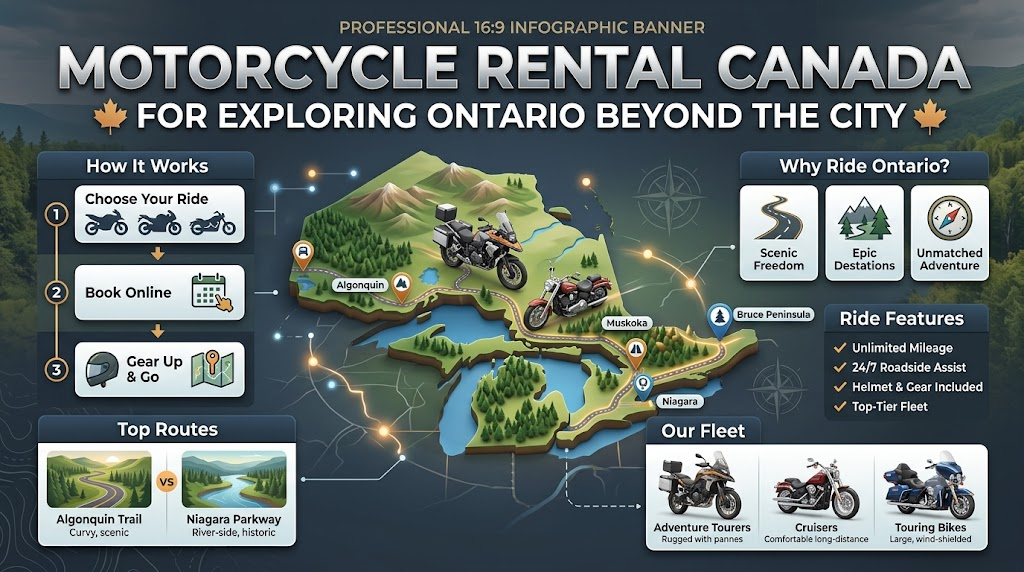
Motorcycle rental Toronto gives you access to southern Ontario’s best riding. The Niagara Parkway follows the river toward Niagara Falls. The Muskoka region offers winding roads through lake country.
Calgary sits on the edge of the prairies. The Rocky Mountains rise just an hour to the west. You can leave the city and reach Banff before lunch.
Motorcycle rental Calgary works perfectly for mountain adventures. The Icefields Parkway runs from Lake Louise to Jasper. It ranks among the most scenic roads on the planet. You pass glaciers, turquoise lakes, and towering peaks.
But Calgary’s weather changes fast. A warm morning can turn cold and windy by afternoon. Pack layers and check forecasts daily.
Both cities have active riding communities. Local shops can recommend routes and help with any issues. Book your bike early during summer months.
Motorcycle Rental Vancouver and Scenic Coastal Rides
Vancouver offers some of Canada’s best coastal riding. The climate here stays mild compared to the rest of the country. You can ride comfortably from March through November.
The Sea-to-Sky Highway connects Vancouver to Whistler. This road hugs cliffs above the ocean. It passes waterfalls, old-growth forests, and dramatic viewpoints. Every curve reveals another postcard view.
Motorcycle rental Vancouver gives you access to this world-famous route. You can ride it in a single day. Or take your time and stay overnight in Squamish or Whistler.
When you rent a motorcycle in Canada, consider Vancouver Island too. The ferry from Horseshoe Bay takes you to Nanaimo. From there, the Pacific Rim Highway leads to Tofino. You ride through ancient rainforests to reach wild Pacific beaches.
Coastal weather brings rain. Pack waterproof gear even in summer. Morning fog can reduce visibility on the highway. Start your rides after the fog lifts.
Also, watch for wildlife. Deer and bears often cross coastal roads. Slow down in forested sections and near water sources.
Adventure Motorcycle Rental Canada
Adventure bikes look different from standard motorcycles. They have tall suspension that handles rough ground. Their tires work on both pavement and gravel. The upright seating position keeps you comfortable for long days.
You will hear people call them “dual-sport” bikes. That simply means they handle two types of terrain.
Adventure motorcycle rental Canada opens up routes that regular bikes cannot touch. The Dempster Highway reaches the Arctic Circle. The Trans-Labrador Highway crosses remote wilderness. Logging roads in British Columbia wind through endless forests.
Gravel roads demand respect. Loose surfaces shift under your tires. Reduce speed and stay relaxed on the bars. Look where you want to go, not at the obstacles.
Mountain temperatures drop fast. A pass that feels warm at the bottom can freeze at the top. Pack layers you can add or remove quickly. Heated grips help on cold mornings.
Fuel planning matters on remote routes. Gas stations become scarce in northern regions. Fill up whenever you see a pump. Carry extra fuel if your route goes deep into the wilderness.
Wildlife awareness is critical. Moose are especially dangerous. They stand tall and dark on the road at night. Their eyes do not reflect light like deer eyes do.
Pre-Ride Vehicle Inspection Checklist
Never ride away without inspecting your vehicle first. This takes fifteen minutes and can prevent problems later. Do this inspection with the rental agent present.
| Check Point | What to Look For | Why It Matters |
|---|---|---|
| Tires & Tread Depth | Cracks, worn tread, correct pressure | Bad tires cause flats and loss of grip |
| Front & Rear Brakes | Firm lever feel, adequate pad thickness | Brakes fail when you need them most |
| Headlight & Turn Signals | All lights working | Visibility and legal requirement |
| Engine Oil & Fluid Levels | Proper oil level, coolant, brake fluid | Breakdown prevention |
| Provincial Registration & Insurance Papers | Valid documents in the vehicle | Police check these at stops |
| Mirrors & Throttle Cable | Secure mirrors, smooth throttle response | Control and safety |
Take timestamped photos of any existing damage before you leave. Photograph the tires, fairings, and mirrors. Email these photos to yourself for your records.
Verify the insurance coverage matches your rental agreement. Ask about the deductible if damage occurs. Know what you pay if something goes wrong.
Motorcycle Road Trip Canada and Seasonal Route Planning
Planning a motorcycle road trip Canada requires realistic thinking about distances and seasons. Canadian summers are short. Mountain passes stay snowy into June. Northern routes open even later.
Plan your trip between June and September for the best conditions. July and August offer the warmest weather and longest days. But popular routes get busy during these months.
Book campgrounds and hotels well in advance. National parks fill up quickly in summer. The same goes for popular towns like Banff, Jasper, and Whistler.
Keep daily mileage reasonable. Long highway days exhaust you and reduce safety. Take breaks every two hours. Stretch your legs. Drink water.
Afternoon thunderstorms arrive often in mountain regions. Plan to finish riding by late afternoon when possible. Morning starts give you dry roads and better views.
National park passes are required for many mountain routes. Buy them online before you go. You will need them for Banff, Jasper, Yoho, and other parks.
Also, check road conditions before you ride. Construction happens during short summer windows. Some mountain passes close for repairs.
Car Rental Canada and Car Rental Toronto
Sometimes four wheels make more sense than two. Families with children need the space and safety of a car. Travelers with heavy luggage will struggle on a motorcycle.
Cold weather makes cars attractive too. Shoulder-season rain and early snow feel miserable on a bike. Air conditioning helps in summer heat.
Car rental Canada gives you flexibility that buses cannot match. You can stop wherever you want. You can change plans based on weather or local recommendations.
Car rental Toronto works well for exploring southern Ontario with a group. You can visit Niagara Falls, Stratford, and the Muskoka region without depending on schedules. You carry all your luggage easily.
All-wheel drive helps in mountain regions and during shoulder seasons. Book early during peak summer months. Automatic transmission cars cost more but reduce fatigue in traffic.
Check the fuel policy carefully. Most companies use full-to-full. Return the car with a full tank or pay inflated refueling charges. Also, confirm the mileage policy. Some rentals include unlimited kilometers. Others charge per kilometer.
Finding Local Rides and Booking Through MotoShare
MotoShare.ca connects travelers with verified local rental providers across Canada. Think of it as a marketplace, not a rental company itself. Local shops list their vehicles. You browse, compare, and book.
Searching for “motorcycle rental near me” becomes simple. Enter your city or travel destination. See what bikes and cars are available. Compare daily CAD rates side by side.
Clear vehicle specifications help you choose wisely. Engine size, luggage capacity, and included gear are all listed. You know whether helmets come with the rental. You know if the bike has ABS brakes.
Booking through a verified marketplace reduces risk. Reviews from other travelers help you avoid unreliable operators. The platform handles payment securely.
MotoShare works with partners in major cities and tourist regions. Whether you need motorcycle rental Toronto, motorcycle rental Vancouver, or car rental Calgary, you can find options in one place.
The platform also simplifies communication. You can ask questions before booking. You can confirm pickup details without confusion.
Real-Life Travel Scenarios
A local rider books a cruiser in Toronto for a weekend escape. He rides to Prince Edward County, stops at wineries, and camps near Sandbanks Provincial Park. The bike costs him $120 CAD per day .
An adventure rider rents a 750cc dual-sport in Calgary. He spends five days exploring the Icefields Parkway to Jasper. He stops at glaciers, photographs wildlife, and camps under mountain stars.
A European tourist lands in Vancouver and rents a bike for a week. She takes the ferry to Vancouver Island. She rides the Pacific Rim Highway to Tofino, surfing and beachcombing along the way.
A family books an all-wheel-drive SUV in Montreal. They tour the Laurentian Mountains for four days. They visit Mont-Tremblant, hike trails, and enjoy lakeside picnics with all their gear.
Common Mistakes to Avoid When Renting Vehicles in Canada
Underestimating massive highway distances. Canada is enormous. Gas stations can be 200 kilometers apart in rural areas. Fill up whenever you can. Carry a jerry can on remote routes.
Forgetting that mountain passes can drop below freezing. Even in July, high passes get cold. Pack warm layers and waterproof gloves. Heated gear helps on early morning starts.
Failing to verify motorcycle license endorsements. Your license must allow motorcycle riding. Learner permits may restrict highway riding or night riding. Check the rules before you book.
Riding at dusk or dawn through wooded areas. Moose and deer are most active at these times. They wander onto roads with little warning. Plan to be at your destination before dark.
Skipping personal layers and rain gear. Canadian weather changes fast. A sunny morning can turn rainy by noon. Pack windproof and waterproof gear you can put on quickly.
Renting a heavyweight touring cruiser without experience. Big bikes feel heavy at low speeds. Crosswinds on the prairies push you around. Start with a lighter bike if you lack experience.
Not checking national park pass requirements. Many mountain routes cross national parks. You need a pass to stop or drive through. Buy yours online before you arrive.
Relying exclusively on mobile data in remote valleys. Cell coverage drops in mountains and northern regions. Download offline maps before you leave. Bring a paper backup for remote routes.
Simple Rental Booking Checklist
- Valid unrestricted motorcycle license from home province or country. Your license must allow motorcycle riding without restrictions. Learner permits may not qualify for rentals.
- Major credit card for security deposit pre-authorization. The card must be in the main rider’s name. Debit cards rarely work for this hold.
- Proof of insurance coverage and clear deductible terms. Know what your insurance covers. Understand the deductible if damage occurs.
- DOT or ECE certified helmet check. Helmets must meet safety standards. Check the certification sticker inside. Make sure the strap works properly.
- Fuel return policy confirmation and drop-off schedule. Most rentals use full-to-full. Confirm the return time and location before you leave.
Frequently Asked Questions
1. Can international visitors rent a motorcycle in Canada using their foreign driver’s license?
Rules vary by province. Most provinces allow visitors to use their valid foreign license for a limited time. Your license must include motorcycle authorization. An International Driving Permit helps if your license uses non-English text. Check provincial rules before you book. Some rental companies require additional documentation.
2. What months are best for planning a motorcycle road trip across Canada?
July and August offer the warmest weather and longest days. June and September work well too, with fewer crowds. Mountain passes stay snowy into June. Northern routes open even later. Avoid October through April for most regions. Coastal British Columbia offers a longer season from March to November.
3. Are motorcycle helmets legally required in every Canadian province?
Yes. Every Canadian province requires helmets for motorcycle riders and passengers. The helmet must meet safety standards like DOT or ECE. Some provinces allow exceptions for religious reasons. But rental companies always require helmets. Inspect your helmet at pickup to ensure it fits properly.
4. What type of insurance is mandatory when renting a motorcycle or car in Canada?
Third-party liability insurance is mandatory in every province. This covers damage or injury you cause to others. Rental companies include basic coverage in their rates. But the deductible can be high. Consider additional coverage through your credit card or travel insurance. Check what your policy covers before you ride.
5. Can beginner riders rent high-powered sport or touring bikes?
Most rental companies require experience for large bikes. They may ask about your riding history. Some restrict certain models to riders over 25. Start with a smaller bike if you lack experience. A 400cc to 650cc bike handles most Canadian roads well. Build your skills before upgrading.
6. How does MotoShare help riders find a reliable motorcycle rental near me?
MotoShare.ca connects you with verified local rental partners across Canada. Enter your city or destination to see available vehicles. Compare daily CAD rates and read reviews from other travelers. The platform shows clear specs for each bike. You book securely through the site.
7. Are one-way rentals possible between major Canadian cities like Calgary and Vancouver?
Some rental companies allow one-way rentals between major cities. This service usually costs extra because they must return the vehicle. Availability varies by company and season. Book well in advance if you need one-way service. Confirm the drop-off location and any additional fees.
8. Do Canadian rental motorcycles include roadside assistance for remote highway breakdowns?
Many reputable rental companies include roadside assistance. Check your rental agreement for details. Some plans cover towing to the nearest town. Others charge extra for remote locations. Carry the assistance phone number with you. Know your options before heading into remote areas.
9. What should riders pack to handle rapid mountain weather changes?
Pack layers you can add or remove quickly. Start with a moisture-wicking base layer. Add an insulating mid-layer like fleece. Top with a waterproof and windproof jacket. Bring waterproof gloves and warm gloves. Heated grips or heated gear help on cold mornings.
10. Can I rent a car instead of a motorcycle on MotoShare if the weather turns cold?
Yes. MotoShare.ca lists cars and SUVs alongside motorcycles. You can switch to a car if weather turns bad. This flexibility helps in shoulder seasons. Browse available cars in your area. Book through the same simple process.
11. What security deposit amounts do Canadian rental hosts typically hold?
Deposits range from $500 to $3,000 CAD depending on the vehicle. Motorcycles usually require smaller deposits than cars. The hold goes on your credit card at pickup. It releases after you return the vehicle undamaged. Debit cards rarely work for this purpose.
12. Why should travelers book through a specialized Canadian rental marketplace?
MotoShare.ca focuses on Canadian rentals. You find verified local partners across provinces. Transparent pricing in CAD means no surprise fees. Reviews help you choose reliable operators. The platform simplifies booking and communication. You avoid the risk of random rentals with unclear terms.
Conclusion
Canada rewards road travelers with landscapes that take your breath away. Your vehicle choice shapes that experience. Match your ride to your route, your skill level, and the season. A cruiser suits long highway days. An adventure bike opens remote gravel routes. A car carries your family in comfort.
Ride within your limits. Respect the wildlife and the weather. Check your gear before every ride. Book through trusted platforms like MotoShare to start your journey with confidence.
