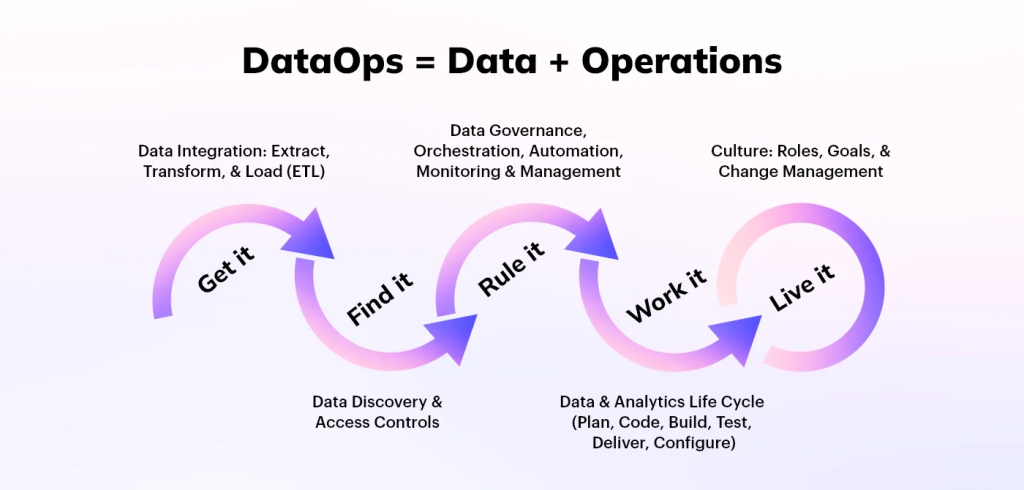
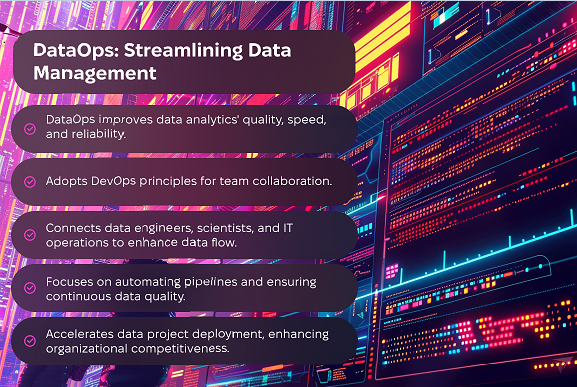
As organizations continue to generate vast amounts of data, the need for efficient data management and analysis has become more pressing than ever. DataOps, a set of practices that combines DevOps and data management, has emerged as a solution to this problem. By automating and streamlining data workflows, DataOps enables organizations to make better, faster decisions and drive business success.
In this blog, we’ll explore the various use cases and applications of DataOps, highlighting its potential to transform industries and revolutionize the way we work with data.
Real-World Applications of DataOps
- E-commerce:
- Personalized recommendations: DataOps can help e-commerce companies analyze customer purchase history, preferences, and demographics to provide personalized product recommendations.
- Inventory management: By automating data pipelines, e-commerce businesses can ensure accurate and up-to-date inventory information, reducing stockouts and overstocking.
- Fraud detection: DataOps can help identify fraudulent transactions by analyzing patterns in customer behavior and payment data.
- Healthcare:
- Patient data management: DataOps can streamline the collection, storage, and analysis of patient data, improving the efficiency of healthcare operations.
- Clinical research: By automating data pipelines, healthcare organizations can accelerate clinical research by facilitating data sharing and analysis.
- Predictive analytics: DataOps can help identify at-risk patients and predict disease outbreaks by analyzing patient data and medical records.
- Financial Services:
- Risk management: DataOps can help financial institutions assess risk by analyzing market data, customer behavior, and economic indicators.
- Fraud detection: DataOps can identify fraudulent activities by analyzing patterns in financial transactions and customer data.
- Customer churn prediction: By analyzing customer data, financial institutions can predict customer churn and take proactive steps to retain customers.
- Manufacturing:
- Predictive maintenance: DataOps can help manufacturers predict equipment failures by analyzing sensor data and historical maintenance records.
- Quality control: DataOps can ensure product quality by analyzing data from production lines and identifying defects.
- Supply chain optimization: DataOps can help optimize supply chains by analyzing demand patterns, inventory levels, and transportation data.
- Telecommunications:
- Network optimization: DataOps can help telecommunications companies optimize network performance by analyzing network traffic data and identifying bottlenecks.
- Customer churn prediction: By analyzing customer data, telecommunications companies can predict customer churn and take steps to retain customers.
- Fraud detection: DataOps can help identify fraudulent activities, such as unauthorized SIM card activations or international calls.

Benefits of DataOps in These Use Cases
- Improved data quality: Ensures accurate and reliable data for decision-making.
- Faster time-to-market: Accelerates the delivery of data-driven insights.
- Increased efficiency: Automates manual tasks and reduces errors.
- Enhanced decision-making: Provides timely and accurate data for informed decisions.
- Improved customer experience: Enables personalized experiences and better service.
If you’re interested in learning more about DataOps and its applications, we’d love to hear from you. Contact us to discuss how DataOps can help your organization unlock the power of its data and drive business success.
