Enhancing DataTables Experience: Custom ID Column with Sequential Index

DataTables is a powerful jQuery plugin that provides an interactive and feature-rich interface for displaying tabular data. One common requirement is to display a custom ID column with a sequential index. In this blog post, we will explore how to implement this feature to enhance the DataTables experience.

The Need for a Custom ID Column

While DataTables automatically generates an ID column for each row, it might not always align with the user’s expectations. In some cases, displaying a custom ID column that starts from 1 and increments sequentially can provide a clearer representation of the data.

Implementing the Custom ID Column

Let’s dive into the implementation. Assume we have a DataTable configuration with the following column definition:

"columns": [{
    "title": "ID",
    "targets": 0,
    "width": "10%",
    "data": 'id',
    "render": function(data, type, row, meta) {
        if (type === 'display') {
            // Generate a sequential index starting from 1
            return meta.row + 1;
        }
        return data;
    }
},

Here’s a breakdown of the key elements:

  • title: Sets the column header to “ID”.
  • targets: Specifies the target column index (0-based).
  • width: Defines the column width.
  • data: Refers to the ‘id’ attribute in the dataset.
  • render: Contains a function to customize the rendering of the data.

The Render Function

The render function is crucial for customizing the display. In this case, it checks the rendering type. If the type is ‘display’, it generates a sequential index using meta.row + 1. This ensures that the index starts from 1 and increments for each row. For other types, such as sorting or filtering, it returns the original data.

Output:-

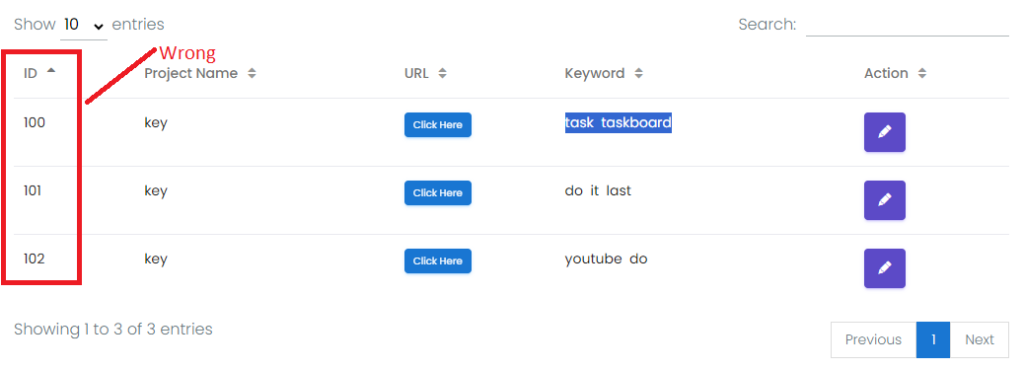
First, see Original the ID
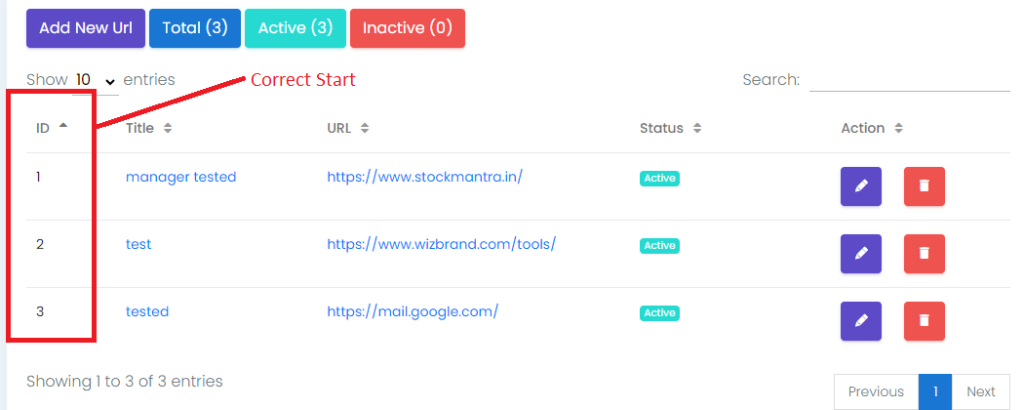
Then, Custom ID
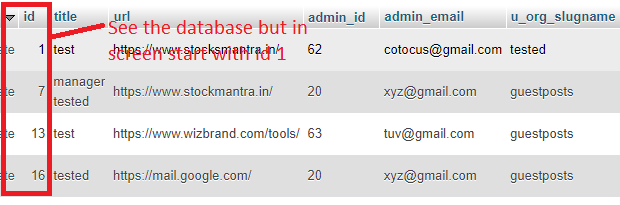
Also, see the database But the Result in the above Image with Custom ID
Hopefully, It will help you …!!!!

Related Posts

The Best AIOps Training Program Guide For Cloud Engineers

As modern IT environments transition from centralized datacenters to highly distributed, multi-cloud, and microservices-based setups, the sheer volume of data generated by enterprise software has exploded. Infrastructure…

Read More

Connect Directly with Trusted Local Experts Using Professnow Marketplace

The local service market is highly fragmented, making it difficult to verify a provider’s background, past work, or true capabilities before they show up at your door….

Read More

Accelerating Analytics Delivery by Automating Data Validation with DataOps Tools

Introduction In the modern digital economy, high-quality, trusted data serves as the foundation for critical enterprise decisions. Organizations rely heavily on business intelligence, machine learning models, and…

Read More

How Predictive Monitoring Platforms Optimize Modern DataOps and Data Observability

Introduction Traditional monitoring systems are no longer equipped to handle this level of complexity. Legacy tools depend entirely on static thresholds, which flag problems only after a…

Read More

DataOps Integration Tools: A Guide to Seamless Data Pipeline Integration

Modern enterprise organizations generate vast quantities of information across dozens of isolated systems. Managing this distributed ecosystem requires engineering infrastructure that can ingest, process, and deliver data…

Read More

Transforming Global Healthcare Solutions with Expert Treatment Guidance

Introduction As healthcare networks expand globally, an increasing number of individuals look beyond their geographic borders for solutions. However, exploring foreign medical environments presents its own set…

Read More
Subscribe
Notify of
guest
0 Comments
Oldest
Newest Most Voted
Inline Feedbacks
View all comments
0
Would love your thoughts, please comment.x
()
x