How to Clone a Git Repository into a Specific Folder

Introduction

Have you ever wondered how to clone a Git repository into a specific folder? Well, you’re in luck! In this article, we will explore the step-by-step process of cloning a Git repository into a specific folder, complete with examples. So, grab your keyboard, and let’s get started!
Step 1: Open your Terminal

First things first, open your terminal. If you’re using a Mac, you can find it in the Utilities folder within the Applications folder. If you’re using Windows, you can open the Command Prompt or Git Bash.
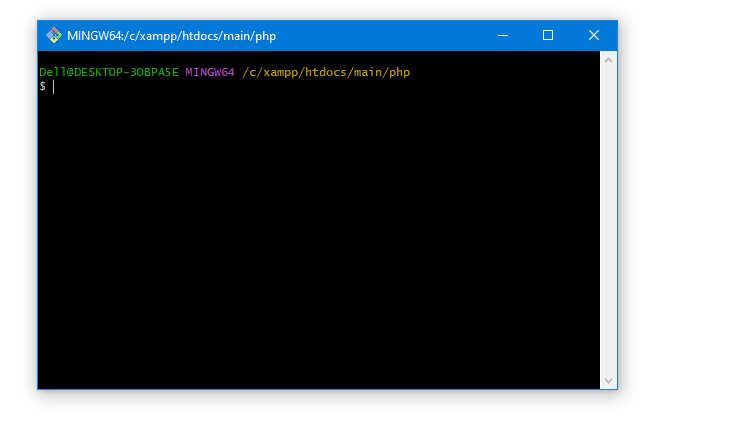
Step 2: Navigate to the Desired Folder

Once your terminal is open, navigate to the folder where you want to clone the Git repository. You can use the cd command followed by the directory path to navigate to the desired folder. For example, if you want to clone the repository into a folder called “my-project”, you would use the following command:

cd /path/to/my-project
Step 3: Clone the Git Repository

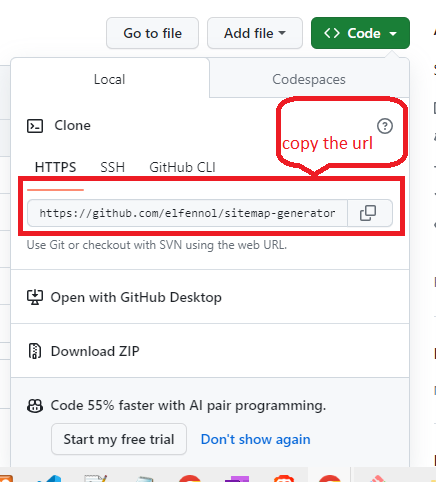
Now that you’re in the desired folder, it’s time to clone the Git repository. To do this, you will need the URL of the repository. If you don’t have the URL, you can usually find it on the repository’s page on GitHub or another Git hosting platform.

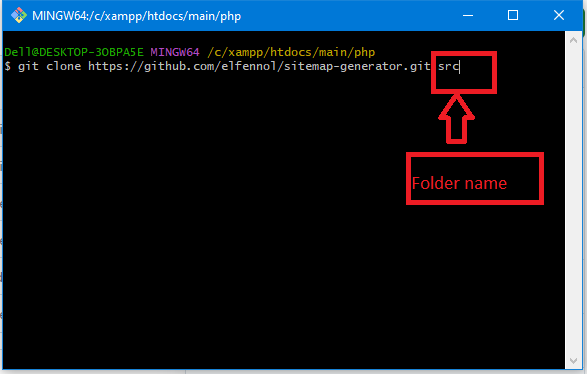
To clone the repository, use the git clone command followed by the repository URL. For example:
git clone https://github.com/elfennol/sitemap-generator.git folder_name
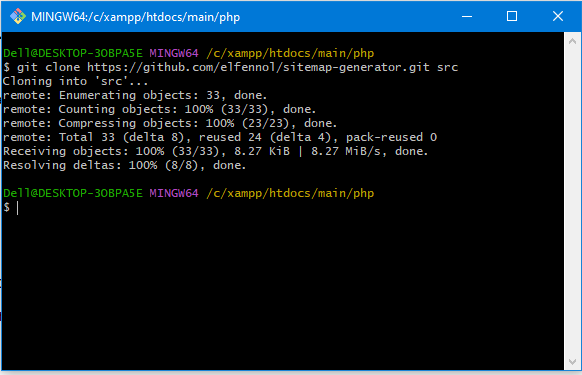
Step 4: Verify the Cloned Repository

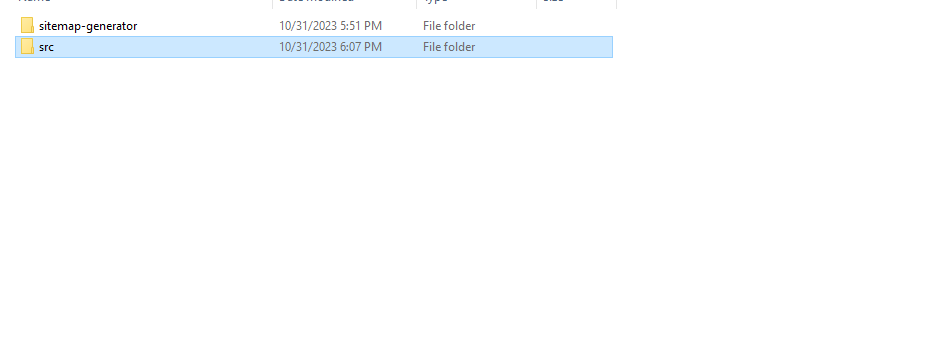
Once the cloning process is complete, you can verify that the repository has been successfully cloned into the specific folder. Use the ls command to list the files and folders in the current directory. You should see the repository folder listed.
I hope this blog will help you !!!!

Related Posts

Accelerating Analytics Delivery by Automating Data Validation with DataOps Tools

Introduction In the modern digital economy, high-quality, trusted data serves as the foundation for critical enterprise decisions. Organizations rely heavily on business intelligence, machine learning models, and…

Read More

How Predictive Monitoring Platforms Optimize Modern DataOps and Data Observability

Introduction Traditional monitoring systems are no longer equipped to handle this level of complexity. Legacy tools depend entirely on static thresholds, which flag problems only after a…

Read More

DataOps Integration Tools: A Guide to Seamless Data Pipeline Integration

Modern enterprise organizations generate vast quantities of information across dozens of isolated systems. Managing this distributed ecosystem requires engineering infrastructure that can ingest, process, and deliver data…

Read More

Transforming Global Healthcare Solutions with Expert Treatment Guidance

Introduction As healthcare networks expand globally, an increasing number of individuals look beyond their geographic borders for solutions. However, exploring foreign medical environments presents its own set…

Read More

Affordable Healthcare Secrets: How MyHospitalNow Helps Patients Find Verified Hospitals and Save Money

Introduction The single greatest hurdle in modern healthcare is the lack of transparent, centralized data. Comparing treatment costs across different institutions is notoriously difficult. A procedure that…

Read More

DataOps Security in Pipelines: Best Practices for Data Engineers

Data has become the primary asset of the modern enterprise, but it is also the most vulnerable. As organizations migrate from static data warehouses to distributed, real-time…

Read More
Subscribe
Notify of
guest
0 Comments
Oldest
Newest Most Voted
Inline Feedbacks
View all comments
0
Would love your thoughts, please comment.x
()
x