
In Laravel, an event is a way to trigger and handle specific actions or tasks within your application. It follows the observer pattern, where an event is fired or raised, and one or more listeners are responsible for handling that event.
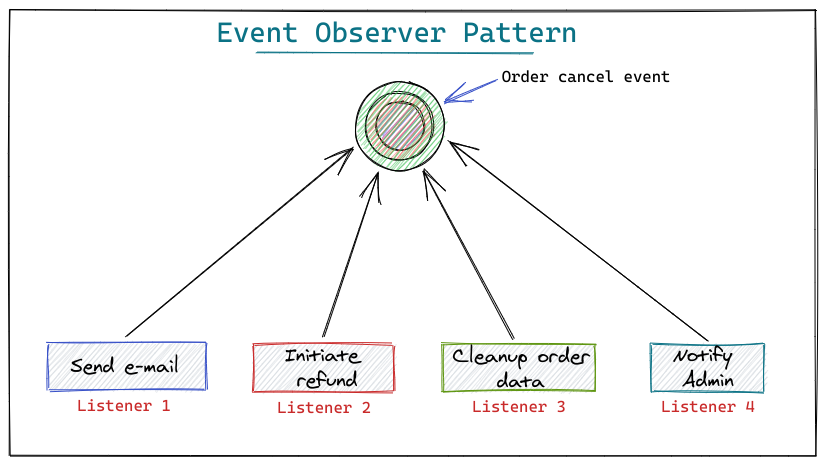
Events in Laravel provide a decoupled way to handle various actions and logic by separating the event itself from its listeners. They allow you to define and manage specific points in your code where certain events occur, such as user registration, data update, email sent, or any custom event that you define.
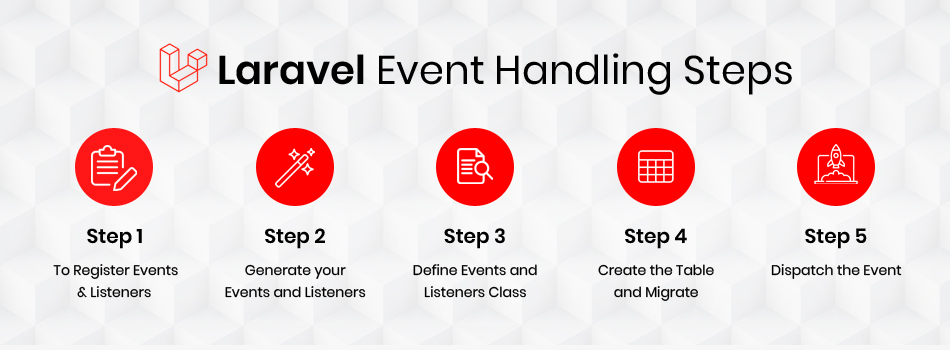
Here’s how the event system in Laravel typically works:
- Event Definition: You define an event by creating an event class, which extends the
Illuminate\Foundation\Events\Eventbase class. This class represents a specific event that can occur in your application. - Event Firing: When a specific condition or action occurs in your application, you can fire an event using the
event()helper function or by dispatching an instance of the event class. This notifies the system that the event has occurred and needs to be handled. - Event Listeners: Event listeners are responsible for handling the event when it is fired. Listeners can be defined as classes or closures, and they are registered in the
EventServiceProviderclass. Each listener specifies what actions should be taken when the associated event is fired. - Event Handling: When an event is fired, Laravel automatically triggers the registered listeners associated with that event. The listeners perform the necessary actions or tasks in response to the event. This can include sending emails, updating records, performing calculations, or executing any custom logic you define.
- Asynchronous Event Handling: Laravel also provides support for handling events asynchronously, using queues. This allows time-consuming or resource-intensive tasks triggered by an event to be processed in the background, improving application performance and responsiveness.
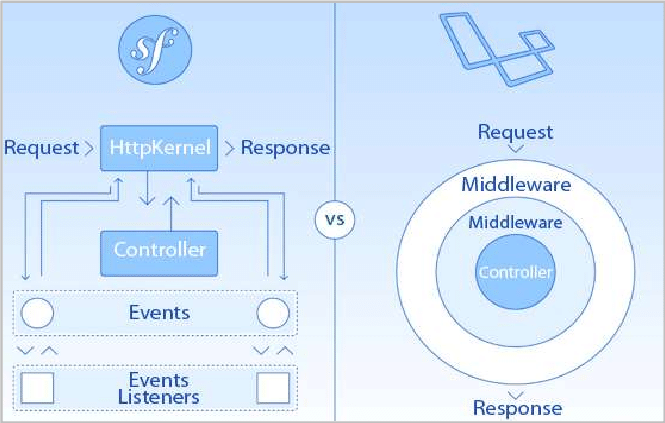
The event system in Laravel promotes the decoupling and modularization of code, as events and listeners can be developed and maintained independently. It provides a flexible and extensible way to manage actions and workflows within your application, making it easier to maintain and expand functionality as your application grows.
