Introduction
The Certified FinOps Professional is the definitive benchmark for experts looking to master the intersection of finance, engineering, and business. As organizations transition from traditional data centers to variable cloud spend models, the need for a disciplined financial framework has never been greater. This guide is designed for professionals who want to move beyond basic cost-tracking and implement a culture of accountability and value optimization.
By following this roadmap, engineers and managers can understand how to bridge the gap between technical operations and executive financial goals. Finopsschool provides the structured learning necessary to navigate this complex landscape, ensuring that cloud investments yield maximum business value. This guide serves as a career-planning tool for those aiming to lead cloud financial management initiatives in global enterprises.
What is the Certified FinOps Professional?
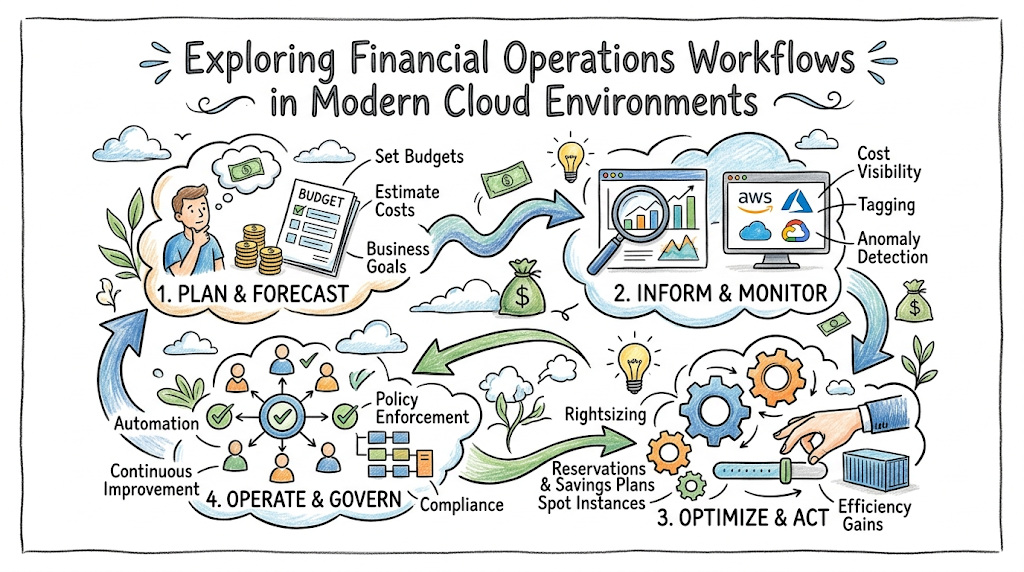
The Certified FinOps Professional status represents a deep understanding of the FinOps Framework, including its principles, personas, and phases. Unlike entry-level certifications that focus on terminology, this professional-level designation focuses on the application of strategies in production environments. It validates a professional ability to drive the Inform, Optimize, and Operate phases across multi-cloud architectures.
This certification exists to professionalize the role of cloud financial management, moving it away from simple accounting toward a dynamic engineering discipline. It aligns with modern engineering workflows by integrating cost-awareness into the DevOps lifecycle. Enterprises recognize this credential as proof that a candidate can manage complex unit economics and drive organizational change through data-driven decisions.
Who Should Pursue Certified FinOps Professional?
This certification is ideal for Cloud Architects, SREs, and DevOps Engineers who are responsible for infrastructure scaling and budget management. It is equally valuable for finance professionals and procurement managers who need to understand the technical nuances of cloud billing. Senior leadership and engineering managers find this track essential for aligning departmental output with corporate financial KPIs.
In the Indian market and global tech hubs, companies are aggressively hiring FinOps experts to curb cloud sprawl and improve margins. Beginners may start with the practitioner level, but experienced engineers use the professional designation to pivot into high-level advisory or platform leadership roles. Anyone managing cloud budgets exceeding six figures annually will benefit significantly from this curriculum.
Why Certified FinOps Professional is Valuable and Beyond
The demand for cloud financial expertise is skyrocketing as enterprises move from cloud-first to cloud-efficient strategies. As toolsets evolve and automate basic cost-saving tasks, the human element of cultural alignment and strategic optimization remains a high-value skill. This certification ensures longevity by focusing on principles that remain constant even as cloud providers change their pricing models.
Professionals who hold this credential see a high return on investment through increased salary potential and leadership opportunities. It shifts the perception of an engineer from a cost center to a value driver within the organization. As businesses prioritize profitability over growth at any cost, the ability to translate technical usage into business value is an indispensable career asset.
Certified FinOps Professional Certification Overview
The program is delivered via the official course portal and hosted on the primary certification website. The assessment approach is rigorous, testing candidates on real-world scenarios rather than rote memorization. It covers the full spectrum of the FinOps lifecycle, ensuring that owners of cloud accounts can navigate complex billing data and vendor negotiations.
The structure is designed to reflect the maturity of a FinOps practice, moving from individual contribution to enterprise-wide governance. Ownership of the cloud bill is decentralized, and this certification provides the tools to manage that decentralization effectively. It offers a practical framework for establishing a FinOps Center of Excellence within any large-scale organization.
Certified FinOps Professional Certification Tracks & Levels
The certification ecosystem begins with the Foundation level, which establishes a common language for all stakeholders. This is followed by the Professional level, which deepens technical and organizational expertise. Advanced levels or specializations focus on specific domains like containers, billing tools, or multi-cloud governance at a massive scale.
Each level aligns with specific career milestones, from junior analyst roles to Principal FinOps Architect positions. By progressing through these tracks, professionals can specialize in either the technical optimization side or the business-focused strategy side. The tracks are designed to be modular, allowing for continuous learning as the cloud industry matures.
Complete Certified FinOps Professional Certification Table
| Track | Level | Who it’s for | Prerequisites | Skills Covered | Recommended Order |
| Foundation | Associate | Beginners, Finance, HR | None | FinOps Principles, Terminology | 1 |
| Professional | Professional | SREs, DevOps, Architects | 6+ months experience | Optimization, Unit Economics | 2 |
| Advanced | Specialist | Lead Architects, Managers | Professional Cert | Governance, Policy Automation | 3 |
Detailed Guide for Each Certified FinOps Professional Certification
Certified FinOps Professional – Practitioner Level
What it is
This certification validates the foundational knowledge of the FinOps lifecycle. It ensures that the candidate understands the core principles and can participate effectively in a FinOps team within a corporate setting.
Who should take it
It is suitable for finance analysts, junior cloud engineers, and project managers new to cloud financial management. This is the entry point for anyone needing a baseline understanding of cloud cost variables.
Skills you’ll gain
- Understanding the 6 FinOps principles.
- Navigating the Inform, Optimize, and Operate phases.
- Identifying different cloud personas and their goals.
- Basic cloud billing and cost allocation techniques.
Real-world projects you should be able to do
- Create a basic cloud spend report for a small team.
- Tag cloud resources according to an organizational schema.
- Identify orphaned resources and suggest immediate deletions.
Preparation plan
- 7 Days: Focus on the official glossary and core principles.
- 30 Days: Review whitepapers and practice with billing dashboards.
- 60 Days: Not typically required for this level unless new to cloud.
Common mistakes
- Overlooking the cultural aspects of FinOps.
- Focusing too much on specific cloud provider tools instead of principles.
Best next certification after this
- Same-track option: Professional Level.
- Cross-track option: Cloud Provider Specific Associate.
- Leadership option: FinOps Manager.
Certified FinOps Professional – Professional Level
What it is
This certification validates the ability to implement and manage a FinOps practice. It focuses on advanced optimization techniques and driving organizational accountability across different departments.
Who should take it
This is for experienced SREs, DevOps leads, and Cloud Architects. It is intended for those who will lead the execution of cloud cost management strategies.
Skills you’ll gain
- Advanced unit economics and cost modeling.
- Implementing automated governance and policies.
- Leading cross-functional team alignment sessions.
- Managing commitment-based discounts at scale.
Real-world projects you should be able to do
- Build an automated showback/chargeback system for a multi-account environment.
- Negotiate Enterprise Discount Programs with cloud vendors.
- Develop a KPI dashboard linking cloud spend to business transactions.
Preparation plan
- 7 Days: Review complex scenario-based practice exams.
- 30 Days: Deep dive into case studies of enterprise FinOps migrations.
- 60 Days: Hands-on implementation of cost-management tools.
Common mistakes
- Ignoring the Operate phase and focusing only on Optimize.
- Failing to account for the technical debt created by cost-cutting measures.
Best next certification after this
- Same-track option: Specialist Tracks.
- Cross-track option: Professional Cloud Architect.
- Leadership option: Director of Cloud Operations.
Choose Your Learning Path
DevOps Path
In this path, the focus is on integrating cost metrics into the CI/CD pipeline. Engineers learn to treat cost as a first-class metric, similar to performance or security. By understanding financial professional principles, DevOps engineers can build cost-aware infrastructure code. This ensures that every deployment is evaluated for its financial impact before reaching production.
DevSecOps Path
The intersection of security and FinOps involves managing the costs of compliance and protective measures. Professionals in this path learn how to optimize the spend associated with security logging, monitoring, and data egress. They ensure that the security posture remains robust without becoming a financial burden. This requires balancing risk mitigation costs against the total value of the protected assets.
SRE Path
Site Reliability Engineers focus on the Operate phase of the lifecycle, ensuring that reliability does not come at an infinite cost. This path covers the trade-offs between Service Level Objectives and the infrastructure spend required to maintain them. SREs learn to implement automated scaling policies that respond to both traffic demand and budget constraints. It bridges the gap between system performance and financial efficiency.
AIOps Path
This path explores the use of machine learning to predict cloud spend and identify anomalies automatically. Professionals learn to implement AI-driven tools that suggest optimizations based on historical usage patterns. It focuses on reducing the manual overhead of managing thousands of microservices and their associated costs. AIOps practitioners use data science to bring high-level accuracy to financial forecasting.
MLOps Path
Managing the costs of machine learning at scale is a specialized discipline within this track. Engineers focus on the expensive nature of GPU training and the storage costs of massive datasets. They learn how to optimize the lifecycle of models, from research to production deployment, ensuring that AI initiatives remain profitable. This involves specific strategies for spot instance usage and model pruning to save resources.
DataOps Path
Data-heavy organizations face unique challenges with storage and data transfer costs. This path focuses on optimizing data pipelines, warehouse configurations, and egress fees between different regions or providers. Professionals learn how to structure data architectures that are cost-effective for both batch and real-time processing. It ensures that the data lake does not turn into a cost swamp for the business.
FinOps Path
The pure FinOps path is dedicated to those who want to lead the Center of Excellence. It focuses heavily on the cultural and organizational shifts required to make cloud financial management a success. Practitioners in this path act as the glue between engineering teams, finance departments, and executive leadership. They are responsible for the overall maturity of the FinOps practice across the entire organization.
Role → Recommended Certified FinOps Professional Certifications
| Role | Recommended Certifications |
| DevOps Engineer | Practitioner + Professional Level |
| SRE | Professional Level + SRE Optimization |
| Platform Engineer | Professional Level + Governance Track |
| Cloud Engineer | Practitioner + Vendor Specific Billing |
| Security Engineer | Practitioner + Cloud Security Specialization |
| Data Engineer | Practitioner + DataOps Optimization |
| FinOps Practitioner | Professional Level + Specialist Tracks |
| Engineering Manager | Practitioner + Leadership Workshop |
Next Certifications to Take After Certified FinOps Professional
Same Track Progression
Deepening your specialization involves moving into niche areas like container cost management or multi-cloud governance. You might explore certifications that focus on specific tools or advanced economic modeling. This path is for those who want to be recognized as the ultimate subject matter experts in cloud financial management. It often leads to roles like Principal FinOps Architect or Chief Cloud Officer.
Cross-Track Expansion
Broadening your skills means looking toward cloud architecture or platform engineering certifications. Understanding the how of the cloud is just as important as the how much. By gaining a Professional Cloud Architect designation, you can better understand the technical levers that drive the costs you are trying to manage. This makes you a more versatile leader who can speak fluently to both engineers and accountants.
Leadership & Management Track
For those looking to move into executive roles, the next step is often a management-focused certification or an MBA. This path emphasizes strategic planning, vendor negotiation, and organizational psychology. You will learn how to build and lead large teams, manage multi-million dollar budgets, and report directly to the CFO or CTO. This transition moves you from executing tasks to defining the financial future of the company.
Training & Certification Support Providers for Certified FinOps Professional
DevOpsSchool
DevOpsSchool stands as a premier institution for those seeking hands-on mastery in the FinOps domain. Their curriculum is meticulously crafted by industry veterans who emphasize the practical application of cloud financial management principles. Students benefit from extensive lab environments where they can simulate real-world billing scenarios and optimization challenges. The platform provides a blend of live instructor-led sessions and a massive library of recorded content, ensuring flexibility for working professionals. Their focus on the broader DevOps ecosystem allows learners to see how financial accountability integrates into the modern software delivery lifecycle, making it a top choice for aspiring professionals.
Cotocus
Cotocus offers specialized training programs that are highly tailored to the needs of modern enterprise environments. They focus on the strategic side of cloud financial management, helping professionals understand the complex nuances of unit economics and automated governance. Their instructors bring years of consulting experience, providing learners with insights into how global companies manage their cloud spend at scale. Cotocus is known for its rigorous training methodology, which includes case study analysis and interactive workshops. This provider is particularly effective for those who want to move beyond the basics and develop a deep, strategic understanding of the cloud financial landscape.
Scmgalaxy
Scmgalaxy has built a massive community-driven platform that serves as a treasure trove of resources for cloud professionals. Their training for this certification is grounded in real-world community experiences and common industry pitfalls. They offer a wealth of technical blogs, video tutorials, and practice assessments that help candidates prepare thoroughly. The platform is especially useful for those who prefer a collaborative learning environment, as it connects students with a global network of peers. Scmgalaxy emphasizes the how-to aspect of FinOps, providing step-by-step guides for implementing cost-saving measures across various cloud service providers and third-party tools.
BestDevOps
BestDevOps focuses on providing high-quality, streamlined training that targets the core competencies required for certification success. Their modules are designed to be concise yet comprehensive, making them ideal for busy engineers and managers who need to upskill quickly. They prioritize the most impactful aspects of the FinOps framework, ensuring that students can immediately apply what they learn to their current roles. BestDevOps uses a results-oriented approach, focusing on exam readiness and the development of practical skill sets. Their platform is user-friendly and offers various learning paths that cater to different experience levels, from foundational practitioners to advanced professional leaders.
Devsecopsschool.com
Devsecopsschool.com offers a unique perspective by integrating security considerations into the cloud financial management curriculum. They recognize that cost and security are often two sides of the same coin in cloud operations. Their training covers how to maintain a secure environment while optimizing the costs of compliance, logging, and data protection. This provider is excellent for professionals who work at the intersection of security and operations and want to ensure that financial efficiency does not compromise the organization risk posture. Their labs include scenarios where learners must balance security requirements with strict budget constraints, providing a truly holistic learning experience.
Sreschool.com
Sreschool.com approaches cloud financial management through the lens of site reliability and system performance. Their training is highly technical and focuses on the Operate phase of the FinOps lifecycle. Learners explore the relationship between infrastructure reliability, service level agreements, and cloud spend. The curriculum teaches SREs how to build automated systems that scale based on both performance metrics and cost efficiency. This provider is the preferred choice for engineers who want to automate the financial aspects of their infrastructure. Their focus on observability and monitoring tools ensures that graduates can build systems that provide real-time visibility into cloud costs.
Aiopsschool.com
Aiopsschool.com is at the forefront of the shift toward automated, AI-driven cloud management. Their training programs focus on leveraging machine learning and artificial intelligence to manage cloud spend at an enterprise scale. Students learn how to implement AIOps tools that can predict spending trends, identify anomalies, and recommend optimizations without human intervention. This provider is ideal for those who want to stay ahead of the curve and understand how automation will shape the future of cloud financial management. The curriculum covers data science basics and the integration of AI models into existing FinOps workflows, preparing learners for a high-tech future.
Dataopsschool.com
Dataopsschool.com addresses the specific and often complex cost challenges associated with large-scale data operations. Their training focuses on the financial management of data lakes, warehouses, and real-time processing pipelines. Learners gain insights into how data architecture decisions impact the bottom line, from storage tiers to egress fees. This provider is essential for data engineers and architects who need to optimize the massive spend often associated with data-heavy applications. Their curriculum includes practical strategies for managing data lifecycles and choosing the right storage solutions to minimize costs while maintaining high levels of data availability and performance for the business.
Finopsschool.com
Finopsschool.com is the primary authority and specialized educational hub for this certification. Their programs are designed to cover every facet of the framework, from initial cultural adoption to advanced enterprise-wide optimization. As a dedicated provider, they offer the most up-to-date content that aligns directly with the official certification standards. Their training is comprehensive, covering all personas and phases of the lifecycle in great detail. Professionals who train here gain a deep, nuanced understanding of the discipline, backed by expert instructors who are active practitioners in the field. It is widely considered the gold standard for dedicated cloud financial management education.
Frequently Asked Questions (General)
- How difficult is the professional certification?
The professional level is moderately difficult and requires a solid understanding of both technical cloud services and financial concepts. It is not just about memorization but about applying the framework to complex, real-world scenarios that engineers face daily.
- What is the average time required to prepare?
For most professionals with cloud experience, 30 to 60 days of focused study is sufficient. This includes reviewing the framework, taking practice exams, and understanding the practical application of optimization strategies in a sandbox environment.
- Are there any strict prerequisites for the exam?
While there are no mandatory prerequisites for the foundation level, the professional level recommends at least six months of hands-on experience in a cloud-related role. Familiarity with cloud billing and enterprise structures is highly beneficial.
- What is the return on investment for this certification?
The ROI is significant, as many organizations are willing to pay a premium for experts who can reduce their cloud spend. It often leads to immediate salary increases and provides the ability to pivot into more strategic leadership roles.
- Do I need to be a developer to pass?
No, you do not need to be a developer. However, you should understand how developers use the cloud, as their provisioning behavior is what ultimately drives the costs you will be managing and optimizing.
- Is this certification recognized globally?
Yes, it is the industry-standard certification for cloud financial management and is recognized by major enterprises and cloud service providers worldwide, including the big three cloud vendors.
- How often do I need to recertify?
Typically, recertification is required every two to three years to ensure that your skills stay current with the rapidly evolving cloud landscape and updated vendor billing models.
- Can a finance professional take this course?
Absolutely. In fact, many successful FinOps practitioners come from a finance or procurement background. This specific course will help bridge the technical gap and help finance teams talk to engineers.
- Should I take the practitioner exam first?
It is highly recommended to take the practitioner exam first to build a strong foundation before attempting the more rigorous professional level, even if you are an experienced cloud engineer.
- What tools will I learn to use?
While the certification is tool-agnostic, you will learn the principles that allow you to effectively use tools like AWS Cost Explorer, Azure Cost Management, and various third-party optimization platforms.
- Does this focus on one specific cloud provider?
No, the framework is designed to be applicable across all cloud providers, including AWS, Azure, Google Cloud, and even private cloud or hybrid cloud environments.
- What is the passing score for the exam?
The passing score varies but generally falls around 70-75 percent. The focus is on demonstrating a comprehensive understanding of all domain areas within the framework rather than just answering technical questions.
FAQs on Certified FinOps Professional
- What is the specific focus of the professional-level exam?
The professional exam focuses on the implementation and management of a FinOps practice within a large organization. It tests your ability to drive cultural change, manage complex unit economics, and automate governance across multiple teams.
- How does this certification help in vendor negotiations?
By mastering the professional curriculum, you gain a deep understanding of commitment-based discounts and enterprise discount programs. This knowledge allows you to negotiate from a position of data-driven strength using actual usage patterns.
- Can this certification help reduce cloud waste immediately?
Yes, the strategies taught in the professional track are designed for immediate impact. You will learn how to identify quick wins like orphaned resources and unattached volumes while planning long-term strategies for rightsizing.
- Is there a focus on container costs in the curriculum?
The professional level covers the complexities of container cost allocation, which is a major challenge for modern organizations. You will learn how to attribute shared cluster costs back to specific teams or applications accurately.
- How does it address multi-cloud environments?
A major part of the professional track is dedicated to the normalization of data across multiple providers. You will learn how to create a single pane of glass for your cloud spend, regardless of which providers your organization uses.
- What role does automation play in the certification?
Automation is a key component of the Operate phase. The certification validates your ability to implement automated policies that can alert teams to budget overruns or even shut down non-compliant resources automatically.
- Does the certification cover internal showback and chargeback?
Yes, establishing a robust showback or chargeback system is a core skill gained. You will learn how to drive accountability by ensuring every dollar spent in the cloud is attributed to the correct business unit.
- How relevant is this for startups?
While often associated with large enterprises, FinOps is vital for startups looking to extend their financial runway. The principles of cost-awareness and optimization are essential for any company where cloud spend is a significant operating budget.
Final Thoughts: Is Certified FinOps Professional Worth It?
If you are looking to advance your career in the cloud era, becoming a Certified FinOps Professional is one of the smartest moves you can make. The industry is moving away from a spend first, ask questions later mentality toward a more disciplined, value-driven approach. Having this certification on your resume signals that you are a leader who understands the business impact of technical decisions and can manage large-scale cloud budgets.
It is not just about saving money; it is about making money by ensuring every cloud dollar is spent efficiently. For engineers, it adds a layer of business acumen that is rare and highly sought after. For managers, it provides a framework to lead teams through the complexities of cloud-native financial management. The investment in this certification will pay dividends throughout your career as cloud adoption continues to grow globally.
