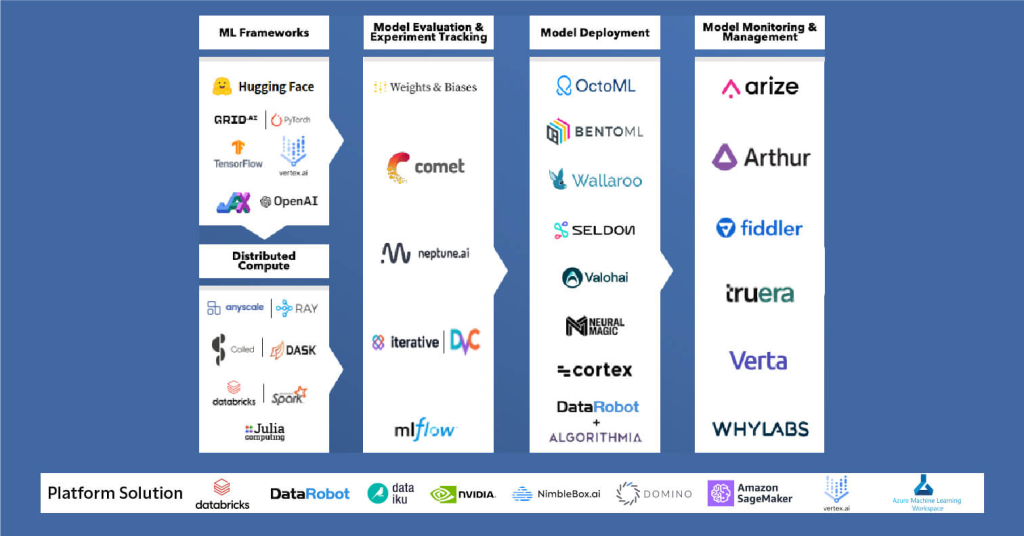
In this blog article, we will discuss the topic of MLOps tools. Whether you are a seasoned data scientist or a newcomer to the field, you have likely heard the term MLOps being thrown around. But what exactly is MLOps, and what tools are available to help streamline the process? Let’s dive in and find out!
Introduction to MLOps
MLOps is a term used to describe the process of applying DevOps principles to machine learning workflows. It involves the use of tools and processes to automate and streamline the development, deployment, and maintenance of machine learning models. The goal of MLOps is to create a more efficient and reliable process for building and deploying machine learning models.
Why Use MLOps Tools?
Before we dive into the specific tools available for MLOps, let’s first discuss the benefits of using MLOps tools in the first place.
One of the main benefits of using MLOps tools is that it helps to reduce the time and effort required to develop and deploy machine learning models. By automating many of the manual processes involved in model development, MLOps tools can free up data scientists’ time to focus on more important tasks.
Another benefit of using MLOps tools is that it helps to ensure consistency and reproducibility in the machine learning workflow. By using standardized processes and tools, MLOps can help to minimize errors and ensure that models are developed and deployed consistently across different teams and environments.
MLOps Tools
Now that we’ve discussed the benefits of using MLOps tools, let’s take a look at some of the specific tools available for MLOps.
Version Control
One of the most important tools for MLOps is version control. Just like with traditional software development, version control allows data scientists to keep track of changes to their models over time. This is important for ensuring that models can be reproduced and debugged if necessary.
There are several version control tools available for MLOps, including Git, Bitbucket, and GitHub. These tools allow data scientists to track changes to their models, collaborate with other team members, and revert to previous versions if needed.
Automated Testing
Another important tool for MLOps is automated testing. Automated testing allows data scientists to test their models quickly and efficiently, ensuring that they are functioning as expected before they are deployed.
There are several automated testing tools available for MLOps, including Pytest, Nose, and Unittest. These tools allow data scientists to write test scripts that can be run automatically to test their models.
Continuous Integration/Continuous Deployment (CI/CD)
CI/CD is a process that involves continuously testing and deploying code changes to production environments. This process is important for ensuring that models are always up-to-date and functioning as expected.
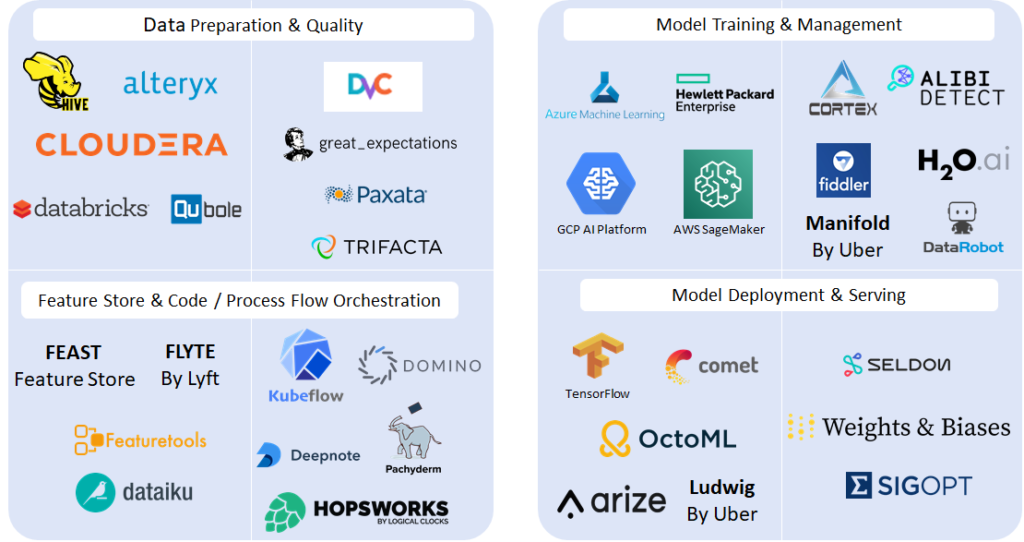
There are several CI/CD tools available for MLOps, including Jenkins, CircleCI, and Travis CI. These tools allow data scientists to automate the process of testing and deploying their models, reducing the risk of errors and ensuring that models are always up-to-date.
Model Monitoring
Finally, model monitoring is an important tool for MLOps. Model monitoring allows data scientists to keep track of their models’ performance over time, ensuring that they are still functioning as expected.
There are several model monitoring tools available for MLOps, including TensorBoard, ELK Stack, and Grafana. These tools allow data scientists to monitor their models’ performance in real-time, making it easier to identify and address issues as they arise.
Conclusion
In conclusion, MLOps is an important process for streamlining the development, deployment, and maintenance of machine learning models. By using tools like version control, automated testing, CI/CD, and model monitoring, data scientists can create a more efficient and reliable process for building and deploying machine learning models. Whether you are a seasoned data scientist or a newcomer to the field, incorporating MLOps tools into your workflow can help you to save time, reduce errors, and improve the quality of your models.
