Introduction
Finding the right hospital for a spine problem is not always as simple as searching for the best spine hospitals and choosing the first result. Patients have different diagnoses, symptoms, treatment needs, budgets, locations, and recovery requirements. A hospital that works well for one person may not be the most suitable option for another. For this reason, hospital selection should focus on the quality and type of care a patient may need rather than relying only on popularity, rankings, or advertising. Patients may be researching the best spine surgery hospitals, best spine surgeons, or the best hospital for spine surgery. Others may be looking for non-surgical treatment, rehabilitation, or a specialist opinion. This guide looks at spine hospital selection from a practical patient perspective, focusing on what is worth checking before making an informed healthcare decision.
Why Choosing the Right Spine Hospital Matters
Spine care can involve several stages, starting with diagnosis and continuing through treatment and follow-up.
Depending on the condition, a patient may need:
- Specialist consultation
- Diagnostic imaging
- Non-surgical treatment
- Surgery
- Pain management
- Physical therapy
- Rehabilitation
- Long-term follow-up
Not every hospital provides the same combination of services.
For example, someone with a condition that can be managed conservatively may primarily need a good specialist and rehabilitation support. Another patient with a complex spinal condition may require specialized surgical expertise and comprehensive inpatient care.
The goal should therefore be to find a hospital that matches the patient’s healthcare requirements.
Begin With the Condition, Not the Hospital Ranking
Before comparing hospitals, patients should understand what type of spine problem is being evaluated.
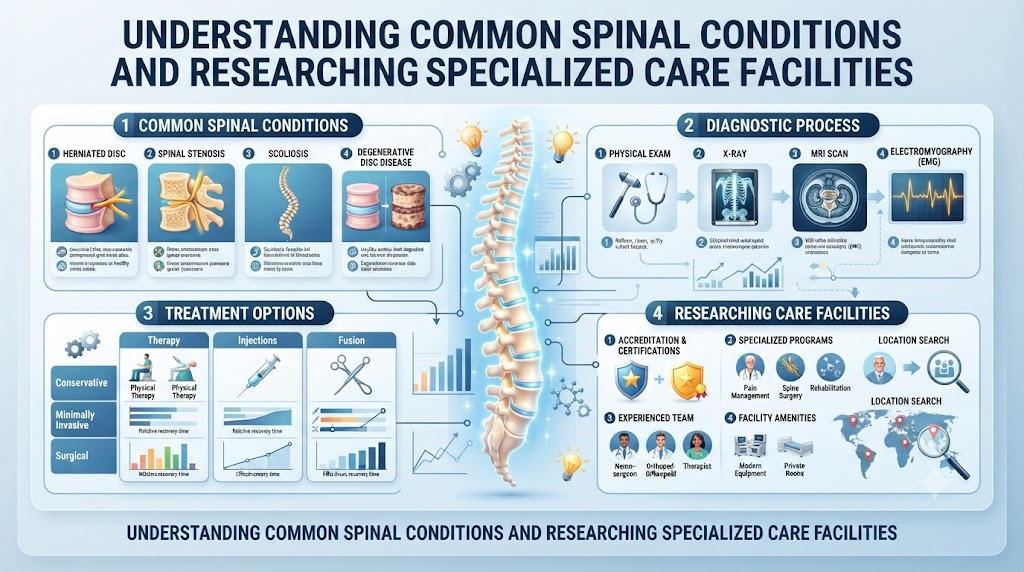
Common reasons for seeking spine care include:
- Herniated or slipped discs
- Spinal stenosis
- Scoliosis
- Spinal deformities
- Nerve compression
- Degenerative spine problems
- Certain spinal injuries
- Persistent neck or back symptoms
The same symptom can have different causes. Back pain, for example, does not automatically mean that a patient has a disc problem or needs surgery.
A qualified healthcare professional should evaluate the patient and determine the diagnosis.
Once the diagnosis or suspected condition is known, patients can search for hospitals and specialists with relevant experience.
What Should Patients Look for in a Spine Hospital?
Instead of focusing on one feature, consider the hospital as a complete care system.
Specialist Expertise
Check whether the hospital has qualified specialists who manage the relevant type of spine condition.
Depending on the patient’s needs, care may involve:
- Orthopedic spine specialists
- Neurosurgeons
- Neurologists
- Radiologists
- Pain management specialists
- Physiotherapists
- Rehabilitation professionals
The exact combination depends on the patient’s condition.
Experience With Similar Conditions
A hospital may have a strong general reputation, but relevant experience is particularly important.
Patients can ask whether specialists regularly treat conditions similar to theirs and whether the hospital provides the treatment options they may require.
Patient Communication
Medical decisions can be easier to understand when specialists communicate clearly.
Patients should have an opportunity to ask about:
- Diagnosis
- Treatment choices
- Risks
- Benefits
- Alternatives
- Expected follow-up
Clear communication does not guarantee a particular outcome, but it can help patients make more informed decisions.
Diagnostic Facilities Are an Important Part of Care
Before treatment is selected, the medical team needs appropriate information about the patient’s condition.
Depending on the situation, evaluation may involve:
- Medical history
- Physical examination
- X-rays
- MRI
- CT scans
- Neurological assessment
- Other clinically appropriate investigations
Patients should not assume that more tests automatically mean better care. The important question is whether the hospital can provide the appropriate evaluation for the condition.
Accurate diagnosis helps the specialist determine whether conservative care, further monitoring, or a procedure may be appropriate.
Not All Spine Problems Need Surgery
Patients searching for spine surgery hospitals may naturally focus on surgical services. However, surgery is only one possible form of spine treatment.
Depending on the condition, treatment may include:
- Physical therapy
- Medicines
- Exercise
- Activity modification
- Pain management
- Rehabilitation
- Other non-surgical approaches
- Surgery when clinically appropriate
Some conditions can be managed without an operation.
This is why patients should ask a specialist why surgery is being considered and whether reasonable non-surgical options are available.
The ability to perform surgery should not be the only measure of a good spine hospital.
How to Evaluate the Best Hospital for Spine Surgery
If a specialist recommends surgery, the hospital should be evaluated from the beginning of the treatment journey through recovery.
Pre-Surgery Care
Before an operation, patients may need:
- Specialist consultation
- Imaging
- Medical evaluation
- Preoperative tests
- Anesthesia assessment
- Discussion of risks and alternatives
Patients should understand why the procedure is being recommended.
Surgical Facilities
When comparing the best hospital for spine surgery, patients may consider:
- Operating facilities
- Qualified surgical teams
- Anesthesia support
- Patient monitoring
- Inpatient services
- Emergency support
Post-Surgery Support
Care does not necessarily end when the operation is complete.
Patients may need:
- Follow-up appointments
- Physical therapy
- Rehabilitation
- Recovery monitoring
- Activity guidance
- Additional medical evaluation when necessary
A hospital with a complete care pathway can make it easier for patients to understand what happens before, during, and after treatment.
Understanding Minimally Invasive Spine Surgery
Many patients search for the best hospital for minimally invasive spine surgery because they are interested in procedures that use smaller incisions and specialized techniques.
Minimally invasive approaches can be appropriate for selected spine procedures and patients. However, they are not suitable for every condition.
The decision can depend on:
- Diagnosis
- Location of the problem
- Spinal anatomy
- Severity
- Type of procedure
- Overall health
- Specialist evaluation
Patients should avoid choosing a hospital simply because it advertises a particular technique.
Instead, ask whether the approach is clinically appropriate.
Useful questions include:
- Why is this procedure recommended?
- Is minimally invasive surgery suitable for my condition?
- What alternatives are available?
- What are the possible risks?
- What follow-up will be required?
Finding the Best Hospital for Slipped Disc Treatment
A slipped disc, also called a herniated disc, can sometimes irritate or compress nearby nerves.
Symptoms may include pain, numbness, tingling, or weakness, although symptoms can vary.
People searching for the best hospital for slipped disc treatment should look for a facility capable of providing appropriate diagnosis and a range of treatment options.
Depending on the individual situation, care may include:
- Physical therapy
- Medicines
- Activity modification
- Pain management
- Other conservative approaches
- Surgery in selected cases
A slipped disc does not automatically mean that surgery is necessary.
The appropriate approach depends on clinical findings, symptoms, imaging, medical history, and response to previous treatment.
What to Consider When Searching for the Best Hospital for Scoliosis Surgery
Scoliosis can affect patients differently, and treatment depends on factors such as the severity and characteristics of the spinal curvature.
Some patients may be monitored or treated without surgery, while others may need surgical evaluation.
Patients searching for the best hospital for scoliosis surgery can compare:
- Scoliosis-related specialist expertise
- Spinal deformity experience
- Diagnostic capabilities
- Surgical facilities
- Rehabilitation services
- Follow-up arrangements
A specialist should determine whether surgery is appropriate after evaluating the patient’s individual situation.
Rehabilitation Should Be Considered Before Choosing a Hospital
One part of hospital selection that is sometimes overlooked is rehabilitation.
Depending on the treatment, patients may require:
- Physical therapy
- Exercise guidance
- Mobility support
- Pain management
- Recovery monitoring
- Follow-up consultations
This is especially relevant when treatment requires several appointments.
Patients comparing best spine treatment hospitals should ask what rehabilitation services are available and how follow-up care is organized.
The Importance of Multidisciplinary Spine Care
Some patients have complex conditions that require input from different healthcare professionals.
A multidisciplinary team may include:
- Spine surgeons
- Neurosurgeons
- Neurologists
- Radiologists
- Pain specialists
- Physiotherapists
- Rehabilitation professionals
The purpose of multidisciplinary care is to bring together appropriate expertise when necessary.
However, having a large team does not automatically mean better care. The important consideration is whether the right professionals are involved for the patient’s specific condition.
Comparing Spine Hospitals: A Practical Checklist
Patients can make the research process easier by comparing hospitals using a consistent checklist.
| Factor | What to Consider |
|---|---|
| Specialist expertise | Experience relevant to your condition |
| Diagnosis | Appropriate examination and imaging |
| Treatment options | Surgical and non-surgical care |
| Surgical services | Facilities and qualified support |
| Rehabilitation | Therapy and recovery services |
| Follow-up | Post-treatment monitoring |
| Accessibility | Travel and appointment convenience |
| Emergency services | Availability of urgent care |
| Communication | Clear explanations and patient support |
This approach can be more useful than relying on a single hospital ranking.
Does the Best Spine Hospital Near Me Need to Be the Closest One?
The search for a best spine hospital near me often starts with convenience.
A nearby hospital can be helpful when patients need repeated visits, imaging, physical therapy, or long-term follow-up.
However, distance should not be the only consideration.
Patients may also need to compare:
- Specialist expertise
- Relevant treatment experience
- Diagnostic facilities
- Surgical capabilities
- Rehabilitation
- Follow-up care
For some complex conditions, traveling farther may be worth considering if the hospital offers specialist services that are not easily available locally.
How to Research the Best Spine Surgeons
Patients researching best spine surgeons should look beyond online popularity.
Useful factors to investigate include:
- Medical qualifications
- Relevant specialization
- Experience with similar conditions
- Experience with the proposed procedure
- Hospital affiliation
- Communication style
- Follow-up arrangements
During a consultation, patients should be encouraged to ask questions and understand the reasoning behind the recommended treatment.
If surgery is suggested, it is reasonable to ask about alternatives, potential risks, and what the recovery and follow-up process may involve.
Questions to Ask Before Selecting a Spine Hospital
Before choosing between best spine treatment hospitals, patients can prepare a list of questions.
Some useful questions are:
- What is the diagnosis?
- What may be causing my symptoms?
- What treatment options are available?
- Is surgery necessary?
- Are non-surgical treatments appropriate?
- Is minimally invasive treatment suitable?
- What are the possible risks and benefits?
- What type of specialist will manage my care?
- Will I need rehabilitation?
- How will follow-up care be handled?
Writing down answers can make it easier to compare hospitals later.
Why Online Rankings Should Not Be the Only Factor
Hospital rankings, ratings, and patient reviews can be helpful starting points, but they should not replace medical evaluation.
A hospital may have an excellent overall reputation but may not have the particular expertise required for a specific spine condition.
Patients can use online resources to research:
- Specialists
- Services
- Facilities
- Treatment options
- Rehabilitation
- Hospital location
The final decision should consider the patient’s medical needs and professional medical advice.
Using BestSpineHospitals.com for Research
Patients who want to research spine hospitals, specialists, and treatment options can visit .
The website can support the initial research process by helping patients understand different spine-care options and factors that may be relevant when comparing hospitals.
However, online information should be used for research and preparation. A qualified healthcare professional should evaluate the patient’s condition and guide individual treatment decisions.
FAQs
What should I consider when choosing the best spine hospitals?
Consider specialist expertise, relevant experience, diagnostic services, treatment options, surgical facilities when needed, rehabilitation, accessibility, and follow-up care. The right choice depends on the patient’s individual requirements.
How can I research the best spine surgeons?
Review relevant qualifications, specialization, experience with similar conditions or procedures, hospital affiliation, communication, and willingness to explain treatment choices, risks, benefits, and alternatives.
What makes a hospital suitable for spine surgery?
Patients can look for qualified specialists, appropriate diagnostic services, suitable operating facilities, anesthesia and inpatient support, emergency services, rehabilitation, and postoperative follow-up.
Do all spine problems require surgery?
No. Depending on the condition, treatment may include physical therapy, medicines, exercise, activity changes, pain management, rehabilitation, or other non-surgical approaches. Surgery is considered only when clinically appropriate.
How should I choose the best hospital for minimally invasive spine surgery?
Ask whether minimally invasive surgery is appropriate for your specific condition and what alternatives are available. The recommended approach should be based on clinical evaluation rather than marketing claims.
FAQ 6
What should I look for in the best hospital for scoliosis surgery?
Consider experience with scoliosis and spinal deformity care, specialist expertise, diagnostic services, surgical capabilities, rehabilitation, and follow-up arrangements. A qualified specialist should determine whether surgery is appropriate.
What should I consider when choosing the best hospital for slipped disc treatment?
Look for a hospital that can provide appropriate evaluation and discuss both non-surgical and surgical options when needed. Treatment depends on symptoms, examination findings, imaging, medical history, and other clinical factors.
Why is rehabilitation important when comparing spine treatment hospitals?
Some patients require physical therapy, exercise guidance, recovery monitoring, or follow-up after treatment. The availability of rehabilitation can therefore be an important factor when comparing hospitals.
Is the best spine hospital near me always the right choice?
Not necessarily. A nearby hospital may be convenient, but specialist expertise, treatment availability, diagnostic services, facilities, and follow-up care should also be considered.
When should someone consult a spine specialist?
A qualified healthcare professional should be consulted when spine symptoms persist, worsen, interfere with normal activities, or require specialist assessment. The professional can determine what evaluation or treatment may be appropriate.
Conclusion
Choosing a spine hospital is less about finding a universally “best” facility and more about finding care that fits the patient’s medical needs. When comparing the best spine hospitals, patients should look at specialist expertise, relevant experience, diagnostic services, treatment choices, surgical infrastructure, rehabilitation, accessibility, and follow-up support. For people considering surgery, understanding the reason for the recommendation is important. Patients can ask whether non-surgical options are appropriate and whether a particular surgical technique, including minimally invasive surgery, fits their condition. The same approach applies when researching scoliosis surgery, slipped disc treatment, or other spine-care services.
