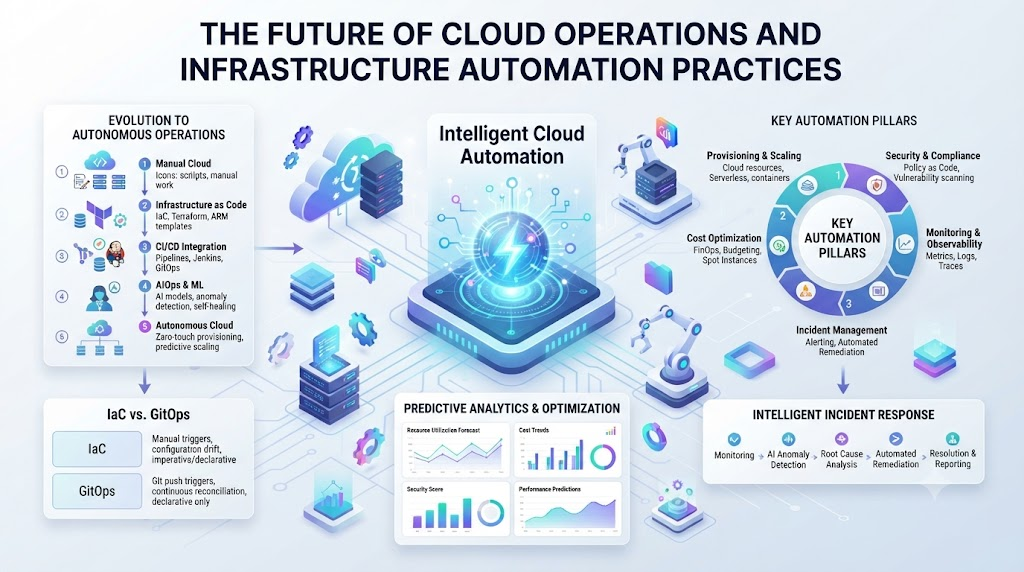
Introduction
Managing modern distributed systems often feels like chasing a moving target. Cloud engineering teams face mounting pressure to deliver application features faster while maintaining absolute stability across complex production environments. Traditional operational models—relying on manual configuration changes, uncoordinated script executions, and direct server modifications—frequently introduce configuration drift, security vulnerabilities, and unpredictable downtime. These friction points undermine reliability and burn out engineering talent. This is where adopting structured approaches becomes essential. To explore foundational paradigms that keep systems resilient, professionals often turn to resources like CloudOpsNow for practical engineering strategies. A primary mechanism for resolving operational chaos is GitOps, an operational framework that applies software development best practices directly to infrastructure and deployment workflows. By the end of this article, you will learn how GitOps transforms cloud operations management, core architectural workflows, implementation steps, and how to avoid costly pitfalls in enterprise environments.
2. What Is GitOps?
GitOps is an operational framework that uses Git repositories as the single source of truth for declarative infrastructure and application configurations. Rather than using imperative scripts or manual console clicks to provision resources, engineering teams define their entire target architecture using code files.
The core purpose of this model is to bring version control, transparency, audit trails, and automated reconciliation to cloud infrastructure management. Within broader cloud operations, GitOps acts as the engine driving continuous delivery. Engineering teams use it to bridge the gap between development speed and operational safety. Anyone managing container platforms, serverless functions, or virtual machine fleets benefits from the clarity and determinism that GitOps introduces.
3. How Does GitOps Work?
The technical workflow of GitOps relies on continuous reconciliation loops that match the desired state in a repository with the actual runtime state in the cloud.
- State Declaration: Engineers write declarative configuration files defining the infrastructure or application deployment and commit them to a Git repository.
- Review and Merge: Changes go through standard pull requests, enabling peer reviews, automated security scanning, and policy validation before merging.
- Agent Notification: An in-cluster or external operator detects that a new commit has landed on the main deployment branch.
- Automated Synchronization: The reconciliation agent fetches the new configuration and applies it to the target cloud environment or orchestration layer.
- Drift Detection and Correction: Continuous monitoring checks for discrepancies between the Git repository and live resources, automatically correcting unauthorized manual adjustments.
4. Core Components of GitOps
Infrastructure as Code (IaC)
Infrastructure definitions are written in declarative formats like Terraform templates or Kubernetes manifests, ensuring that environments can be spun up identically across regions.
Version Control System (VCS)
Git functions as the authoritative source of truth. Every modification, addition, or deletion is permanently logged, providing instant rollback capabilities by reverting commits.
Automated Reconciliation Agents
Specialized software operators run within or alongside cloud environments to continuously evaluate state discrepancies and enforce configuration sync without human intervention.
5. Role of AWS, Azure, and GCP
Implementing GitOps across major public clouds requires understanding how native orchestration layers interact with declarative definitions.
- Amazon Web Services (AWS): Teams frequently combine declarative Infrastructure as Code tools with container orchestrators like Amazon ECS or Amazon EKS, using controllers to synchronize workloads stored in GitHub or GitLab repositories.
- Microsoft Azure: Azure integrates smoothly with Git-backed pipelines through native tooling and managed Kubernetes services (AKS), supporting streamlined enterprise governance and access workflows.
- Google Cloud Platform (GCP): Google Cloud utilizes native build pipelines and Anthos or Google Kubernetes Engine (GKE) clusters, allowing operators to secure deployments using policy enforcement engines directly tied to source repositories.
6. Cloud Operations and Automation Considerations
Modern cloud operations management relies heavily on minimizing manual overhead through smart automation. GitOps shifts cloud infrastructure automation away from ad-hoc scripting toward structured, reviewable pipelines.
When scaling environments, manual provisioning creates severe bottlenecks. By standardizing configuration files and leveraging automated testing before merges occur, teams establish robust cloud operations best practices. This eliminates human error during late-night deployments and ensures uniform resource tagging, security policies, and networking parameters across development, staging, and production estates.
7. Monitoring, Observability, and Reliability
A successful deployment model requires deep visibility into system behavior. While GitOps manages the deployment state, observability tools like Prometheus, Grafana, and OpenTelemetry measure runtime health.
Teams track key metrics, log streams, and distributed traces to verify that code changes do not degrade service level indicators (SLIs). If an automated synchronization introduces a performance regression, real-time alerts notify engineers, who can immediately execute a Git revert to restore stability.
8. Security and Governance
Security in a GitOps architecture is centered around principle-of-least-privilege access and immutable audit trails.
- No Direct Production Access: Engineers do not log into production servers or clusters directly; all changes flow through authenticated pull requests.
- Enhanced Compliance: Every modification carries a cryptographic signature and an approval history, satisfying rigorous compliance and auditing requirements.
- Secret Management: Sensitive credentials are kept out of plain-text repositories by integrating secure vault solutions and encryption tools directly into the deployment pipeline.
9. Best Practices
- Treat Git as the Absolute Source of Truth: Never allow manual hotfixes directly on production infrastructure; all changes must originate from a version-controlled pull request.
- Implement Rigorous Automated Testing: Run syntax validation, security linting, and policy checks on every pull request before merging code into production branches.
- Separate Environments Logically: Use dedicated branches or folder structures within your repository to isolate development, staging, and production environments clearly.
- Adopt Declarative Over Imperative Definitions: Always declare what the system should look like rather than writing procedural scripts detailing step-by-step execution.
- Enable Real-Time Drift Alerts: Configure reconciliation agents to notify operations teams immediately when unauthorized changes or drift occur in cloud resources.
- Secure Secrets Properly: Never commit plaintext credentials or API keys to public or private repositories; leverage external secret stores securely.
- Scale Incrementally: Begin implementation with non-critical workloads to refine team workflows before migrating mission-critical production systems.
10. Common Mistakes
- Bypassing Code Reviews for Speed: Allowing emergency bypasses ruins audit histories and reintroduces configuration drift.
- Monolithic Repository Structures: Packing all microservices and infrastructure into a single massive repository slows down pull request validation and creates merge conflicts.
- Ignoring Automated Reconciliation Alerts: Disabling or ignoring drift warnings leaves systems vulnerable to undocumented manual modifications.
- Inadequate Secret Encryption: Storing unencrypted passwords or tokens directly inside configuration files exposes organizations to immediate data breaches.
- Neglecting Rollback Testing: Failing to verify that automated rollbacks function correctly during staging exercises often leads to extended outages in production.
11. Real-World Use Cases
- Multi-Cluster Kubernetes Management: Enterprises manage dozens of globally distributed Kubernetes clusters from a single central Git repository, ensuring uniform security baselines.
- Automated Compliance Enforcement: Financial institutions use pull request validations to ensure every infrastructure change complies with strict regulatory frameworks before deployment.
- Disaster Recovery and Environment Replication: Teams completely rebuild failed production environments in a secondary cloud region within minutes by applying the canonical state from Git.
12. Challenges and Limitations
While powerful, GitOps introduces specific operational hurdles. Managing secrets securely within a Git workflow requires additional tooling and careful key management.
Cultural resistance can also slow adoption, as traditional operations teams accustomed to manual console administration must adapt to code-centric workflows. Furthermore, tool sprawl and complex reconciliation loops can introduce debugging overhead when automated pipelines encounter unexpected synchronization errors.
13. Step-by-Step Implementation Guide
- Assess Existing Architecture: Review current deployment workflows, identify manual intervention points, and inventory your existing declarative configurations.
- Establish Repository Standards: Create structured Git repositories with clear branching strategies, protection rules, and mandatory peer-review policies.
- Select Synchronization Tooling: Install and configure cloud-native synchronization agents suited to your orchestration stack.
- Define Initial Workloads: Migrate a non-production application or auxiliary infrastructure stack into the new declarative structure.
- Configure Automated Pipelines: Set up automated testing, linting, and security scans to run on every incoming pull request.
- Establish Monitoring and Drift Detection: Connect runtime observability tools and verify that reconciliation agents successfully detect and correct simulated drift.
14. Future of GitOps
The future of GitOps points toward deeper integration with artificial intelligence, autonomous remediation engines, and policy-as-code frameworks. As platform engineering continues to mature, automated systems will predict configuration bottlenecks before they impact users. Unifying security scanning, cost optimization, and multi-cloud management into cohesive Git workflows will cement GitOps as the standard operating model for modern cloud-native enterprises.
Frequently Asked Questions
- What is GitOps and how does it relate to DevOps?
GitOps builds upon core DevOps principles by taking continuous delivery, version control, and collaboration, and applying them directly to infrastructure and operational management.
- Is GitOps only usable with Kubernetes?
No, while Kubernetes is the most common platform for GitOps due to its native declarative model, the principles apply to any infrastructure management workflow that supports declarative definitions.
- How does GitOps improve cloud infrastructure management security?
It eliminates direct manual access to production environments, replacing ad-hoc changes with auditable pull requests, automated security scans, and strict peer reviews.
- What happens if someone makes a manual change to the live environment?
In a GitOps model, automated synchronization agents detect the configuration drift immediately and reconcile the environment back to the desired state defined in Git.
- Which version control systems are compatible with GitOps?
Any standard Git hosting platform—such as GitHub, GitLab, or Bitbucket—can serve as the single source of truth for your configuration files.
- How are secrets handled securely in GitOps?
Sensitive data is encrypted using specialized tools and injected securely at runtime rather than storing raw plaintext credentials inside your repositories.
- Can GitOps support multi-cloud strategies?
Yes, teams manage resources across multiple cloud providers simultaneously by organizing their repositories to target different cloud-agnostic infrastructure definitions.
- What tools are commonly used for GitOps synchronization?
Popular choices include specialized continuous delivery operators designed to monitor repositories and automatically apply state changes to clusters.
- How difficult is it for traditional teams to transition to GitOps?
The transition requires a cultural shift toward code-centric workflows, but teams usually progress smoothly by starting with non-critical workloads and scaling gradually.
- How does GitOps handle rollbacks during an outage?
Because all changes are version-controlled, rolling back a faulty update is as simple as reverting a commit in Git, which triggers an automatic synchronization to the stable state.
Conclusion
Embracing GitOps allows engineering organizations to bring predictability, transparency, and robust automation to their daily operations. By treating configuration files as the ultimate source of truth, teams eliminate configuration drift, streamline compliance audits, and build resilient cloud systems. Implementing these practices responsibly empowers cloud professionals to scale infrastructure efficiently while maintaining absolute confidence in their production environments.
