Introduction
Japan rewards travelers who explore by road. The asphalt is smooth. The mountain passes wind through cedar forests. Neon city streets glow after dark. A rental vehicle gives you true travel independence.
You can chase hidden shrines in the countryside. You can stop at a roadside station for fresh local fruit. You can change plans on a whim. Trains are great, but wheels take you further.
This guide covers motorcycles, scooters, and cars across Japan. It also covers fleet software for shop owners. We built it for riders, tourists, and rental operators alike. MotoShare.jp connects these groups through one simple marketplace. Let’s dive in.
Why Rent a Motorcycle in Japan?
Riding across Japan is pure joy. The roads stay clean and well maintained. Drivers are calm and predictable. Signage is clear, even if you cannot read Japanese yet.
Highway rest stops, called Michi-no-Eki, are a treat. They offer local food, clean restrooms, and regional souvenirs. Many sit beside stunning mountain views. You can rest, refuel, and chat with locals.
Mountain roads like the Irohazaka and Hakone Skyline wind through forests. Quiet countryside shrines wait at the end of narrow lanes. Coastal routes offer ocean views for miles. Every turn feels like a postcard.
One key rule: match the engine class to your skill. A 50cc moped suits short city hops. A 125cc small bike handles light touring. A 250cc light motorcycle balances power and ease. Heavy bikes of 400cc and above demand real experience. Be honest about your comfort level before you book.
Choosing Your Ride: Scooters, Touring Bikes, and Cars
Japanese streets vary wildly. Tokyo alleys are tight. Tollways run fast. Mountain roads climb steeply. The right vehicle depends on your route, your luggage, and your license class. Choose carefully before booking.
| Vehicle Type | Best Use | Rider License Class Needed | Luggage Space | Road Comfort |
|---|---|---|---|---|
| City Scooter (50cc–125cc) | City hops, short errands, local sightseeing | 50cc: moped license; 125cc: small motorcycle license | Small underseat box | Low; fine for short city trips |
| Standard Commuter (250cc) | Day tours, suburban riding, light highways | Light motorcycle license (250cc class) | Medium; add a rear bag | Good; stable at highway speed |
| Touring Motorcycle (400cc–1000cc+) | Long distance, mountain passes, expressways | Heavy motorcycle license (400cc+) | Large; panniers and top box | Excellent; built for hours of riding |
| Compact Rental Car / Kei Car | Families, rain days, heavy luggage | Standard Japanese driver’s license or valid IDP | Large trunk or rear seats | High; weatherproof and comfortable |
Highway speed limits in Japan sit at 80 to 120 km/h on expressways. Urban roads run much slower. Most toll gates accept ETC cards, so ask for one. Passengers in cars must wear seatbelts at all times. Motorcycle tandem rules differ, and we cover them later.
レンタルバイク 東京 and Motorcycle Rental Tokyo
Tokyo is a fantastic base for a riding trip. Central avenues are wide and orderly. Cross the Rainbow Bridge and you feel the city open up. Odaiba offers waterfront views and open roads. Head west and Hakone and Mt. Fuji wait within a day’s ride.
Riders searching for レンタルバイク 東京 will find many options. Shops cluster near major stations and highway entry points. Book early on weekends, because popular models sell out fast. Always compare engine class, insurance coverage, and luggage options.
For motorcycle rental Tokyo visitors, timing matters. Avoid weekday rush hours in central wards. Early morning rides feel calm and cool. Weekend getaways toward Fuji need an early start, especially in autumn.
Also, plan your parking before you leave. Central Tokyo enforces strict parking rules. You cannot leave a bike just anywhere. We explain legal parking spots in a later section.
MotoShare.jp lists verified Tokyo shops with real prices in JPY. That makes comparing options simple. You see the bike, the shop, and the total cost before booking.
スクーターレンタル 東京 and Affordable Urban Cruising
Scooters shine in the city. They slip through traffic easily. They park in small spaces. They sip fuel, which keeps costs low. For daily commuting or short tourist hops, a scooter is a smart pick.
Lightweight scooters under 125cc need a small motorcycle license for foreign riders. The exact class depends on your IDP category. Confirm your license covers the engine size before booking. Shops will check this carefully.
Parking is the big challenge in central wards. Sidewalk parking draws swift fines from ward monitors. Use designated motorcycle parking bays, called bike parking lots. Many charge by the hour, and some offer daily rates.
Hunting for 東京 バイク レンタル 安い deals? Compare weekly rates and off-season discounts. Shops near residential wards often cost less than tourist hubs. Also ask about helmet rental and included insurance.
For スクーターレンタル 東京 searches, MotoShare.jp shows budget-friendly scooters across the city. You can filter by engine size, price, and pickup location. That saves time and money.
レンタルバイク 日本 and Touring Across the Country
Japan is a touring paradise. The Izu Peninsula offers coastal curves and ocean views. Nagano hides mountain switchbacks through alpine air. Hokkaido stretches wide and wild, with long empty roads.
Long-distance touring needs planning. Weather shifts fast in the mountains. Summer brings typhoons to coastal regions. Spring and autumn mornings feel chilly at higher altitudes. Pack layers and rain gear.
Heated grips help on cold mountain mornings. Many touring bikes include them, so check before booking. Roadside stations offer warm drinks and local maps. They also make great photo stops.
For レンタルバイク 日本 trips, plan your fuel stops in rural areas. Gas stations thin out in the mountains. Fill up whenever you see a station. Also keep some cash handy for unmanned toll gates.
Riders searching motorcycle rental Japan will find MotoShare.jp covers many regions. You can book a bike in Tokyo and plan a multi-day route. Just confirm the shop’s return rules first.
Pre-Ride Safety Check and Highway Rules
A quick check before you ride prevents big problems later. It takes five minutes. Walk around the bike with the shop staff. Confirm every item on this list before you leave.
| Check Point | What to Look For | Why It Matters |
|---|---|---|
| Tire Tread & Air Pressure | Visible tread depth; firm tires; no cracks | Grip and stability depend on healthy tires |
| Front & Rear Brake Levers | Firm feel; no sponginess; smooth response | Brakes are your first safety system |
| Headlight & Turn Signals | Bright beam; all signals flash clearly | Visibility keeps you safe at night |
| Jibaiseki Insurance Papers | Valid certificate stored on the bike | Mandatory liability coverage proof |
| ETC Card Unit & Reader | Unit powers on; card inserts smoothly | Avoids toll gate delays and fines |
| Mirrors & Handlebar Controls | Tight mirrors; smooth throttle and clutch | Control and awareness start at the bars |
Japan drives on the left side of the road. This surprises many visitors, so stay alert at intersections. On expressways, tandem riding has strict rules. Check the age and license duration requirements. Finally, take photos of the bike at check-in. This protects you from damage disputes later.
レンタカー 東京 and Car Rental Tokyo for Groups
Sometimes a car beats a motorcycle. Rainy season travel is one case. Carrying heavy suitcases is another. Family road trips with small children need car seats and doors. A car solves all of this.
Compact Kei-cars zip through tight alleyways. They park in small spaces and sip fuel. Larger hybrid cars suit highway cruising and long trips. Both handle Japan’s toll network well.
Highway tolls add up on long routes. Rent an electronic ETC card with your car. It speeds up toll gates and often lowers the fare. Many rental shops offer ETC cards for a small daily fee.
Parking towers are common in Tokyo. Your car parks itself in a mechanical stack. Check height limits before entering. Also note the operating hours, because some towers close at night.
For レンタカー 東京 searches, book early during holiday seasons. Golden Week and New Year fill up fast. Travelers seeking car rental Tokyo options will find family-friendly vehicles at MotoShare.jp. Compare trunk space and seat counts before you decide.
Modern Fleet Software: バイクレンタル 管理システム
Running a rental fleet is hard work. Bookings arrive from many channels. Bikes need cleaning and servicing. Licenses need checking. Deposits need tracking. Spreadsheets break down fast.
Modern software fixes this chaos. A バイクレンタル 管理システム shows live bike availability in real time. Online bookings sync automatically. Double bookings disappear. Staff see every reservation on one screen.
License record management matters too. Shops must verify IDP categories and expiration dates. Good software stores these records safely and flags problems early. That protects both the shop and the rider.
Deposit calculation and refund tracking also get easier. The system logs every payment in JPY. Reports show revenue by bike, by week, by season. That data guides smarter fleet decisions.
Car rental shops benefit from the same tools. A レンタカー 管理システム handles vehicle classes, insurance add-ons, and ETC card inventory. Fleet managers save hours every week. Fewer errors mean happier customers.
How MotoShare Connects Renters and Rental Businesses
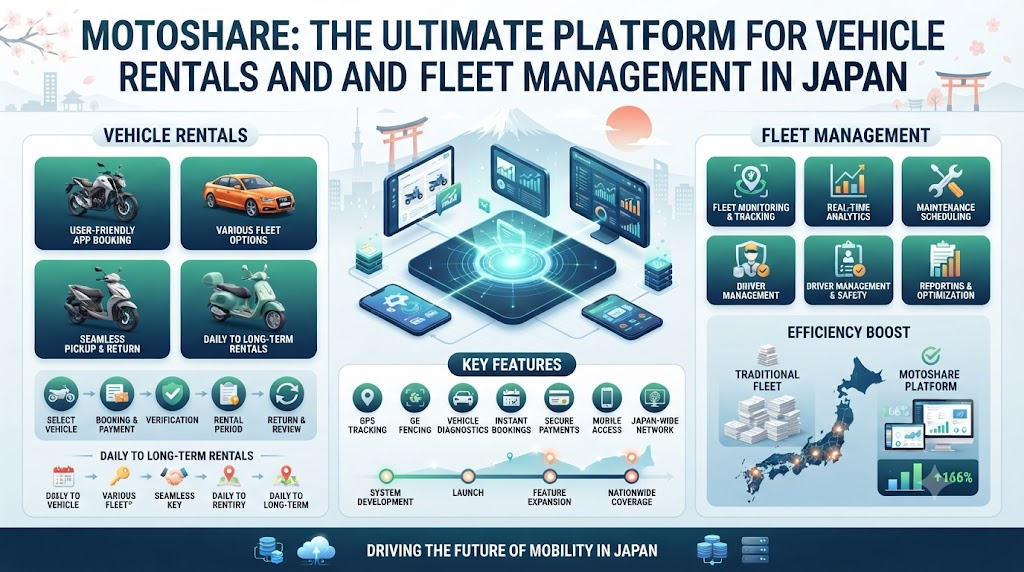
MotoShare.jp works on two sides. For travelers, it is a discovery marketplace. You browse real bikes and cars from verified local partners. Prices show clearly in JPY. You book online in minutes.
For rental operators, it is a full management platform. Shops list their fleet, manage bookings, and track availability. The system handles license checks and deposit records. Owners focus on service, not paperwork.
Transparency is the core promise. There are no hidden platform fees. You see the full price before you confirm. Verified fleet partners meet local safety and insurance standards.
So whether you ride or rent out vehicles, MotoShare.jp serves both sides. Travelers gain choice and trust. Operators gain reach and efficiency. That balance makes the road better for everyone.
Real-Life Travel and Business Scenarios
- Haneda arrival ride: An international tourist lands at Haneda Airport. They rent a 250cc bike near the city. With a valid IDP and a packed route map, they ride toward Mount Fuji and Hakone. Two days of mountain roads and lake views follow.
- Kamakura weekend scooter: A Tokyo resident wants a cheap weekend escape. They book an affordable scooter through a local shop. They ride south to Kamakura’s coastal cafes and quiet temples. Parking is easy, and fuel costs stay tiny.
- Nikko family car trip: A family rents a spacious hybrid car in Tokyo. They drive to Nikko to see the famous shrines. No train timetables, no luggage struggles. The kids nap in the back while parents enjoy the mountain road.
- Shop owner upgrade: A local motorcycle shop owner runs a growing fleet. Bookings arrive from many channels and overlap. They adopt modern rental software to track availability and licenses. Double bookings stop, and weekend revenue climbs.
Common Mistakes to Avoid When Renting Vehicles in Japan
- Wrong IDP type: Japan only accepts the 1949 Geneva Convention International Driving Permit. Other permit types do not work. Check your permit before flying, and apply for the correct one at home.
- Sidewalk parking: Parking bikes on public pedestrian sidewalks brings swift fines. Ward monitors patrol central Tokyo daily. Use designated motorcycle parking bays instead. They cost little and keep you legal.
- Skipping the ETC card: Long expressway journeys get slow and costly without ETC. Ask for an ETC card when booking. It speeds up toll gates and often cuts the fare.
- Tandem expressway errors: Riding tandem on the Shuto Expressway has strict rules. The passenger must meet age and license duration requirements. Confirm the rules with your rental shop before riding two-up.
- No damage photos: Skipping a walk-around inspection can cost you. Existing scratches may get blamed on you later. Take clear photos and video at pickup. Show them to shop staff before leaving.
- Moped expressway entry: Bikes under 125cc cannot enter expressways in Japan. The law requires over 125cc for toll roads. Plan slower local routes if you rent a moped. Never ignore the blue expressway signs.
- Self-service fuel confusion: Many rural stations run self-service pumps. Learn the payment flow before you arrive. Ask staff for help the first time. Running out of fuel in the mountains ruins a good day.
- Cash and card gaps: Rural mountain towns may have unmanned toll gates. Some small shops take cash only. Carry a local credit card and some JPY cash. That combo covers almost every situation.
Simple Rental Booking Checklist
- Valid 1949 Geneva Convention IDP: Or bring your official Japanese driver’s license with a certified translation. Check the permit category covers your bike’s engine size.
- Original passport: Foreign travelers must show their physical passport at pickup. Shops scan it for legal records. Copies are not enough.
- Major credit card: Shops place a security deposit pre-authorization on your card. Confirm the limit covers the deposit before you arrive.
- Certified helmet: Rent one from the shop or bring your own. It must meet Japanese JIS or equivalent safety standards. Loose or damaged helmets get refused.
- Fuel and return plan: Confirm the full-tank return policy at pickup. Note the return time in your calendar. Late returns may add fees.
Frequently Asked Questions
1. What driver’s license do foreign tourists need to rent a motorcycle in Japan?
Foreign tourists need a valid 1949 Geneva Convention International Driving Permit. Your home license must also be valid and match the bike class. The IDP must carry the correct motorcycle category. Shops check both documents carefully at pickup. Without them, you cannot rent or ride legally in Japan.
2. Which side of the road do vehicles drive on in Japan?
Japan drives on the left side of the road. This applies to cars, motorcycles, and scooters everywhere. Watch carefully at intersections and roundabout-style junctions. Left turns feel easy, but right turns cross oncoming traffic. Take your first ride slowly. Your brain adjusts within a day or two.
3. Are motorcycle helmets legally required for all riders across Japan?
Yes, every rider and passenger must wear a certified helmet in Japan. The law applies on all roads, including short city trips. Helmets must meet Japanese safety standards, such as JIS. Rental shops provide approved helmets with every bike. Never ride without one, even for a quick errand.
4. Are motorcycles permitted to ride on Japanese expressways and toll roads?
Motorcycles over 125cc may use expressways and toll roads in Japan. Mopeds and small bikes under 125cc are banned from these roads. Tandem riding has extra rules on some urban expressways. Check your bike’s class before planning highway routes. Always confirm tandem rules with your rental shop.
5. What is the mandatory Jibaiseki insurance policy in Japan?
Jibaiseki is Japan’s mandatory liability insurance, required by law for all vehicles. It covers injury to other people in an accident. It does not cover your own bike or your own injuries. Rental shops include it automatically. Many riders add optional coverage for extra peace of mind.
6. What is an ETC card, and why should motorcycle renters ask for one?
ETC is Japan’s electronic toll collection system. An ETC card slots into a reader on the bike or car. It lets you pass toll gates without stopping. Fares are often discounted. Ask your rental shop for an ETC card when planning long expressway journeys. It saves time and money.
7. Where can riders legally park motorcycles and scooters in central Tokyo?
Use designated motorcycle parking bays and paid bike parking lots in central Tokyo. Sidewalk parking draws fast fines from ward monitors. Many lots charge by the hour, and some offer daily rates. Plan your parking stops before each ride. Never assume a spot is legal without a clear sign.
8. Can two people ride tandem on a motorcycle in Japan?
Yes, tandem riding is legal if the bike is registered for two people. The passenger must be at least 16 years old. On the Shuto Expressway, extra rules apply for younger or newer riders. The rider must hold the correct license class. Confirm the shop’s tandem policy before booking.
9. When should a traveler choose a rental car instead of a motorcycle in Tokyo?
Choose a car during rainy season, with heavy luggage, or with small children. Families need car seats and doors. Groups with suitcases need trunk space. Cars also handle long highway trips in comfort. Motorcycles suit solo riders and fair weather. Match the vehicle to your real needs.
10. What should a rider do if they encounter an accident or flat tire on a Japanese highway?
Move to a safe spot off the road and turn on hazard lights. Call the emergency number 110 for police help. Contact the rental shop immediately after. Many shops offer roadside assistance for renters. Do not attempt repairs on a busy highway. Safety comes first, always.
11. How does a rental management system help Japanese vehicle shop operators?
A rental management system tracks live bike availability in real time. It stops double bookings and syncs online reservations. It stores license records and calculates deposits in JPY. Reports show revenue by vehicle and season. Owners save hours of admin work and reduce costly errors.
12. Why should riders and fleet owners use a platform like MotoShare in Japan?
MotoShare.jp shows verified rental partners with clear prices in JPY. Riders compare bikes, scooters, and cars in one place. Operators gain reach and use built-in management tools. There are no hidden platform fees. Both sides save time. That makes booking and renting simpler and safer.
Conclusion
Match your vehicle to your route. A scooter suits city streets. A touring bike handles mountain passes. A car wins on rainy days and family trips. Check the season, the weather, and your luggage needs. Then confirm your license class covers the ride.
Respect local road etiquette. Drive on the left, park legally, and wear your helmet. Carry your IDP and some cash. Ride within your limits and enjoy every mile.
Japan’s roads are waiting. From Fuji’s foothills to Hokkaido’s wide plains, the open highway calls. Ride safe, travel smart, and let the journey surprise you.
