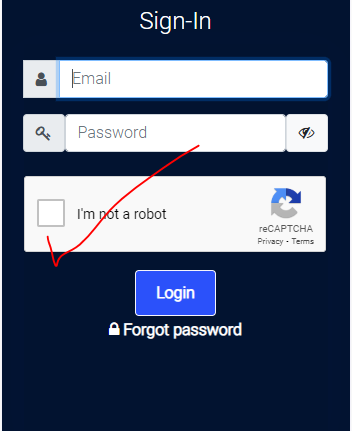
Integrating Google re-Captcha In Laravel

Google reCAPTCHA is a powerful tool for protecting websites from spam and abuse. Integrating reCAPTCHA into your Laravel application adds an additional layer of security by requiring users to verify that they are not bots. In this guide, we’ll walk through the process of integrating Google reCAPTCHA into a Laravel application.

Step 1: Sign Up for reCAPTCHA

The first step is to sign up for Google reCAPTCHA if you haven’t already. Visit the reCAPTCHA website (https://www.google.com/recaptcha) and sign in with your Google account. Once logged in, register your website/domain to obtain the necessary keys for integration.
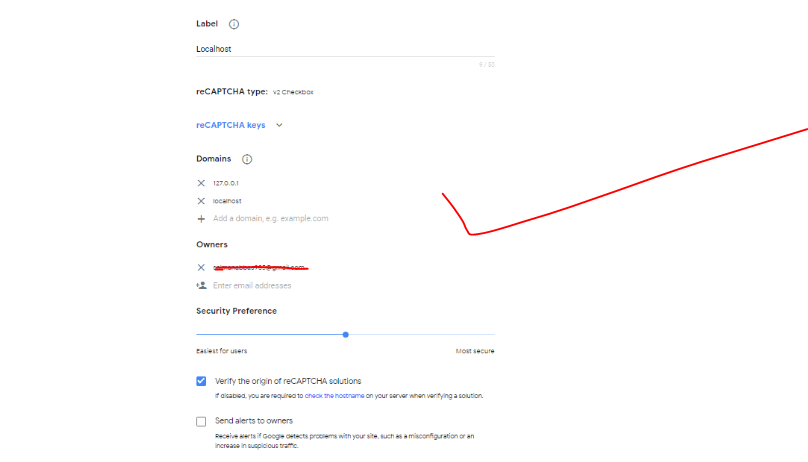
Step 2: Get Site and Secret Keys: After registering your website/domain, you’ll receive two keys: Site key and Secret key. These keys are essential for integrating reCAPTCHA into your Laravel application. Keep them secure and don’t share them publicly.

Step 3: Install Google reCAPTCHA Package: In your Laravel application directory, install the “anhskohbo/no-captcha” package using Composer. This package provides a simple way to integrate reCAPTCHA into Laravel forms.

composer require anhskohbo/no-captcha

Step 4: Configure .env File: Add your reCAPTCHA site key and secret key to the .env file of your Laravel application.

NOCAPTCHA_SECRET=your-secret-key
NOCAPTCHA_SITEKEY=your-site-key

Step 5: Add reCAPTCHA to Laravel Forms

 <div class="form-group{{ $errors->has('g-recaptcha-response') ? ' has-error' : '' }}">
{!! app('captcha')->display() !!}
 @if ($errors->has('g-recaptcha-response'))
<span class="help-block">
<strong class="tst4 btn btn-danger">{{ $errors->first('g-recaptcha-response') }}</strong>
</span>
@endif
</div>
public function login(Request $request)
    {
        $validator = Validator::make($request->all(), [

            'email' => 'required|string|email|max:255|unique:users',
            'password' => 'required|string|min:8|confirmed',
            'g-recaptcha-response' => 'required|captcha',
        ]);

      
    }
}

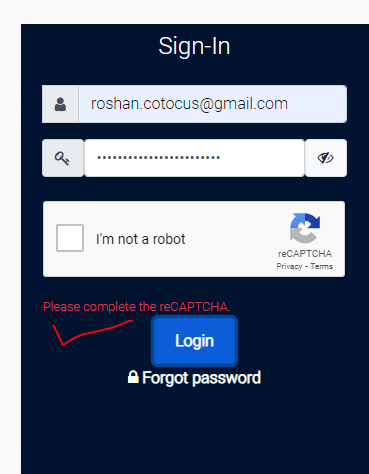
Output:-

Without clicking on recaptcha
Hopefully, It will help you …!!!

Related Posts

Certified AIOps Manager: Strategic Framework for Intelligent IT Operations

Introduction The Certified AIOps Manager program is a specialized training designed to help professionals lead the next wave of IT operations. This guide is for engineers and…

Read More

Advanced AIOps Architect Certification Roadmap for DevOps Engineers

Introduction The Certified AIOps Architect is a comprehensive professional program designed for engineers and architects who want to master the intersection of Artificial Intelligence and IT Operations….

Read More

Advanced Certified AIOps Professional Guide for Mastering AI Driven Operations Skills

Introduction Artificial Intelligence for IT Operations is the future of managing complex systems and large scale digital environments. The Certified AIOps Professional program is designed for those…

Read More

Certified AIOps Engineer Training to Boost Automation Monitoring and Career Growth

The Certified AIOps Engineer is a specialized professional program designed to integrate artificial intelligence into modern IT operations. As systems scale and generate massive amounts of telemetry…

Read More

Advanced Guide to AIOps Foundation Certification for Scalable IT Infrastructure

In an era where infrastructure and applications generate massive amounts of telemetry data, manual intervention is no longer a sustainable strategy for maintaining system uptime. The AIOps…

Read More

Advanced Certified Site Reliability Manager Learning Path for DevOps Teams

Introduction The Certified Site Reliability Manager program is an essential credential for those aiming to lead high-performance engineering teams in the modern era of cloud computing. As organizations transition…

Read More
Subscribe
Notify of
guest
0 Comments
Oldest
Newest Most Voted
Inline Feedbacks
View all comments
0
Would love your thoughts, please comment.x
()
x