Punching Through the Surface with CSS

In the vast ocean of web design, there exists a technique that allows websites to transcend the ordinary and dive deep into creativity. This technique, metaphorically speaking, is akin to “punching through the surface,” breaking free from the constraints of conventional design and exploring new depths of creativity and innovation. In this blog post, we’ll embark on a journey to explore this concept further and uncover the potential it holds for creating engaging and memorable web experiences.

HTML Structure:

<!DOCTYPE html>
<html lang="en">
<head>
    <meta charset="UTF-8">
    <meta name="viewport" content="width=device-width, initial-scale=1.0">
    <title>Three Columns Layout - Wizbrand</title>
    <link rel="stylesheet" href="style.css">
</head>
<body>
    <div class="container">
        <div class="container">
            <div class="container">
                <div class="container">
                    <div class="surface">
                        <div class="hole"></div>
                    </div>
                 </div>
            </div>
        </div>
    </div>
    
</body>
</html>

CSS Structure:

.container {
    padding: 28px;
    width: 100%;
    padding: 28px;
    width: 100%;
    background: blue;
}

.surface {
    display: flex;
    justify-content: center;
    align-items: center;
    background-color: black;
    width: 300px;
    height: 300px;
    margin: auto;
}

.hole {
    height: 150px;
    width: 150px;
    border-radius: 50%;
    height: 150px;
    width: 150px;
    border-radius: 50%;
    background: linear-gradient(239deg,#387ba8 27.11%,#1eb47d 73.91%);
    background-attachment: fixed;
}

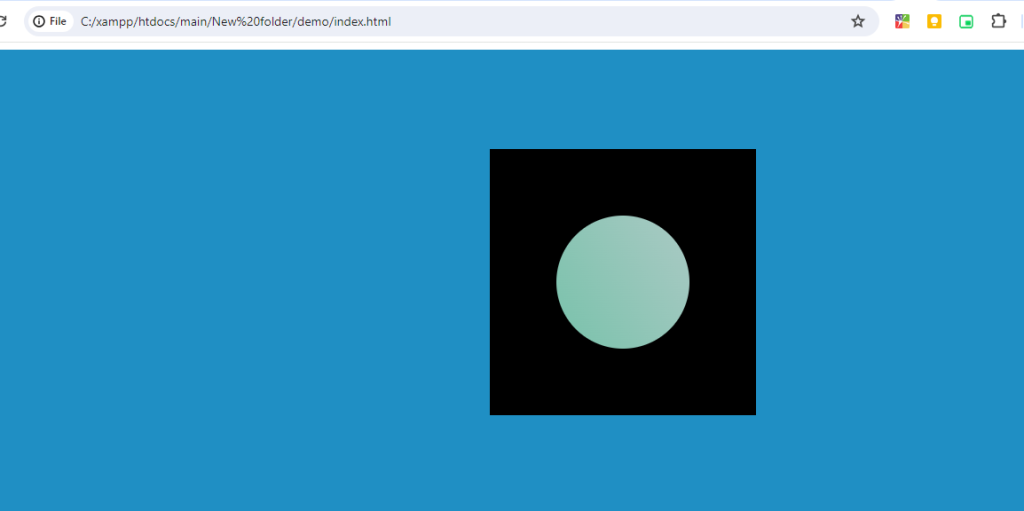
Output:-
Related Posts

Best Free Programming Ebooks to Learn Software Development

Learning modern technology can feel overwhelming when tutorials are scattered across dozens of websites. Many software developers, engineering students, and IT professionals struggle to find comprehensive study…

Read More

FinOps Training: Understanding Cost Visibility and Optimization

Introduction Moving workloads to the cloud can simplify infrastructure management, but it can also introduce a new financial challenge. Teams can provision resources whenever they need them,…

Read More

The Architecture of Intelligent DataOps: From Ingestion to Automation

Introduction Modern organizations run on distributed data ecosystems. On any given day, an enterprise environment ingests, transforms, and serves petabytes of records sourced from transactional databases, external…

Read More

Transforming Data Reliability: How DataOps Platforms Drive Proactive Monitoring

Introduction Traditional monitoring focuses almost entirely on infrastructure availability and binary job execution states—whether a server is up or whether a task completed. However, modern distributed environments…

Read More

Navigating Pipeline Risks with Expert DevSecOps Consulting Services

Software delivery moves faster today than at any point in technological history. High-performing engineering organizations push code changes to production multiple times a day using automated deployment…

Read More

DevOps Support Services: Key Practices for Stable Production Environments

Introduction Running modern software infrastructure is an ongoing responsibility. A development team may successfully launch an application, but keeping that application reliable in production requires continuous attention….

Read More
Subscribe
Notify of
guest
0 Comments
Oldest
Newest Most Voted
Inline Feedbacks
View all comments
0
Would love your thoughts, please comment.x
()
x