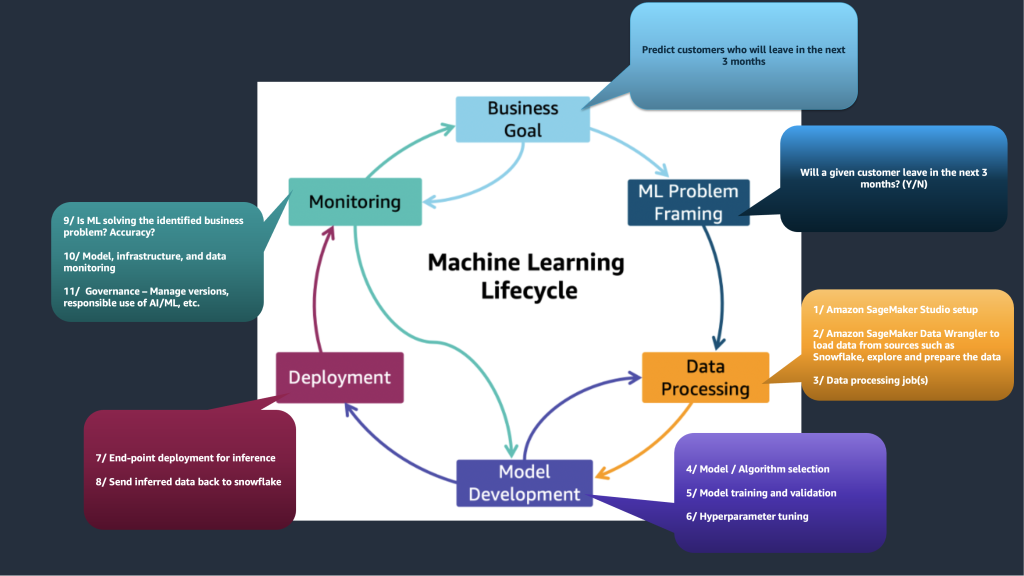
If you’re reading this article, chances are you’re familiar with machine learning operations, or MLOps for short. But just in case you’re not, let’s start with a quick definition:
MLOps is the practice of applying DevOps principles to machine learning workflows. It’s a way to manage and automate the entire machine learning life cycle, from data preparation to model deployment and monitoring.
Now that we’re all on the same page, let’s dive into the most popular use cases for MLOps.
Use Case #1: Model Training and Deployment
The most obvious use case for MLOps is to streamline the process of model training and deployment. By automating these tasks, you can save time and reduce the risk of errors.
One approach to MLOps is to use a continuous integration and continuous deployment (CI/CD) pipeline, similar to what’s used in software development. This involves automating the build, test, and deployment of machine learning models.
Another approach is to use a platform specifically designed for MLOps, such as Kubeflow or MLflow. These platforms provide a way to manage the entire machine learning life cycle, from data preparation to model deployment and monitoring.
Use Case #2: Data Management
Another important aspect of MLOps is data management. Machine learning models are only as good as the data they’re trained on, so it’s essential to have a robust data management process in place.
This involves everything from data cleaning and pre-processing to data versioning and lineage tracking. MLOps tools can help automate these tasks and ensure that data is properly managed throughout the machine learning life cycle.
Use Case #3: Model Monitoring and Maintenance
Once a machine learning model is deployed, it’s important to monitor its performance and ensure that it continues to perform well over time. This involves monitoring key metrics, such as accuracy and precision, and making updates to the model as needed.
MLOps tools can help automate these tasks and provide alerts when performance starts to degrade. This allows data scientists to quickly identify and address issues before they become a major problem.
Use Case #4: Collaboration and Knowledge Sharing
Finally, MLOps can be used to facilitate collaboration and knowledge sharing among data scientists and other stakeholders. This involves providing a centralized platform for sharing data, models, and other resources, as well as tools for version control and collaboration.
By using MLOps tools to facilitate collaboration, data scientists can work more efficiently and share knowledge more effectively, ultimately leading to better machine learning models and better business outcomes.
Conclusion
In conclusion, MLOps is a powerful set of tools and practices that can help organizations streamline their machine learning workflows and achieve better business outcomes. By automating tasks like model training and deployment, data management, model monitoring and maintenance, and collaboration and knowledge sharing, organizations can save time, reduce errors, and improve the quality of their machine learning models.
