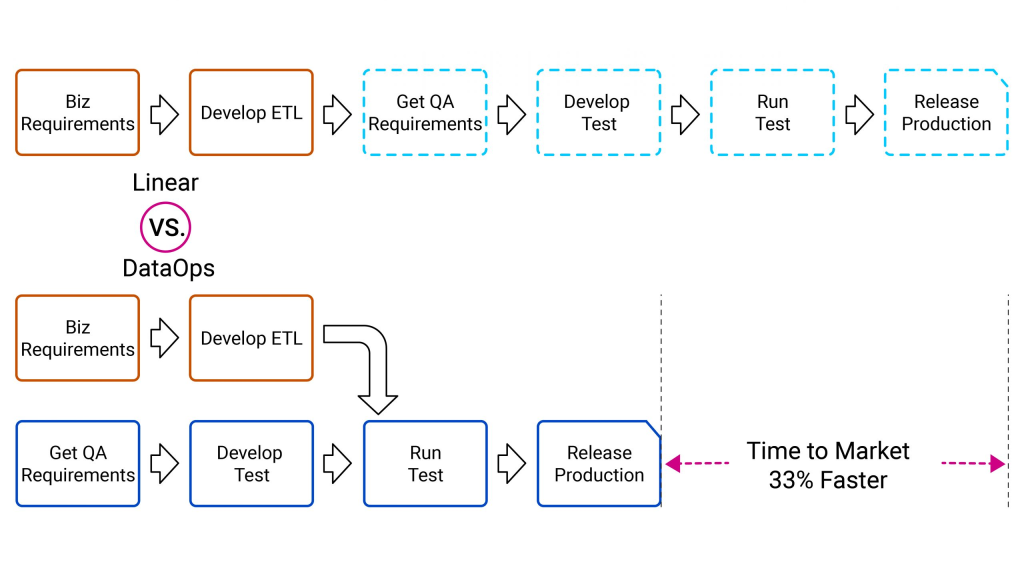
Are you looking for real-life examples of how DataOps is being implemented in organizations? Look no further! In this blog post, we will explore some of the top DataOps implementation examples.
What is DataOps?
But first, let’s define what we mean by DataOps. DataOps is a methodology that combines DevOps principles with data management practices. It aims to streamline the process of collecting, processing, and analyzing data in real-time by improving collaboration, automation, and monitoring.
Top DataOps Implementation Examples
1. Netflix
Netflix is a prime example of a company that has successfully implemented DataOps. They have built a data platform that enables real-time data processing and analysis. They use Apache Kafka for data streaming, Apache Flink for stream processing, and Apache Cassandra for storing data.
Netflix’s DataOps team is responsible for ensuring that data is secure, accurate, and available for analysis. They work closely with developers, data scientists, and other stakeholders to ensure that data is integrated seamlessly into the company’s applications and services.
2. LinkedIn
LinkedIn is another company that has embraced DataOps. They have built a centralized data platform that enables real-time data processing and analysis. They use Apache Kafka for data streaming, Apache Spark for batch processing, and Apache Hadoop for distributed storage.

LinkedIn’s DataOps team is responsible for ensuring that data is accurate, consistent, and available for analysis. They work closely with developers, data scientists, and other stakeholders to ensure that data is integrated seamlessly into the company’s applications and services.
3. Airbnb
Airbnb is a company that has also adopted DataOps. They have built a data platform that enables real-time data processing and analysis. They use Apache Kafka for data streaming, Apache Spark for batch processing, and Amazon S3 for storing data.
Airbnb’s DataOps team is responsible for ensuring that data is accurate, timely, and available for analysis. They work closely with developers, data scientists, and other stakeholders to ensure that data is integrated seamlessly into the company’s applications and services.
Conclusion
These are just a few examples of companies that have successfully implemented DataOps. By adopting this methodology, they have been able to streamline their data management processes, improve collaboration, and make better use of their data. If you’re looking to implement DataOps in your own organization, these examples provide a great starting point.

Hi, I greatly appreciate the quality content, truly amazing stuff. thank you 🙂
DataOps is a critical element of modern business operations. By implementing DataOps, companies like Netflix, Uber, and Airbnb can enable faster and more efficient decision-making, allowing them to maintain their competitive edge.
Thanks again for the great blog post!!!
This article provides a great overview of DataOps and its benefits. I’m definitely going to look into implementing DataOps in my organization
DataOps implementation examples showcase how leading companies are reaping the benefits of streamlined data processes. By integrating data from multiple sources in real-time, enhancing data quality, and enabling collaborative analytics, DataOps empowers businesses to make data-driven decisions with confidence. These examples inspire others to embark on their DataOps journey and make the most of their data resources.
Contact us for the training – Contact@DevOpsSchool.com
DataOps integration at Company F improved data transparency, leading to optimized resource allocation and cost savings.
This is a great article that provides a comprehensive overview of DataOps. I particularly like the way the article highlights the benefits of DataOps and provides real-world examples of how it is being implemented.
Automating data pipelines, using version control, employing CI/CD for data, integrating data quality, and implementing self-service analytics.
This blog is a treasure trove of insights! Thank you for taking the time to showcase these top DataOps implementation examples. I’m excited about the possibilities DataOps offers, and your blog has given me the confidence to explore it further.
I couldn’t believe how much I learned in such a short time. The instructor’s engaging style and well-structured content made it a breeze
Data analytic teams can implement DataOps in seven simple steps: (1) Add data and logic tests, (2) Use a version control system, (3) Branch and merge, (4) Use multiple environments, (5) Reuse and containerize, (6) Parameterize your processing and (7) Work Without Fear