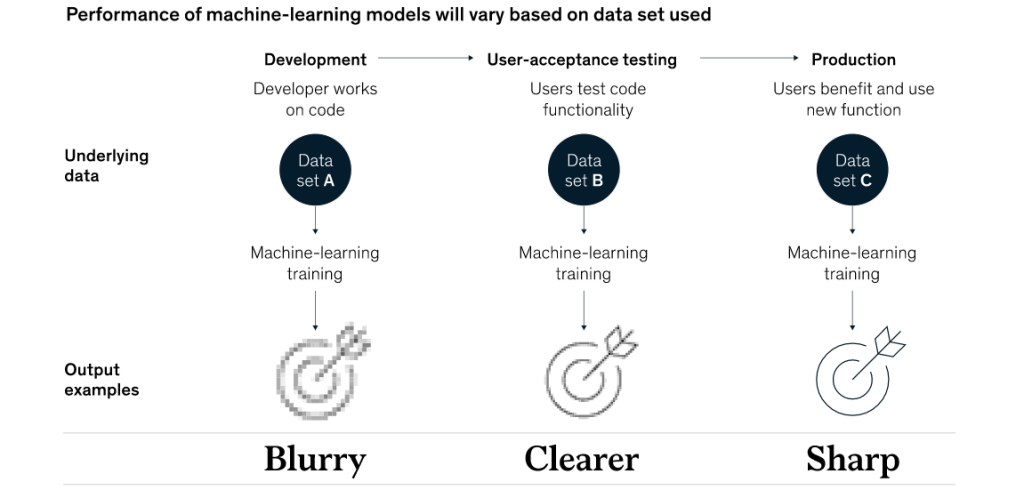
Have you ever wondered how machine learning models are deployed and managed in production environments? That’s where MLOps comes into play. MLOps is a set of practices that combines software engineering and machine learning to deploy, monitor, and maintain machine learning models.
In this article, we’ll explore some of the top MLOps implementation examples in different industries.
1. Netflix
Netflix is a streaming giant that uses machine learning to personalize user experiences, recommend content, and optimize video encoding. To make this possible, Netflix relies on a sophisticated MLOps infrastructure that includes:
- A centralized metadata platform to store and manage data across the entire ML pipeline.
- Automated workflows that incorporate continuous integration/continuous delivery (CI/CD) and testing to ensure model accuracy and reliability.
- A dedicated team of data scientists, ML engineers, and software developers who work together to build and deploy ML models.
Netflix’s MLOps implementation has enabled the company to scale its ML initiatives and improve the accuracy and speed of its recommendations.
2. Uber
Uber is a ride-sharing platform that uses machine learning to predict rider demand, optimize routes, and improve safety. To support these ML use cases, Uber has developed an MLOps platform that includes:
- A centralized data platform that ingests and processes data from various sources.
- A model registry that tracks the versioning and deployment of ML models.
- Automated workflows for model training, testing, and deployment.
Uber’s MLOps implementation has enabled the company to develop and deploy ML models at scale, resulting in improved rider experiences and increased efficiency.
3. Airbnb
Airbnb is a home-sharing platform that uses machine learning to personalize search results, predict user preferences, and detect fraudulent activity. To support these ML use cases, Airbnb has developed an MLOps platform that includes:

- A data platform that ingests and processes data from various sources.
- Automated workflows for model training, testing, and deployment.
- A model monitoring system that detects and alerts on model drift and other issues.
Airbnb’s MLOps implementation has enabled the company to improve the accuracy and relevance of its search results and detect fraudulent activity more effectively.
4. LinkedIn
LinkedIn is a social networking platform that uses machine learning to recommend jobs, connections, and content to its users. To support these ML use cases, LinkedIn has developed an MLOps platform that includes:
- A centralized data platform that ingests and processes data from various sources.
- Automated workflows for model training, testing, and deployment.
- A model monitoring system that tracks model performance and alerts on issues.
LinkedIn’s MLOps implementation has enabled the company to improve the relevance and engagement of its content and job recommendations, resulting in increased user satisfaction.
5. Capital One
Capital One is a financial services company that uses machine learning to detect fraud, personalize offers, and optimize credit decisions. To support these ML use cases, Capital One has developed an MLOps platform that includes:
- A data platform that ingests and processes data from various sources.
- Automated workflows for model training, testing, and deployment.
- A model governance system that ensures compliance with regulatory requirements.
Capital One’s MLOps implementation has enabled the company to improve the accuracy and speed of its fraud detection and credit decisions, resulting in reduced risk and increased customer satisfaction.
Conclusion
MLOps is a critical component of modern machine learning initiatives, enabling organizations to develop and deploy ML models at scale while ensuring accuracy, reliability, and compliance. The examples we’ve explored in this article demonstrate the versatility and effectiveness of MLOps across different industries and use cases. If you’re interested in implementing MLOps in your organization, these examples provide a great starting point for inspiration and guidance.
