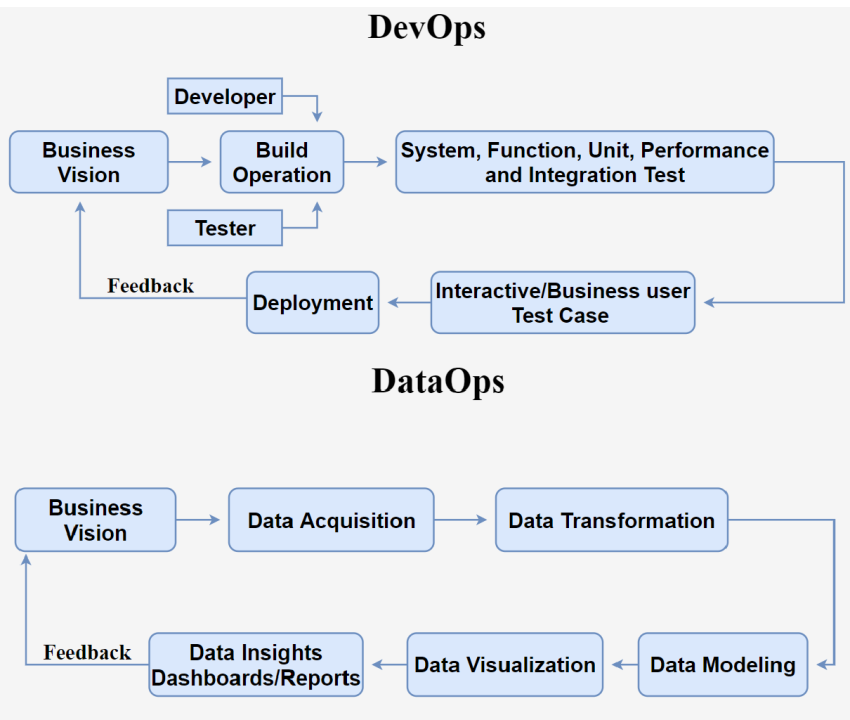
Are you confused about the difference between DevOps and DataOps? Don’t worry, you’re not alone. Many people are unsure about the distinction between these two related concepts. In this article, we will explore the differences between DevOps and DataOps in detail.
What is DevOps?
DevOps is a software development methodology that emphasizes collaboration and communication between software developers and IT operations teams. The goal of DevOps is to improve the speed and quality of software delivery by automating the software development process and reducing the time it takes to deploy new features and updates.
DevOps is based on the principles of agile software development, which emphasizes iterative and incremental development, continuous integration and delivery, and a focus on customer satisfaction. DevOps teams work together to develop, test, and deploy software quickly and efficiently, using tools like continuous integration and deployment (CI/CD), automation, and monitoring to ensure that software is delivered reliably and consistently.
What is DataOps?
DataOps is a data management methodology that emphasizes collaboration and communication between data scientists, data engineers, and IT operations teams. The goal of DataOps is to improve the speed and quality of data delivery by automating the data management process and reducing the time it takes to deploy new data products and services.
DataOps is based on the principles of agile software development, but with a focus on data management rather than software development. DataOps teams work together to develop, test, and deploy data products and services quickly and efficiently, using tools like data integration, data quality, and data governance to ensure that data is delivered reliably and consistently.
What Are the Differences Between DevOps and DataOps?
While DevOps and DataOps share some similarities, there are also some important differences between the two methodologies. Here are some of the key differences:
Focus
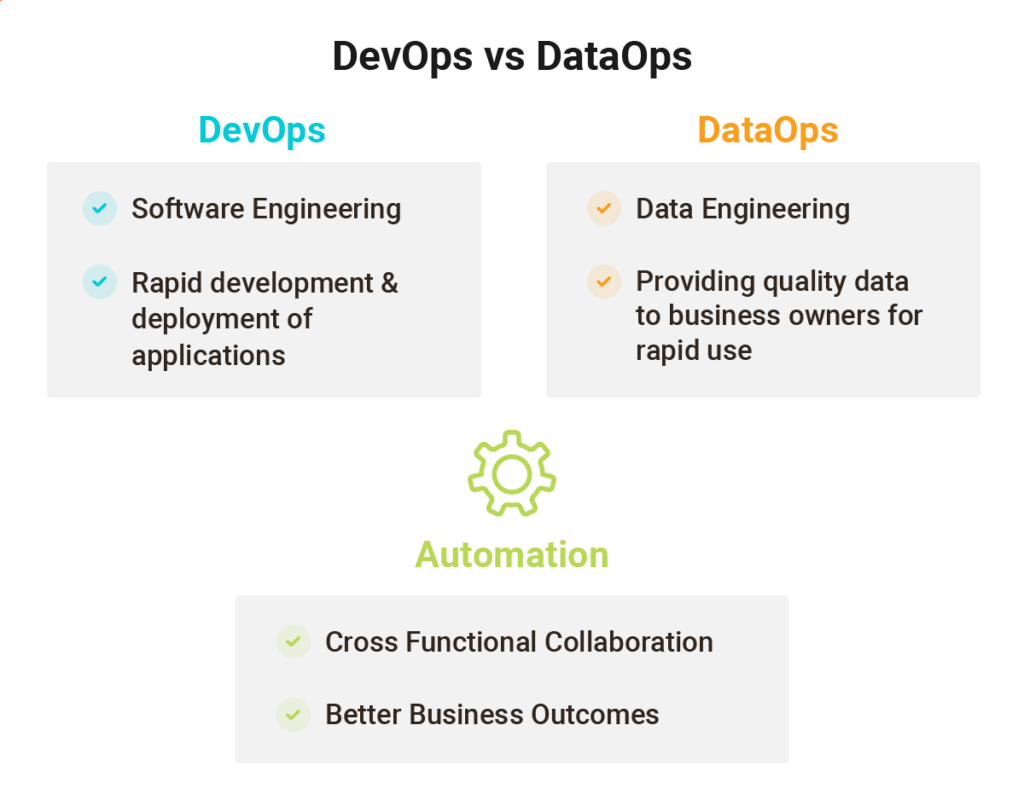
The biggest difference between DevOps and DataOps is their focus. DevOps is primarily focused on software development, while DataOps is primarily focused on data management. DevOps teams are responsible for developing, testing, and deploying software, while DataOps teams are responsible for managing data products and services.
Tools
DevOps and DataOps also differ in the tools they use. DevOps relies heavily on tools like CI/CD, automation, and monitoring to streamline the software development process. DataOps, on the other hand, relies on tools like data integration, data quality, and data governance to manage data products and services.
Team Structure
DevOps and DataOps teams also differ in their structure. DevOps teams are typically composed of software developers and IT operations professionals, while DataOps teams are composed of data scientists, data engineers, and IT operations professionals.
Goals
DevOps and DataOps also have different goals. DevOps aims to improve the speed and quality of software delivery, while DataOps aims to improve the speed and quality of data delivery. DevOps focuses on delivering software features and updates quickly and efficiently, while DataOps focuses on delivering data products and services quickly and efficiently.
Conclusion
In conclusion, while DevOps and DataOps share some similarities, they are also distinct methodologies with different focuses, tools, team structures, and goals. Understanding the differences between DevOps and DataOps is important for anyone involved in software development or data management, as it can help ensure that the right methodology is used for the right task.
