What is the Readability Score and its Types and Formula?

Introduction

Have you ever wondered how readable your writing is? Readability score is a metric that measures the ease with which a reader can understand a piece of text. It helps to determine the level of difficulty and complexity of a written document. In this article, we will explore the concept of readability score, its types, and the formula used to calculate it.
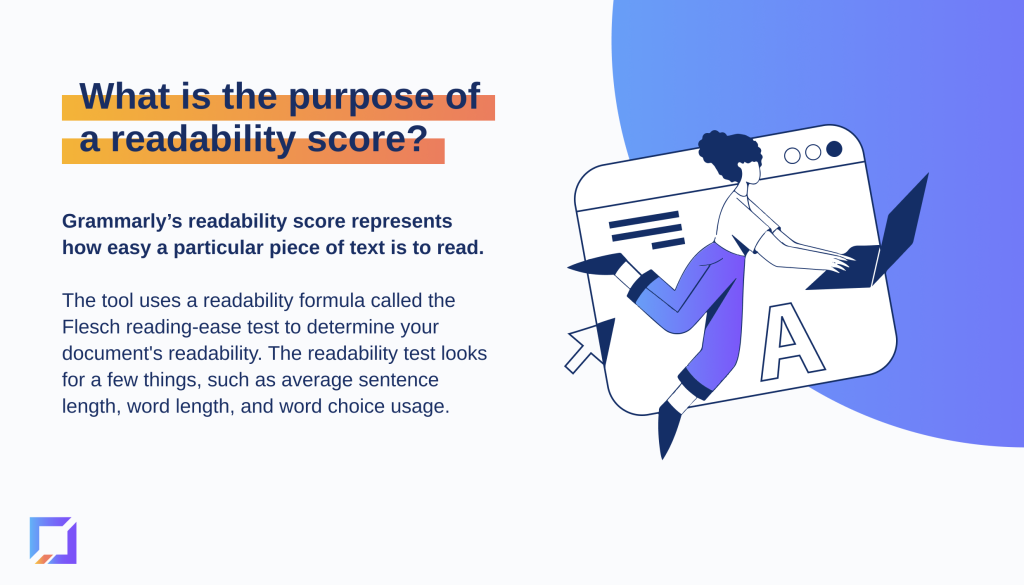
There are several formulas and methods to calculate readability scores, but two of the most common and widely used are the Flesch-Kincaid Grade Level and the Gunning Fog Index. Here’s an overview of each:

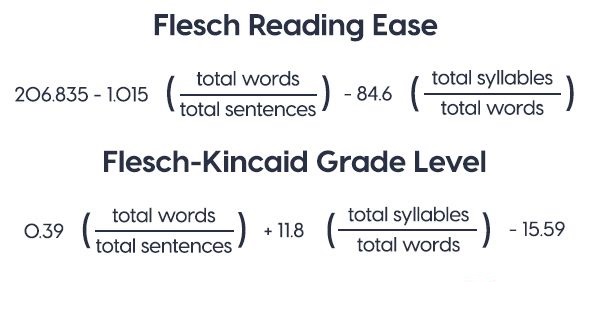
  1. Flesch-Kincaid Grade Level (Flesch Reading Ease):
    • The Flesch-Kincaid Grade Level is a readability score that estimates the grade level required to understand a piece of text. The lower the grade level, the easier the text is to read.
    • Formula: The formula involves the average sentence length (ASL) and the average number of syllables per word (ASW).
    • Flesch-Kincaid Reading Ease = 206.835 – (1.015 × ASL) – (84.6 × ASW)
    • Higher scores indicate easier-to-read text.
2. Gunning Fog Index:

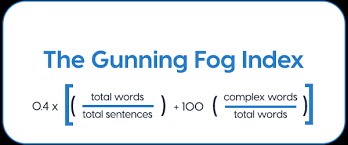
  • The Gunning Fog Index calculates readability based on sentence length and the number of complex words. It is another method to estimate the grade level required to read a text.
  • Formula: The formula involves the average sentence length (ASL) and the percentage of words with three or more syllables (ASW).
  • Gunning Fog Index = 0.4 × (ASL + ASW)
  • Higher scores indicate more complex and less readable text.
Conclusion

Readability score is an important tool for writers and educators to assess the readability of a text. By understanding the different types of readability scores and their formulas, writers can improve the accessibility and clarity of their writing. So, the next time you write a document, consider using a readability score to ensure that your message reaches your intended audience with ease.

Related Posts

Certified MLOps Architect: Skills, Syllabus, and Career Opportunities Explained Clearly

Introduction The Certified MLOps Architect is a comprehensive program designed for professionals who want to bridge the gap between machine learning and production engineering. This guide is…

Read More

Advanced Certified MLOps Professional Program for Scalable AI Model Deployment Systems

Introduction The Certified MLOps Professional program from AIOpsSchool has emerged as a vital benchmark for engineers looking to bridge the gap between data science and production engineering….

Read More

Powerful Certified MLOps Engineer Program to Build Reliable ML Infrastructure

Introduction The integration of Machine Learning into production environments has created a significant gap between data science and traditional software engineering. The Certified MLOps Engineer program is…

Read More

Professional Skill Alignment Around MLOps Foundation Certification in Modern Workplaces

Introduction The MLOps Foundation Certification has emerged as a critical benchmark for professionals looking to bridge the gap between data science and production engineering. This guide is…

Read More

Certified AIOps Manager: Strategic Framework for Intelligent IT Operations

Introduction The Certified AIOps Manager program is a specialized training designed to help professionals lead the next wave of IT operations. This guide is for engineers and…

Read More

Advanced AIOps Architect Certification Roadmap for DevOps Engineers

Introduction The Certified AIOps Architect is a comprehensive professional program designed for engineers and architects who want to master the intersection of Artificial Intelligence and IT Operations….

Read More
Subscribe
Notify of
guest
0 Comments
Oldest
Newest Most Voted
Inline Feedbacks
View all comments
0
Would love your thoughts, please comment.x
()
x