DataOps and DevOps are both methodologies designed to improve software development and delivery processes. While they share some similarities, they have distinct focuses and objectives.
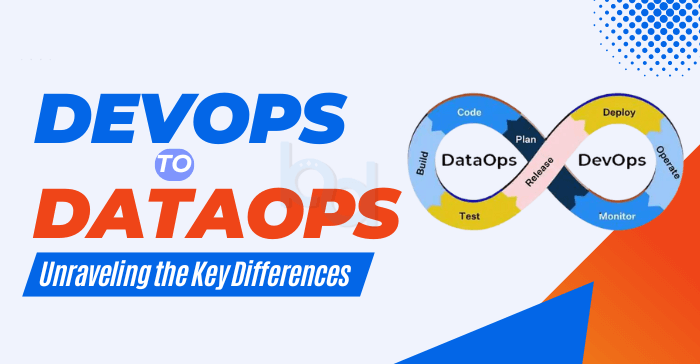
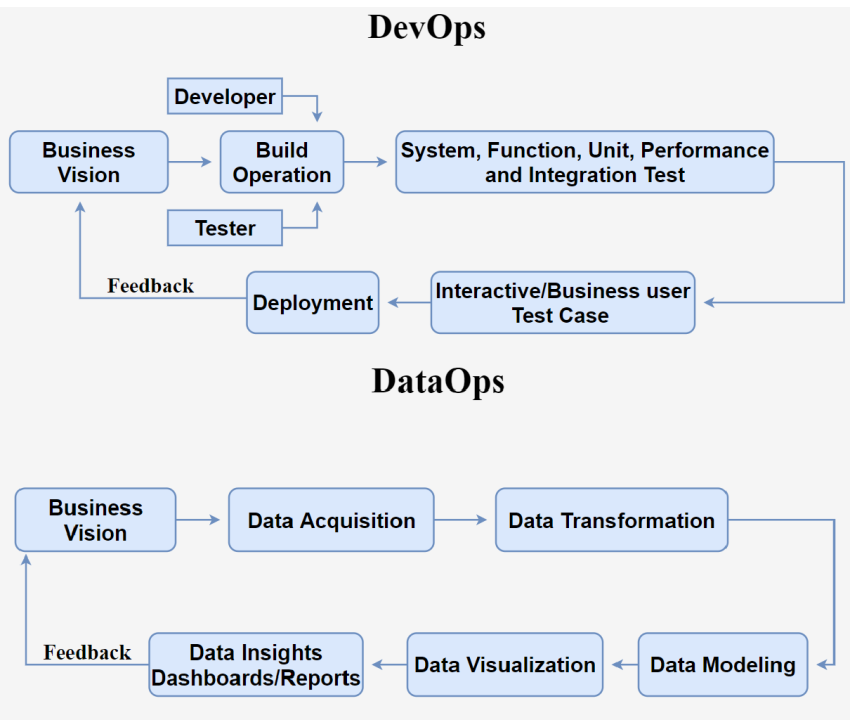
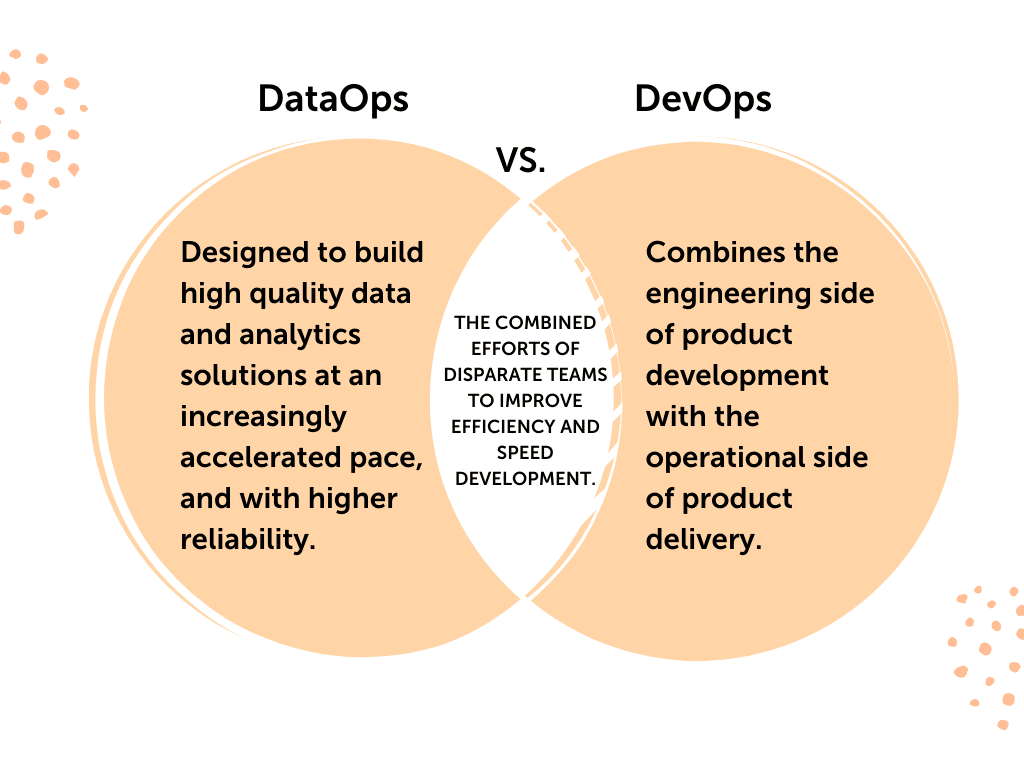
DataOps specifically targets data management and analytics. It aims to streamline the process of moving data from source to consumption, ensuring data quality, reliability, and timeliness. DataOps emphasizes collaboration between data engineers, data scientists, and business analysts to deliver data-driven insights efficiently.
DevOps is a broader approach that focuses on breaking down silos between development and operations teams. It promotes collaboration, automation, and continuous delivery to accelerate software development and deployment. DevOps emphasizes the entire software lifecycle, from development to production.
Similarities Between DataOps and DevOps
- Collaboration: Both methodologies emphasize collaboration among teams to improve efficiency and communication.
- Automation: Automation is a key component of both DataOps and DevOps, helping to reduce manual tasks and errors.
- Continuous Delivery: Both methodologies aim to deliver software or data products continuously, ensuring faster time-to-market and improved customer satisfaction.
- Agile Principles: DataOps and DevOps often incorporate agile principles, such as iterative development and flexibility.
Key Differences Between DataOps and DevOps
While both methodologies promote efficiency and collaboration, they operate in different domains and have unique focuses.
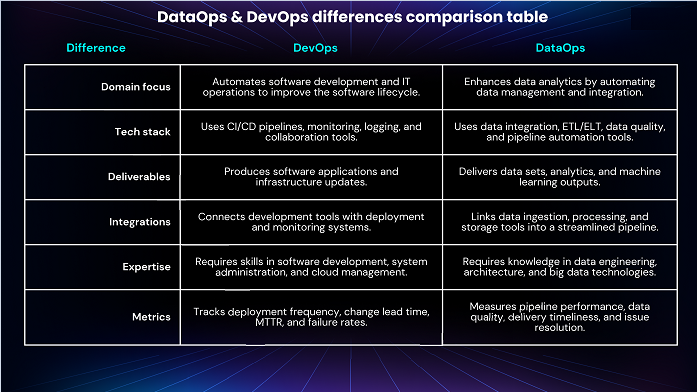
1. Domain Focus
- DevOps: Focuses on software development, infrastructure management, and deployment pipelines.
- DataOps: Focuses on managing data pipelines, data integration, and ensuring data quality across the organization.
2. Primary Goal
- DevOps: Aims to accelerate the development, testing, and deployment of software applications.
- DataOps: Aims to streamline the collection, transformation, and analysis of data to deliver high-quality, actionable insights.
3. Key Stakeholders
- DevOps: Involves software developers, system administrators, and IT operations teams.
- DataOps: Involves data engineers, data scientists, data analysts, and database administrators.
4. Automation Focus
- DevOps: Automates the process of software building, testing, deployment, and monitoring.
- DataOps: Automates data pipelines, ETL (Extract, Transform, Load) processes, data validation, and data monitoring.
5. Tools and Technologies
- DevOps: Tools like Jenkins, Docker, Kubernetes, Ansible, and Git are used to automate software delivery and manage infrastructure.
- DataOps: Tools like Apache Airflow, Prefect, Talend, and Great Expectations focus on data workflow orchestration, data quality, and integration.
In conclusion, DataOps and DevOps are complementary methodologies that can work together to improve software development and data management processes. By understanding the differences and similarities between these approaches, organizations can effectively implement them to achieve their goals.
