Introduction
Amaravati stands out as one of the most culturally layered regions in southern India. Situated along the banks of the Krishna River, this historic town brings together ancient Buddhist architecture, classic Shaivite temple heritage, and the evolving civic landscape of modern Andhra Pradesh. Whether you are arriving for a quiet weekend pilgrimage, an educational tour, or an outing with your family, navigating the area requires practical local context. This comprehensive Amaravati travel guide is designed to help travelers plan their visit efficiently. From historic stupa mounds and archaeological galleries to scenic riverbanks and community happenings, the region offers plenty of ground to cover. Readers can access detailed travel advice and check upcoming regional activities directly on Amaravati Orbit before setting out. The following sections outline key sights, logical route ideas, seasonal recommendations, and smart travel practices to make the most of your journey.
What Makes Amaravati Unique in Andhra Pradesh?
Amaravati holds a distinct position in Indian history. Rather than being a single-era destination, it is an intersection of ancient monastic life, classical river trade, and contemporary state development. The region first gained international prominence under the Satavahana dynasty between the second century BCE and the third century CE, evolving into one of South Asia’s premier centers of Mahayana Buddhist learning.
Pilgrims, sculptors, and scholars once traveled along the Krishna River basin to visit its monasteries. Centuries later, the town grew into a vital center for Shaivite worship, anchored by the revered Amareswara temple. Today, as part of the broader capital region of Andhra Pradesh, the area bridges its ancient roots with modern institutional infrastructure.
Understanding this dual identity helps visitors appreciate the local rhythm. You are not simply visiting a quiet archaeological pocket; you are exploring a living cultural landscape that remains central to the identity of the state.
Top Places to Visit in Amaravati
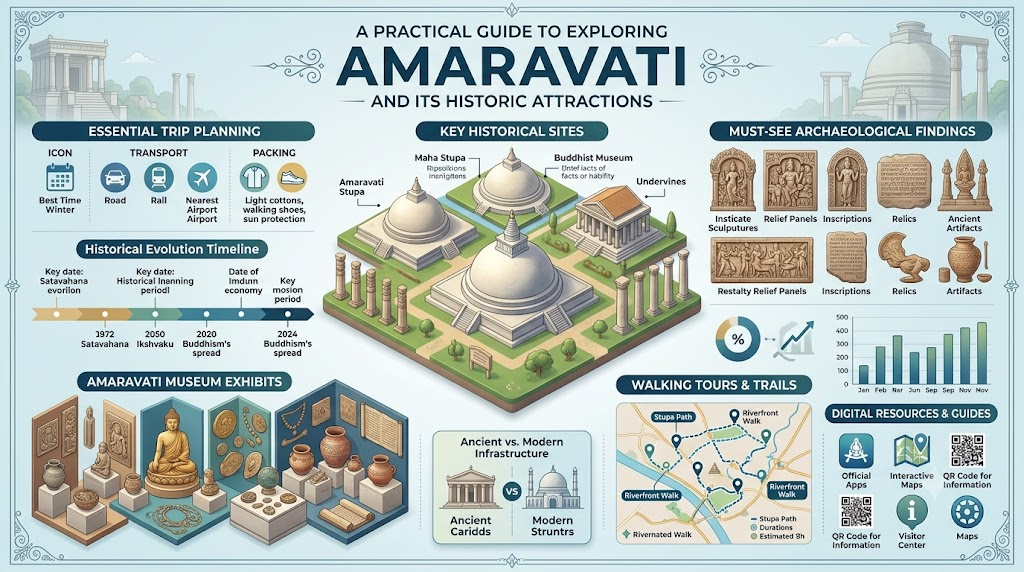
Planning an itinerary starts with understanding the primary attractions. The main historic and cultural highlights sit relatively close to one another, making it easy to visit several key spots over a single morning or afternoon.
The Great Amaravati Stupa (Maha Chaitya)
The Great Stupa forms the archaeological heart of the town. While the original structural dome was dismantled over centuries, the remaining mound, foundational platform, and reconstructed stone railings offer clear insight into Satavahana-era Buddhist artistry.
Walking around the excavated complex, visitors can observe limestone slabs carved with scenes from the Jataka tales, traditional symbols of the Buddha, and decorative lotus motifs. Information plaques installed by the Archaeological Survey of India (ASI) explain the architecture and layout of the original pradakshina (circumambulatory) path. It is a quiet, contemplative space that rewards unhurried observation.
Amaravati Archaeological Museum
Located a short walk from the Stupa site, the Archaeological Museum maintained by the ASI houses the finest surviving sculptures discovered during local excavations.
The galleries display intricately carved limestone panels, free-standing statues of the Buddha, relic caskets, pottery fragments, and inscriptions spanning several centuries. The collection provides the necessary visual context to visualize what the Great Stupa looked like during its peak. Information boards explain the distinctive Amaravati school of art, characterized by dynamic compositions, slender figures, and narrative clarity.
Amareswara Swamy Temple
Positioned right along the Krishna River, the Sri Amareswara Swamy Temple is dedicated to Lord Shiva and represents one of the five revered Pancharama Kshetras in Andhra Pradesh.
The temple features tall gopurams, pillared mandapams, and stone inscriptions recording donations made by various ruling dynasties, including the Kota kings and the Vijayanagara Empire. The inner sanctum houses a towering white marble Shiva Lingam. The temple grounds remain active throughout the day, drawing devotees from across the country, especially during early morning and evening prayer times.
Dhyana Buddha Statue
Standing tall near the riverbanks, the Dhyana Buddha is a contemporary landmark constructed to celebrate the region’s enduring Buddhist legacy.
The colossal seated statue measures 125 feet in height and rests on a two-story base designed to reflect traditional Buddhist design. The interior museum space features murals, relief sculptures, and quiet halls designed for reflection and learning. The landscaped gardens surrounding the statue provide sweeping views across the open water, making it a favorite stop for families during late afternoons.
Enriching Things to Do in Amaravati
Visiting historical landmarks is only part of the experience. To appreciate the town fully, travelers should spend time engaging with the everyday river life and local crafts.
Walking the Krishna River Ghats
The riverbanks near the Amareswara Temple offer a peaceful setting for morning or twilight walks. Local boatmen frequently operate short rides along the water, depending on seasonal water levels and safety conditions. Watching morning rituals, observing fishermen casting their nets, and feeling the river breeze provide an authentic glimpse of local life away from highway traffic.
Exploring Local Markets and Handlooms
The roads surrounding the temple complex are lined with small stalls selling brass pooja items, wooden crafts, and traditional sweets. Travelers interested in local textiles can also take short detours toward nearby handloom weaving communities located within Guntur district, where artisans produce distinctive cotton sarees and fabrics using traditional pit looms.
Joining Community Programs and Festivals
Depending on the time of year, Amaravati hosts several cultural celebrations. Maha Shivaratri brings thousands of pilgrims to the riverfront for nocturnal prayers, temple processions, and sacred baths. Similarly, Buddha Jayanti brings special chanting ceremonies, meditation gatherings, and cultural seminars to the Dhyana Buddha complex. Checking regional platforms like Amaravati Orbit helps visitors confirm dates for regional cultural programs, agricultural exhibitions, and community events.
Logical Sightseeing Itineraries
Because the core historic landmarks are clustered together, an efficient schedule prevents unnecessary back-and-forth travel. Here are two practical ways to structure your time.
Option A: The Complete One-Day Plan
- Morning (8:30 AM – 11:30 AM): Begin at the Great Stupa to avoid the midday sun, followed by an unhurried walk through the ASI Archaeological Museum.
- Midday (12:00 PM – 2:00 PM): Enjoy a traditional Andhra thali at a local vegetarian restaurant and take a brief rest during the hottest part of the day.
- Afternoon (2:30 PM – 4:30 PM): Visit the Amareswara Swamy Temple, allowing time to observe the historic stone inscriptions and architecture.
- Evening (5:00 PM – 6:30 PM): Head to the Dhyana Buddha complex for open-air walks through the gardens and sunset views across the Krishna River.
Option B: The Weekend Extended Plan
- Day 1: Dedicate the full day to the historic town of Amaravati, covering the archaeological digs, museum galleries, river ghats, and riverside landmarks.
- Day 2: Expand your route toward nearby heritage attractions in the Krishna-Guntur corridor, such as the ancient rock-cut Undavalli Caves near Tadepalle, or the bustling cultural markets of Vijayawada.
Quick Reference: Top Experiences at a Glance
| Landmark or Activity | Best Suited For | Ideal Time of Day | Typical Duration |
|---|---|---|---|
| Amaravati Great Stupa | History buffs, photographers | Early Morning | 1 to 1.5 hours |
| ASI Archaeological Museum | Students, researchers, art lovers | Late Morning | 1 to 2 hours |
| Amareswara Temple | Devotees, architecture enthusiasts | Morning or Evening | 1 hour |
| Dhyana Buddha Complex | Families, casual sightseers | Late Afternoon / Sunset | 1 to 1.5 hours |
| Krishna River Ghats | Nature lovers, contemplative walkers | Dawn or Dusk | 45 minutes |
How to Reach Amaravati
Reaching the region is straightforward, thanks to its proximity to the commercial centers of Guntur and Vijayawada.
By Road
Amaravati connects directly to Vijayawada (approximately 35 to 40 kilometers away) and Guntur (approximately 32 kilometers away) via state highways and newly developed regional road corridors. Andhra Pradesh State Road Transport Corporation (APSRTC) runs regular buses connecting these cities to the town center. Taxis and private auto-rickshaws are also readily available for day trips.
By Rail
The nearest major railway junctions are Vijayawada Junction (BZA) and Guntur Junction (GNT). Both are well-connected by express trains to major Indian metros including Hyderabad, Chennai, Bengaluru, and Visakhapatnam. From either station, visitors can complete the remaining leg by bus or hired taxi.
By Air
The closest airport is Vijayawada International Airport (VGA) at Gannavaram, roughly 55 to 60 kilometers from historic Amaravati. The airport operates daily direct domestic flights to key commercial hubs, where travelers can hire pre-paid car services directly to the heritage area.
Best Time to Plan Your Visit
Weather plays a major role in how much you will enjoy exploring open-air archaeological ruins.
October to February (Winter)
This is the most comfortable period to tour the region. Daytime temperatures are moderate, humidity remains manageable, and mornings are cool. It is the best window for walking between open excavation pits and spending hours around riverfront grounds.
March to May (Summer)
Summers in the coastal Andhra plains can be intensely hot, with temperatures frequently climbing past 40°C. If you must visit during these months, restrict sightseeing to early mornings (before 10:00 AM) or late afternoons, and spend the midday hours in shaded museum galleries.
June to September (Monsoon)
The monsoon brings frequent showers that turn the riverbanks lush and green. While rain may occasionally interrupt walking tours of outdoor ruins, the Krishna River looks impressive during these months, and cloud cover provides relief from direct sunlight.
Connecting Nearby Regional Attractions
If you have extra time during your weekend journey, consider adding these neighboring sites to your route:
- Undavalli Caves: Located roughly 30 kilometers east toward Vijayawada, these four-story rock-cut cave temples date back to the 4th–5th centuries and feature a grand monolithic statue of reclining Vishnu carved out of sandstone.
- Kondaveedu Fort: Situated roughly 45 kilometers southwest near Chilakaluripet, this hilltop fortress offers panoramic trekking paths and ruins originating from the Reddy dynasty.
- Prakasam Barrage and Kanaka Durga Temple: Centered in Vijayawada, this historic barrage across the Krishna River and the hill-top temple provide an ideal urban contrast to the quiet streets of rural Amaravati.
Practical Tips
- Dress Code Awareness: Modest attire covering shoulders and knees is mandatory inside the Amareswara Swamy Temple and appreciated around traditional Buddhist monuments.
- Footwear Management: Outdoor stone pathways can heat up quickly by noon. Slip-on footwear makes it easier to transition in and out of sanctums and temple courtyards.
- Hydration and Sun Safety: Always carry reusable water bottles, a broad-brimmed hat, and sunscreen, especially when walking around the open Stupa excavations.
- Cash Considerations: While digital payments (UPI) work across most shops and ticket counters, keeping small paper currency handy helps with local boatmen, shoe-keeping stands, and village stalls.
- Verify Opening Schedules: Archaeological sites and museums run on fixed weekly timetables; verifying operating hours before traveling prevents unexpected schedule disruptions.
FAQs
What is Amaravati most famous for?
Amaravati is renowned for its ancient Buddhist heritage, particularly the Great Amaravati Stupa and the distinctive Amaravati school of art. It is also celebrated for the sacred Sri Amareswara Swamy Temple along the Krishna River and its role as part of Andhra Pradesh’s evolving capital region.
How far is Amaravati from Vijayawada and Guntur?
Amaravati is located roughly 35 to 40 kilometers from Vijayawada and about 32 kilometers from Guntur. Both cities serve as convenient transit hubs, with road travel typically taking between 45 minutes and an hour depending on traffic conditions.
Can Amaravati be explored in a single day?
Yes, a single day provides enough time to see the primary highlights. A standard day tour comfortably covers the Great Stupa mound, the ASI Archaeological Museum, the Amareswara Temple, and the Dhyana Buddha riverfront complex without rushing.
What are the must-see attractions for first-time visitors?
First-time visitors should prioritize the Great Amaravati Stupa ruins, the nearby Archaeological Museum to see the excavated stone carvings, the towering Dhyana Buddha statue, and the historic Amareswara Swamy Temple complex on the riverbank.
What is the Amaravati school of art?
The Amaravati school of art was a classical Indian sculptural style that flourished from the second century BCE through the third century CE. It is known for its intricate narrative relief carvings, expressive human forms, and dynamic depictions of Buddhist legends on white limestone.
Is there an entry fee for the monuments in Amaravati?
The Archaeological Survey of India charges a nominal entry fee for access to the Great Stupa complex and the Archaeological Museum. The Amareswara Swamy Temple and Dhyana Buddha complex are generally open to visitors without mandatory admission charges, though small parking or camera fees may apply.
What is the best season to travel to Amaravati?
The winter months from October to February offer the best weather for sightseeing. Temperatures are milder and humidity is lower, making it comfortable to walk around open-air archaeological sites, temple courtyards, and riverside gardens.
Are there good dining options in Amaravati?
The town offers simple, authentic South Indian vegetarian eateries, particularly near the main bus stand and temple entrances. For broader multi-cuisine dining or luxury hospitality, travelers often base themselves in nearby Vijayawada or Guntur, which have diverse restaurant options.
Is Amaravati suitable for family trips with children?
Yes. The open gardens at the Dhyana Buddha statue and the interactive displays at the ASI Archaeological Museum make Amaravati an educational, family-friendly outing. Paved walking areas allow children and elders to explore comfortably at their own pace.
How can visitors find information on local events in Amaravati?
Travelers can consult local tourism information centers, check regional festival announcements, or follow independent community platforms like Amaravati Orbit to discover upcoming cultural programs, temple festivals, and weekend gatherings across the capital region.
Conclusion
Amaravati offers an enriching travel experience that balances historical discovery with peaceful riverfront views. By taking time to explore its ancient stupa, inspect classical museum carvings, and visit living places of worship, travelers gain a genuine appreciation for the deep cultural heritage of Andhra Pradesh. Planning your day around morning and evening visits ensures you stay comfortable while enjoying the best light for photography and outdoor walks. Before you begin your trip, check event announcements and updated travel recommendations on Amaravati Orbit to ensure a well-organized journey. Whether you visit for a brief day trip or an extended cultural weekend, the heritage along the Krishna River leaves a lasting impression.
