Microservice is a collection of freely deployable services. It is an approach to building application software as a collection of independently deployable, compact, modular services. Herein, each service executes a different operation and interacts with one another via a simple, well-defined interface API.
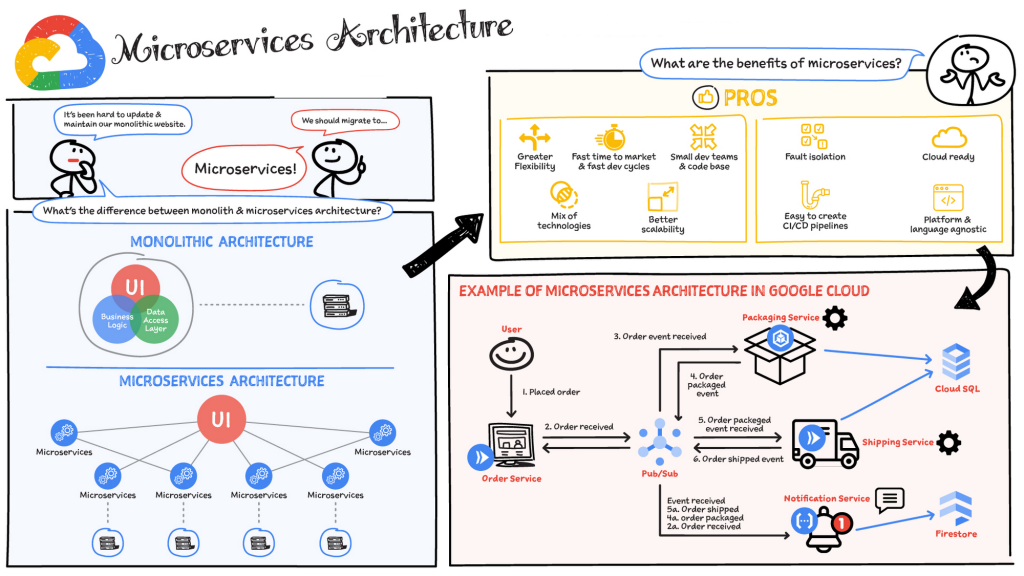
Microservice Architecture
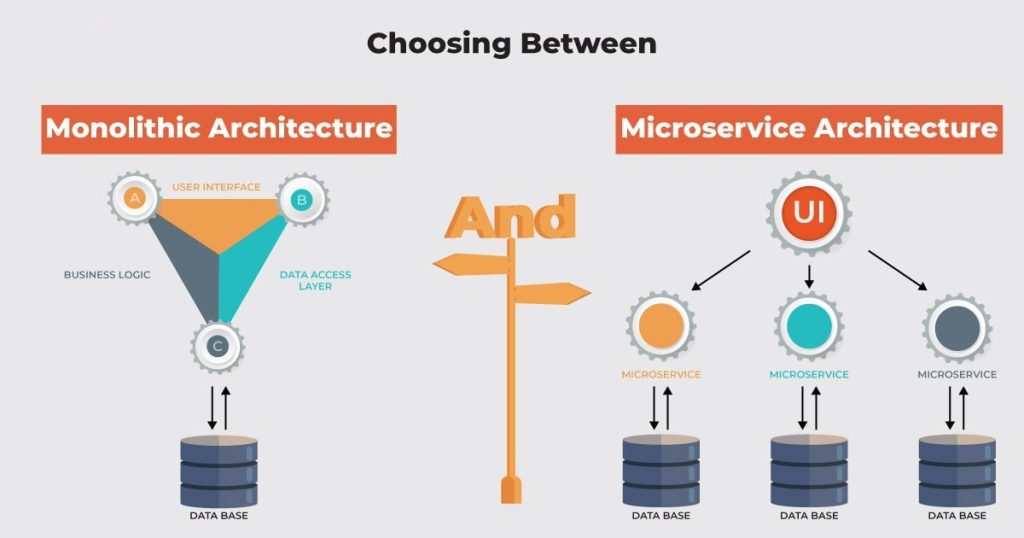
Monolithic Architecture
Monolithic (formed of a single large block of stone, unchanged) architectural style, which is used when an app is constructed as a single structure.
Microservices Architecture
Microservices is a method to develop a single program as a suite of separate sections and services connected by APIs. It allows the creation of several microservices that can be controlled by various teams and coded in various programming languages.
Why do we need Microservice?
Microservices architecture allows cross-functional teams to develop, test, problem-solve, deploy, and update services independently, which leads to faster deployment and troubleshooting turnaround times.
Advantages of Microservices
- Microservices are self-contained, independent deployment modules.
- The cost of scaling is comparatively less than the monolithic architecture.
- Microservices are independently manageable services. It can enable more and more services as the need arises. It minimizes the impact on existing services.
- It is possible to change or upgrade each service individually rather than upgrading in the entire application.
- Microservices allow us to develop an application which is organic (an application which latterly upgrades by adding more functions or modules) in nature.
- It enables event streaming technology to enable easy integration in comparison to heavyweight interposes communication.
- Microservices follow the single responsibility principle.
- The demanding service can be deployed on multiple servers to enhance performance.
- Less dependency and easy to test.
- Dynamic scaling.
- Faster release cycle.
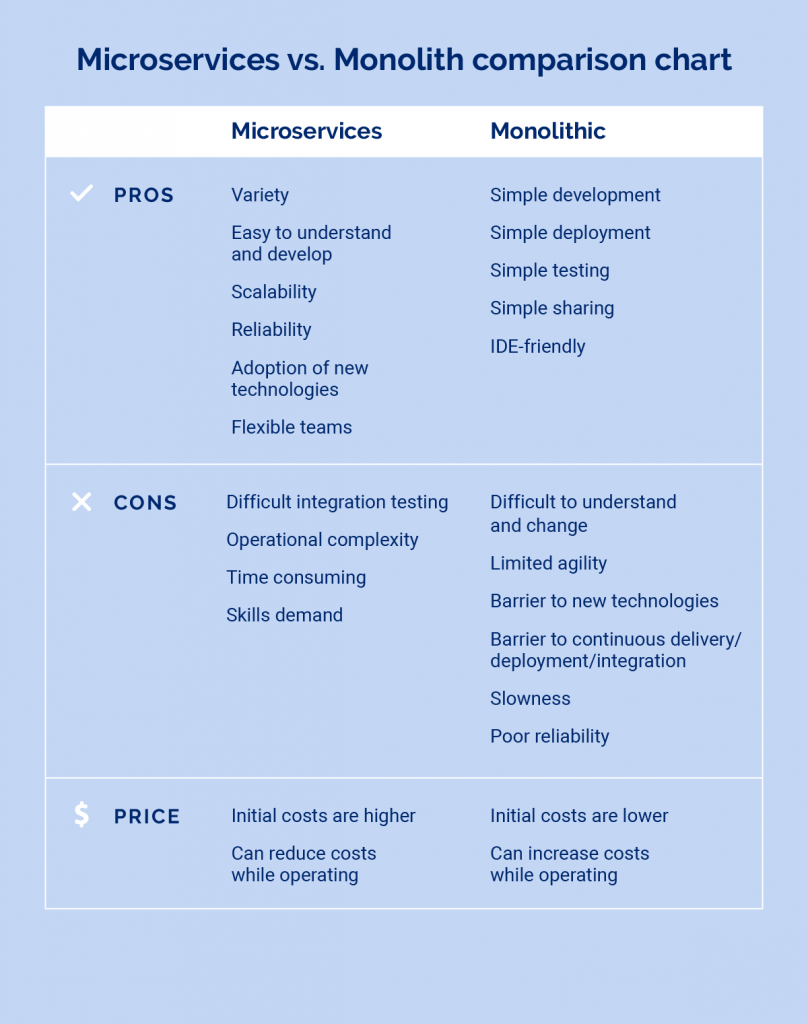
Disadvantages of Microservices
- Microservices has all the associated complexities of the distributed system.
- There is a higher chance of failure during communication between different services.
- Difficult to manage a large number of services.
- The developer needs to solve the problem, such as network latency and load balancing.
- Complex testing over a distributed environment.
