Introduction
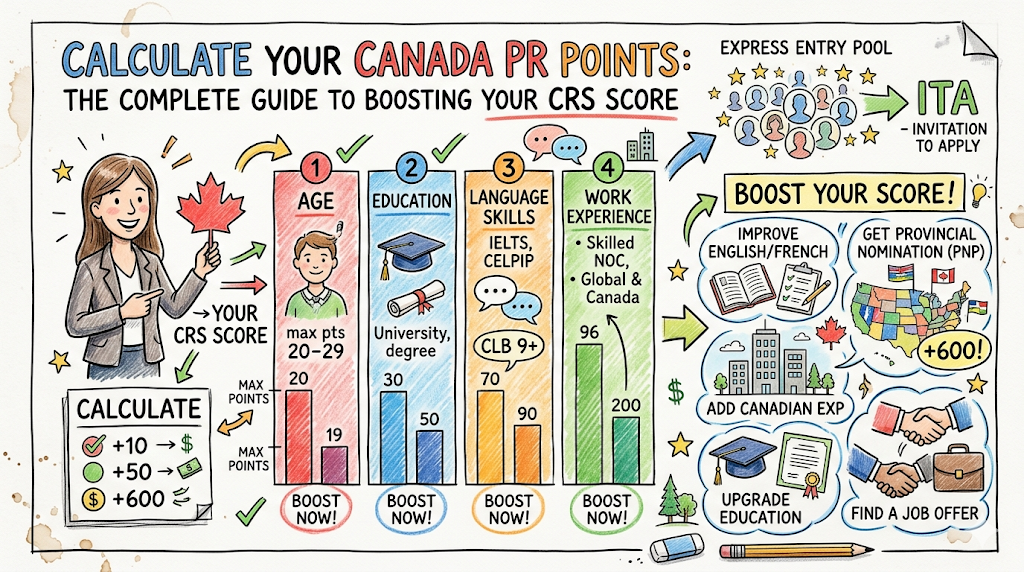
Canada uses an objective, merit-based points system to select the most qualified candidates from around the world. To assess your chances, you need to use a reliable tool known as the Canada PR Points Calculator. This tool evaluates your profile and provides a clear picture of where you stand in the immigration pool. Before you invest your time and hard-earned money into application fees, it is essential to check your eligibility. Knowing your score beforehand helps you avoid costly mistakes and allows you to plan your profile improvement strategies effectively. This comprehensive guide explains everything you need to know about the Express Entry system, the Comprehensive Ranking System (CRS), and how to maximize your points for a successful Canadian permanent residency application. For more details on managing your migration profile and calculating your points accurately, you can visit the Desinri Canada PR Points Calculator.
What Is Canada PR Points Calculator?
The Canada PR Points Calculator is an online diagnostic tool that estimates your score within Canada’s immigration ranking framework. It serves as a personal assessment tool, allowing you to input your background details to see how immigration authorities will evaluate your profile.
Purpose and Functionality
The primary purpose of this calculator is to provide instant clarity. Instead of guessing your chances, you receive a clear data point that shows how competitive your profile is in the global talent pool. The tool evaluates specific demographic and professional factors, converting your life achievements—such as your education, language skills, and work history—into a definitive numerical score.
Why Canada Uses the CRS System
The Comprehensive Ranking System (CRS) is a merit-based evaluation framework. Canada utilizes this system to ensure the immigration selection process is objective, transparent, and aligned with its economic needs. By prioritizing candidates with strong language skills, advanced education, and adaptable professional experience, Canada selects individuals who can quickly integrate into the local workforce and contribute to the economy.
Eligibility Score vs. CRS Invitation Score
Many beginners confuse the initial eligibility assessment with the actual competitive ranking score. They are two entirely different metrics:
- Federal Skilled Worker (FSW) Eligibility Score: This is a preliminary 100-point grid. You must score at least 67 points to prove you are eligible to enter the Express Entry pool.
- CRS Invitation Score: Once you enter the pool, you are ranked out of a maximum of 1,200 points. This score determines your position in the pool, and only the top-ranking profiles receive invitations during regular Express Entry draws.
Simple Example: Think of the 67-point grid as a driver’s license exam that allows you to buy a race car. The CRS score is the actual race where only the fastest cars make it to the podium. If a candidate improves their IELTS score from a CLB 8 to a CLB 9 and adds a year of Canadian work experience, their CRS score can jump significantly, making them highly competitive for an invitation.
How Canada PR Points System Works
The Comprehensive Ranking System breaks your profile down into specific, quantifiable categories. Here is a detailed look at how points are awarded across the core selection factors.
Age Points
Age heavily influences your score. The system favors younger candidates who can contribute to Canada’s workforce over a longer career span. Points peak between the ages of 20 and 29 and gradually decrease after age 30.
| Age Profile | Points with Spouse | Points Without Spouse |
| Under 18 years | 0 | 0 |
| 18 to 19 years | 90 | 95 |
| 20 to 29 years | 100 | 110 |
| 30 years old | 95 | 105 |
| 35 years old | 70 | 75 |
| 40 years old | 45 | 50 |
| 45 years old or more | 0 | 0 |
Education Points
Higher educational qualifications yield significantly higher point totals. Your non-Canadian degrees must be validated by an Educational Credential Assessment (ECA) to claim these points.
- High School Diploma: 28 points (with spouse) / 30 points (without)
- Bachelor’s Degree (Three or more years): 112 points (with spouse) / 120 points (without)
- Master’s Degree or Professional Degree: 126 points (with spouse) / 135 points (without)
- Doctoral Level (Ph.D.): 140 points (with spouse) / 150 points (without)
Language Proficiency (IELTS / CELPIP / PTE)
Language skills are one of the most dynamic areas of your profile because you can retake these tests to boost your score. Points are awarded based on your Canadian Language Benchmark (CLB) level across Reading, Writing, Listening, and Speaking. Reaching a CLB 9 across all four abilities unlocks substantial bonus points.
Work Experience
The system rewards both foreign work experience and Canadian work experience. To qualify, your experience must fall under an eligible National Occupational Classification (TEER categories 0, 1, 2, or 3).
- Foreign Experience: Maxes out at 3 years for point calculations, but yields much higher scores when paired with high language test results.
- Canadian Experience: Highly valued because it proves you can successfully adapt to the local workplace culture. One single year of Canadian experience can add up to 40 individual points to your core profile.
Spouse Factors, Job Offers, and Provincial Nominations
- Spousal Accompany: If your spouse is migrating with you, their education, language skills, and Canadian work history can add up to 40 points to your shared application profile.
- Valid Job Offer: A qualifying job offer supported by a Labour Market Impact Assessment (LMIA) adds either 50 or 200 points depending on the executive level of the position.
- Provincial Nomination (PNP): Receiving a nomination from a Canadian province provides an automatic 600-point boost, guaranteeing you an invitation in the next Express Entry draw.
Canada Express Entry System Explained
Express Entry is not an immigration program itself; it is an online management system used by Immigration, Refugees and Citizenship Canada (IRCC) to process applications for three major federal economic immigration programs.
1. Federal Skilled Worker Program (FSWP)
This program is tailored for skilled professionals worldwide who have significant foreign work history, solid language proficiency, and post-secondary education. It requires candidates to first pass the 67-point eligibility threshold before entering the competitive pool.
2. Canadian Experience Class (CEC)
Designed specifically for in-demand temporary workers and international graduates who have completed at least one full year of skilled work inside Canada. This program often experiences lower CRS cutoff trends because candidates are already integrated into the Canadian community.
3. Federal Skilled Trades Program (FSTP)
This pathway targets certified tradespeople with specialized technical expertise in industrial, electrical, construction, construction management, or maintenance sectors. It prioritizes practical work experience and job offers over advanced academic degrees.
4. Provincial Nominee Program (PNP)
Most Canadian provinces run their own migration streams linked directly to Express Entry. If a province reviews your pool profile and finds that your skills match their local labor shortage, they can issue a nomination, instantly securing your path to PR.
CRS Score Breakdown
The Comprehensive Ranking System breaks down its 1,200 total available points into distinct modules. Understanding this structure helps you identify exactly where you can improve your score.
| CRS Core Module Components | Max Points with Spouse | Max Points Without Spouse |
| Core Human Capital Factors (Age, Education, Language, Experience) | 460 | 500 |
| Spouse / Common-Law Partner Factors (Skills and Language) | 40 | 0 |
| Skill Transferability Factors (Combinations of Skills) | 100 | 100 |
| Additional Factors (PNP, Job Offer, French, Relatives in Canada) | 600 | 600 |
| Grand Maximum Dynamic Target | 1200 | 1200 |
Skill Transferability Factors
This module rewards the interaction between your skill sets. For example, the combination of a Master’s degree and a high IELTS score yields significant bonus points, as does combining years of foreign work history with strong language test results.
Additional Points Opportunities
- Provincial Nomination: 600 Points
- Arranged Employment (LMIA Approved): 50 or 200 Points
- French Language Skills (Bilingual Advantage): 50 Points
- Canadian Post-Secondary Education: 15 or 30 Points
- Siblings Living in Canada (Citizen/PR): 15 Points
Step-by-Step Example Calculation
To see how these rules apply in real life, let’s look at a realistic scenario for a solo applicant using the Canada PR Points Calculator.
Profile Snapshot
- Age: 29 years old (Maximum points category)
- Education: Evaluated Master’s Degree
- Language Skills: IELTS Results: Listening 8.5, Reading 8.0, Writing 7.5, Speaking 7.5 (Achieving CLB 9 across the board)
- Foreign Work Experience: 3 Full Years as a Software Engineer
- Canadian Connections: None
Step-by-Step Points Accrual
Step 1: Core Human Capital Assessment
- Age Profile Points: 110 Points (Maximum points for age 29)
- Education Points Assessment: 135 Points (For an approved Master’s level degree)
- Language Proficiency (CLB 9): 124 Points (31 points per sub-test section)
Step 2: Skill Transferability Bonuses
- Education + CLB 9 Combo: 50 Points (Maximum bonus awarded)
- 3 Years Foreign Work + CLB 9 Combo: 50 Points (Maximum bonus awarded)
Step 3: Additional Factors Evaluation
- PNP, Job Offer, or Siblings: 0 Points
Final Score Summary
- Core Human Capital: 369 Points
- Transferability Combinations: 100 Points
- Additional Factors: 0 Points
- Total Estimated CRS Score: 469 Points
How to Improve CRS Score
If your initial calculation falls short of recent draw cutoffs, you don’t need to give up. Profiles in the Express Entry pool can be updated at any time, allowing you to steadily improve your position.
- Maximize Language Test Scores: Moving your language scores up by even a fraction of a point can make a massive difference. For example, hitting a CLB 9 instead of a CLB 8 doesn’t just give you a few extra points for language proficiency; it also triggers up to 100 bonus points in the Skill Transferability section.
- Learn French: Canada highly values bilingual candidates. Developing strong French language skills can add up to 50 additional points to your profile and make you eligible for targeted French-language draws, which often have lower score thresholds.
- Gain Additional Work History: If you have less than three years of foreign work experience, continuing to work in your current skilled role will boost your score over time.
- Pursue Higher Education: Adding a one-year post-graduate diploma or certificate to an existing Bachelor’s degree shifts your profile into the “Two or more certificates/degrees” category, giving your score a significant lift.
- Target Provincial Nominations: Regularly check provincial immigration streams. Getting a provincial nomination gives your profile an immediate 600-point boost, guaranteeing you an invitation to apply for permanent residency in the next draw.
11. Provincial Nominee Programs (PNPs)
When general Express Entry score thresholds are high, the Provincial Nominee Program (PNP) offers an excellent alternative path to PR.
Provinces manage these regional immigration streams to address specific local labor shortages. When a province nominates you from the Express Entry pool, your score increases by 600 points, ensuring you receive an ITA during the next selection round.
Key Provincial Programs to Consider
- Ontario Immigrant Nominee Program (OINP): Frequently searches the Express Entry pool for tech professionals, engineers, and healthcare workers through targeted Human Capital Priorities draws.
- Alberta Advantage Immigration Program (AAIP): Focuses on candidates with family connections in the province, job offers, or experience in high-demand sectors like tourism, tech, and agriculture.
- Saskatchewan Immigrant Nominee Program (SINP): Uses an In-Demand Occupations list to target professionals whose skills match current gaps in the local labor market.
- British Columbia Provincial Nominee Program (BCPNP): Features weekly targeted draws for tech professionals, healthcare workers, and early childhood educators.
Documents Required
To accurately calculate your points and successfully submit your profile, you need to gather official supporting documents. You cannot guess your metrics; every claim requires proof.
- Valid Passport: Must be a valid international passport to confirm your identity and citizenship.
- Educational Credential Assessment (ECA): An official report from an approved organization (like WES or IQAS) verifying that your international degree matches Canadian education standards.
- Language Test Results: Valid test reports from IELTS, CELPIP, or PTE Core for English, or TEF/TCF for French. Test results must be less than two years old.
- Employment Reference Letters: Detailed, formal letters from your past employers verifying your job duties, job titles, and hours worked to confirm your NOC TEER category.
- Proof of Funds: Bank statements showing you meet the minimum settlement fund requirements to support your family in Canada, unless you are currently authorized to work in Canada or have a valid job offer.
- Police Clearance Certificates: Clean background check records from every country where you have lived for six consecutive months or more since turning 18.
Processing Time & PR Process
The journey through the Express Entry system follows a structured, step-by-step timeline. Understanding each stage helps you manage your expectations and prepare your documentation in advance.
Submit Profile (Valid 12 Months) ➔ Receive ITA (60-Day Deadline) ➔ Submit PR Visa Fee & Docs ➔ Biometrics ➔ COPR
- Profile Submission: Your profile remains active in the Express Entry pool for up to 12 months. If you don’t receive an invitation during that time, you can submit a new profile.
- Invitation to Apply (ITA): When your CRS score matches or exceeds a draw cutoff, you receive an official ITA. You then have an absolute deadline of 60 calendar days to submit your complete application and all supporting documents.
- Application Processing: IRCC processes most complete Express Entry applications within 6 to 8 months from your final submission date.
- Medical and Biometrics: During processing, you will receive instructions to take an official medical exam with an empanelled physician and submit your biometrics fingerprint scans.
- Confirmation of Permanent Residence (COPR): Once approved, you will receive your Confirmation of Permanent Residence (COPR) document and your immigrant landing visa, clearing the way for your move to Canada.
Common Mistakes to Avoid
A single administrative error or miscalculation can lead to your application being rejected or your profile being banned for misrepresentation. Be sure to avoid these common pitfalls:
- Inaccurate Points Calculation: Never claim points for credentials you haven’t completed yet. Do not guess your language scores or assume your degree matches Canadian standards before receiving your official ECA report.
- Using Expired Language Test Results: Language test scores are valid for exactly two years from the test date. If your results expire while your profile is in the pool, your profile becomes invalid, and any application submitted with expired scores will be rejected.
- Selecting the Wrong NOC Code: Carefully review Canada’s National Occupational Classification system. Do not choose a code based solely on your job title; pick the NOC code that matches the actual daily duties and responsibilities listed in your employment letters.
- Incomplete Supporting Documentation: If an employment reference letter is missing required details—such as your weekly working hours, salary, or company letterhead—IRCC may reject your entire application as incomplete instead of asking for clarification.
- Misunderstanding the PNP Process: Applying for a provincial stream does not automatically grant you points. You must wait for the province to review your application and issue an official nomination certificate before you can claim those 600 bonus points in the Express Entry system.
Real-Life Case Studies
These real-life case studies show how different candidates successfully used strategic planning to improve their scores and secure their PR invitations.
Case Study 1: The Solo Tech Professional
- Candidate Profile: Amit, a 28-year-old software engineer based in India.
- Initial Profile Metrics: Amit entered the pool with a Bachelor’s degree, 3 years of work history, and an initial IELTS score of CLB 8. His starting score was 415 points, which fell short of the draw cutoffs.
- Improvement Strategy: Amit spent two months preparing intensively for his language exams. He retook the test and achieved a CLB 9 across all sections.
- Final Result: Hitting CLB 9 triggered the maximum Skill Transferability bonus points, boosting his final score to 469 points and securing his ITA in the next general draw.
Case Study 2: The Married Couple Optimization
- Candidate Profile: Elena (Primary Applicant) and her husband, Marco.
- Initial Profile Metrics: Elena had strong core human capital factors, but because Marco had not taken a language test or evaluated his degree, their combined score sat at 430 points.
- Improvement Strategy: Marco took an English language test and achieved a CLB 7. He also ran his Bachelor’s degree through WES for an ECA evaluation.
- Final Result: Adding Marco’s education and language points gave their shared profile an extra 22 points. This brought their total score to 452 points, which was high enough to secure an ITA during a targeted regional draw.
Case Study 3: The Dedicated Healthcare Professional
- Candidate Profile: Sarah, a 34-year-old specialized nurse with 5 years of work experience.
- Initial Profile Metrics: Due to her age and a lower language score, Sarah’s initial CRS score was 390 points, making it difficult to qualify for general draws.
- Improvement Strategy: Instead of focusing solely on general draws, Sarah submitted an Expression of Interest directly to the Ontario Immigrant Nominee Program (OINP) healthcare stream.
- Final Result: Recognizing her in-demand medical background, Ontario issued her a provincial nomination. This added 600 bonus points to her profile, raising her total score to 990 points and guaranteeing her an ITA in the very next draw.
FAQs
What is a good CRS score for Canada PR?
A competitive CRS score depends entirely on current draw trends. Generally, scores above 470-490 are considered strong for general draws. However, if your background matches targeted categories—like tech, healthcare, trades, or French speakers—you can often secure an invitation with a much lower score.
How many points are actually needed for Canada PR eligibility?
To enter the Express Entry pool through the Federal Skilled Worker Program, you must first score at least 67 out of 100 points on the initial eligibility grid. Once you are in the pool, you are ranked using the 1,200-point Comprehensive Ranking System, where your invitation depends on how your score compares to other candidates in the current draw.
Can I apply for Canada Express Entry without a formal job offer?
Yes, you can. A job offer is not required to enter the Express Entry pool or receive an Invitation to Apply. The vast majority of candidates who secure permanent residency do so without a Canadian job offer, relying instead on their strong language skills, education, and work history.
Does my age affect my Canada PR score?
Yes, age significantly impacts your score. The system awards the maximum number of age points (110 points for solo applicants) to candidates between 20 and 29 years old. Once you turn 30, your age points gradually decrease each year, dropping to 0 by age 45.
Is an IELTS language test mandatory for the PR process?
Yes, proving your language proficiency is mandatory. You must take an approved language exam—such as IELTS or CELPIP for English, or TEF/TCF for French—to claim points and submit your Express Entry profile.
Can my spouse help increase my overall CRS score?
Yes, an accompanying spouse can contribute up to 40 points to your overall profile. They can earn these points by completing an Educational Credential Assessment (ECA) for their degrees, taking an approved language test, or gaining valid Canadian work experience.
Which Canadian province is the easiest one to get PR in?
There is no single “easiest” province, as each region targets different skills. For example, Ontario and British Columbia are excellent for tech and healthcare professionals, Alberta favors candidates with local job offers or family connections, and Saskatchewan is ideal for specific in-demand trades and professions.
How long do my official language test results remain valid?
Your language test results are valid for exactly two years from the date of the exam. You must ensure your results remain valid both when you submit your Express Entry profile and when you submit your final application for permanent residency.
What exactly is an ECA report and do I need one?
An Educational Credential Assessment (ECA) is an official review that verifies your international degree, diploma, or certificate matches Canadian education standards. You need an ECA report to claim points for any education completed outside of Canada.
Can I update my Express Entry profile after I submit it?
Yes, you can update your profile at any time while it is active in the pool. You can update your profile to reflect new language test scores, additional work history, higher educational credentials, or a new provincial nomination.
What happens after I receive an Invitation to Apply (ITA)?
Once you receive an ITA, you have exactly 60 calendar days to submit a complete, formal application for permanent residency. This includes uploading all required supporting documents, paying the visa fees, and submitting your police clearance certificates.
Are there specific Express Entry draws for specific professions?
Yes, IRCC regularly holds category-based selection draws. These draws target candidates with specific profiles, such as strong French language skills or work experience in high-demand fields like STEM, healthcare, trades, transport, and agriculture.
Conclusion
Securing your permanent residency in Canada requires careful planning, accurate information, and a clear strategy. Your journey begins by using the Canada PR Points Calculator to understand your baseline score and see exactly how your background is evaluated.
Your initial score is simply a starting point, not a final verdict. If your score falls below current draw cutoffs, you can take practical steps to improve it—whether that means retaking your language tests, gaining more work history, or pursuing provincial nominations. By staying informed, tracking draw trends, and preparing your documents early, you can systematically build a competitive profile and turn your dream of moving to Canada into a reality.
